Skip to Content Skip to Search Go to Top Navigation Go to Side Menu


"signs" Tag


Hobo symbols and Rastafari language construct our fantasy similar to Cinema


Wednesday, June 2, 2010

Slavoj Zizek argues in his “Perverts guide to the cinema“, that each individual lives in a fantasy, fed by cinema. The role we play in society and the values we place on certain people, objects and situations are constructed by cinema. “If you are looking for what is in reality more real than reality itself, look into the cinematic fiction”(Zizek)

What is cinema actually? 24 frames a second. 24 images that visualize a story.  Usually accompanied by sound and dialogue to further visualize the story. So cinema tells us stories. And the stories create fantasies in the viewer.

However, we have not only started living our lives in accordance to fantasy stories since cinema. Story telling has been part of every culture. Through visual or literal means. It may seem like cinema is the most extreme way of story telling, as it can depict scenes in the most realistic way. However, as Zizek argues, cinema does not depict realistic scenes. It plays on the viewers fantasy. An example he gives is that porn depicts sex realistically. Cinema on the other hand, by hiding the obscenity, increases the erotic fantasy of the viewer even more. In cinema, the viewer is aroused through mere suggestions and everything around sex, not the act itself.


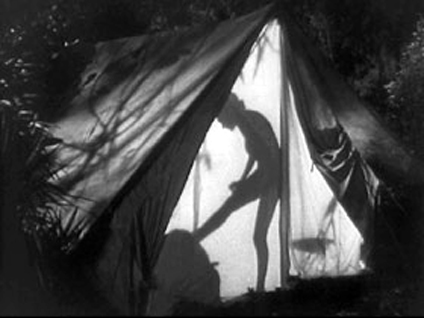
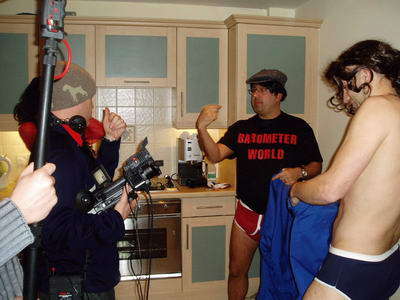
Jane changes clothes in silhouette,” from Tarzan and His Mate (1934) / “Percy changes his clothes” for The Dirty Weekender

The reason I bring this in, is that I want to investigate visual and literal symbols that similarly arouse the viewers fantasy through implying a story or some sort of meaning. Cinema is actually just a more complex alignment of symbols and construction of literary narrative. Therefore, Zizeks claim should also apply to more basic symbols and also language itself.

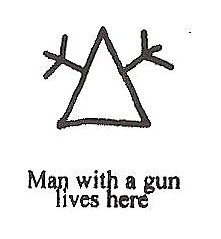
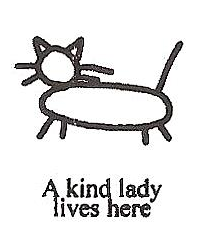
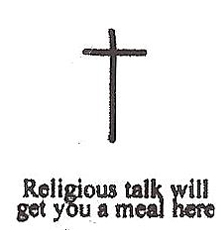
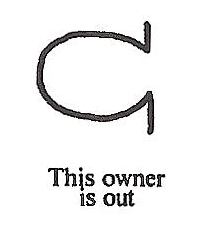
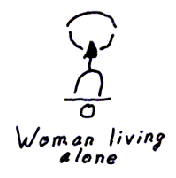
These images belong to a set of symbols used by gypsies and hobos. They would draw them on houses, street crossings etc. to warn and help each other.

What I found most intriguing is the hidden implications these symbols hold. The symbol meaning “woman living alone” holds a very dark implication. Even the shape of the symbol could suggest something sexual. Or the vulnerability of the woman, as this house can easily be entered.

A simple symbol like this can already visualize stories about rape, robbery or abuse.

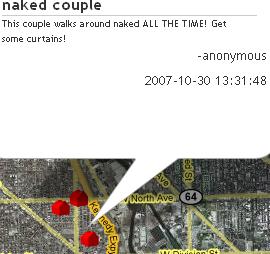
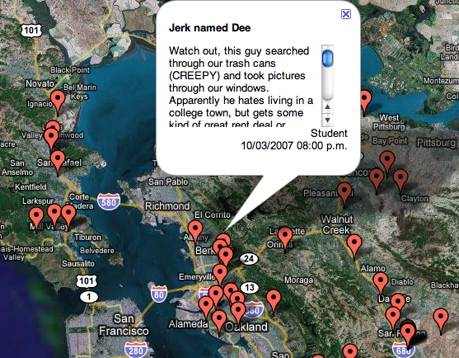
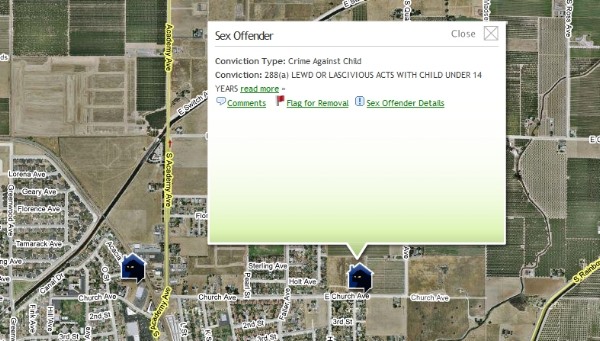
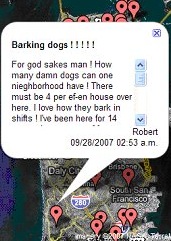
This is what struck me when I came across these symbols, flipping through a book in one of our design workshops. However it is not only an insight into the brutal reality of hobo life. It also relates to far more recent developments. The recently censored site Rottenneighbor.com was a website launched in 2007, by Brant Walker. It allowed users to anonymously mark the houses of neighbours on google maps.


The concept of marking these houses has similarities to that of the hobo symbols.

Hobo sign for barking dog

The intensions and therefore the implications of these marks are different. The hobo sign is meant as a warning for when intruding into the property. The rottenneighbor entry seems to be more a way of letting out anger, a way of revenge.

In their function they are very similar though. The purpose of Rottenneighbor.com is to serve as advice for people choosing a new neighborhood to live in. This is very similar to the function of the hobo signs, although hobos would not look to buy or rent property, their signs also advise them about the safety of staying in certain neighborhoods.

On Rottenneighbor.com some entries also held similar implications to the hobo sign “woman living alone”.  There have been entries posted such as “Hier wohnt eine Schlampe, leicht zu haben und lässt die Tür immer offen.” a German post implying that the woman living in this apartment is easy to have and leaves the door unlocked. This post is an example for not going with the actual function of the website, of recommending neighborhoods. Instead it informs that there is something to get in this apartment. This makes its function even more similar to that of the hobo symbols.

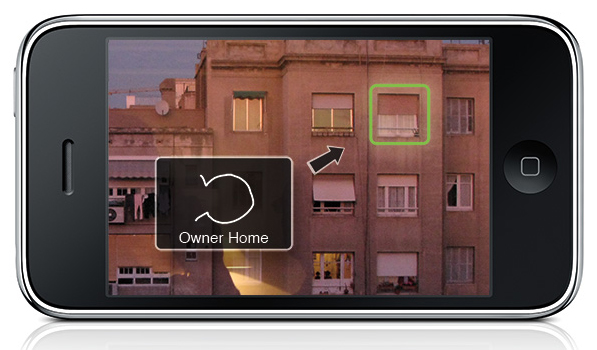
This idea for an iphone application also plays on the idea of marking places to allow some sort of interaction with them. So the user would be able to search for, say, “a ’safe camp’ or a ‘Kindhearted Lady’ (a picture of a cat) and then have the iPhone show him the location.”

However it is not only visual symbols, that hold implications. Also language unconsciously creates and upholds values and stories.

To become aware of this in English language, it can be interesting to look at the language of the Rastafari. A culture that has been very conscious of their use of words and grammar.

The  language spoken by the Rastafari is based on Jamaican English. Its a creole language, which formed when African slaves were brought to Jamaica and had to adapt to the English of the slave masters. In their “reasoning sessions”, language was a big point for discussion and the Rastafari consciously changed it to rid it of any unwanted implications and meanings. “If you Really want to know how Rasta’s think, “Listen to them Talk” (Nicholas, Tracy. Rastafari A Way of Life pg.37)

There are three main purposes for which these changes in the language have been made

1) To be aware of the subjectivity of each individual and the unity of man

“I” replaces “me”

“Me” is felt to turn the person into an object whereas “I” emphasises the subjectivity of an individual.

“I and I” replaces the pronouns “him” she” “we” “you” and “me”

This change of grammar refuses the “objective case”, that which is acted upon.

It aims at seeing the subjective-self in each individual.

And showing the unity of man.

Inity replaces unity

Demonstrates a general pattern of replacing “you” and similar sounds with “I”. U is consideres negative as it sounds like “you”

Itinually replaces continually

It has the everlasting/everliving sense of I existing continuously.

2) To not hide true meaning, implications of words

Underpression replaces Opression.

Polytricks replaces Politics

Politicians as tricksters

Outvention replaces Invention

Mechanical devices are seen as outdated, and because it is the inner experience of being a Rastafarian that is invention.

3) To give words the positive implications they should have

Rising together replaces Falling in love

Everliving replaces Everlasting

Overstanding replaces Understanding

Referring to enlightenment that raises one’s consciousness.

Know replaces Believe

Rastas do not believe Haile Selassie is God and that they the Rastas are the chosen people. They claim to know these things, and would never admit to believing them.

Reasoning replaces Conversation

Any lengthy talk should not consist of conversing back and forth, but reasoning. Putting minds together to discuss anything from politics to sports or everyday life.

Sign In or Sign Up?

We should pay more attention to the values that are created around us. The art of story telling is constantly affecting our fantasy. Not only in cinema. Im not saying that language or images should be changed to give them more positive implications. But like the Rastafari, we could become more aware of their importance.

1000 Contemporary political posters


Monday, December 7, 2009

For this last posting I wanted to find a book wich I could connect to my other two postings. In the search system of the library I searched on the tagword ‘754.‘. Out of the hole list of search results one title popped out as ‘could be interesting’. The book was in the design category and had the title: ‘Prop Art over 1000 contemporary political posters’ . So on the cover of this book you could already find two tags of my previous posts (1000 and 754.). Political posters always try to convince you of something that the party who spread them stands for. In that way this book is also connectable to the tagwords direction and signs.

The book itself is filled with pictures of political posters, some of them in color. Most of the posters have something to do with war, or the remembrance of a war. But next to them are also posters shown about ecological movement and the women’s liberation.

754.1 -YAN-

City Signs


Thursday, November 12, 2009

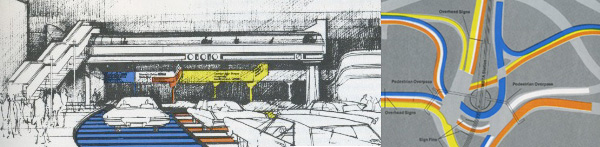
Walking through the library with a specific direction in mind (the tagword signs) my eyes crossed a book with the title ‘City Signs and Lights’. It is a book printed in the seventies and it has a silvershining cover with a lot of black ink printed over it. The book contains a study in city signs and lights. The interesting thing about this book for me is that it shows the paradox I discribed in my last post. And it contains a lot of examples where signs could get confusing.

One solution I really liked was where the writer (Stephen Carr) tried to untie a traffic knot. What he sugested was marking all the different directions by giving them their own color and repeat this in the direction signs, and give each section of the road the right colour wich lead you to the place where you wanted to be.

754.5 -carr-

1000 Signs


Tuesday, November 10, 2009

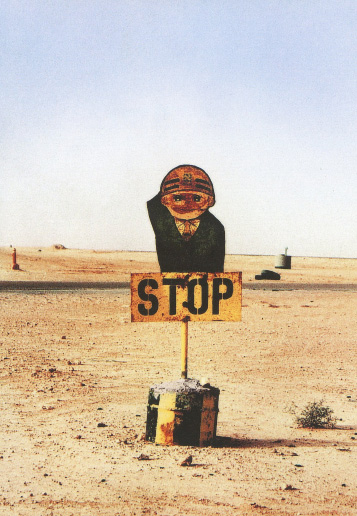
Walking through the library without a specific direction in mind my eyes crossed a book with a few signs on the back. No title, only the publisher (taschen) and the editor (colors magazine). I got attracted by these signs because they pulled my eyes immediately in its direction. Like signs have to do, they tell you how fast to go, where to stop, where to turn. Going through the book it was nice to see the different signs in different languages. Even if there is an Arabic text in the sign you still now what to do.

The nice thing about signs is the paradox in it. If we all follow the signs in a strict way, we will not get anywhere. Because at one point you will come across a dead end- or a stop sign. But if no one gives anything about the signs and ignore them it will become a complete mess.

754.9 -mus-

reserved space


Tuesday, November 3, 2009

“subjective library” images and flickr tag-cloud

Read the reflections of A and C group’s journey into the Rietveld Library’s Design and Art section. This journey to investigate, made our fascinations, preconceptions and hidden desires manifest. How does a subjective book choice create a personal mirror and leaves traces of tags, connecting Design to Art, exposing autonomy in both.

Read about the subjective, open and intiutive first book choice from the Design section of our library. Wonder about the tags connected to those accounts. Follow the continuing story as a second book is selected based on those tags created. Witness the third posting in which those sets of tags lead us from Design to Art. A move that forces us to reflect upon the connection between them both.

Follow the continuing accounts of the three succeeding investigating postings by clicking on the yellow link. Experience the total list of tags created during this “Subjective Library” Project.


LIST OF TAGS:

3289 days, A4, cover, funky colors, television, unatractive, film photography : fauna, flora, interesting, lines, strange, fluffy, simple, horrible, brainwork, complicated, proud, “to know” : disorder, game, grid, systematization, “One Minute Sculpture” : library, swindler, breaking news, library loser, extraordinary, talented : space, absence-presence, framework, surrounding, returning : abnormal, rediscover, choice, plain, others : 1000, 754., direction, signs, city, direction, traffic, political, posters : blue Pinocchio, screaming, spine of book, blue, Pinocchio, blue fairy, eyecandy, contemporary, folk, mentality : not getting there, unknown, judging by covers, content, connection, strangers, subject : supermarket, theft, housewife, tiny, midlife crisis, multilingual : logic, question, reason, consciousness, interest, remarks, impossible, mathematical, perspective : attraction, strange, swissfolk, art, death, life, love, Maurizio Cattelan : cover, old book, unique, obsession, miniature : Anita, eyes, portrait, dominant, name, color, film : Wiener Werkstätte, characteristic, hand work, mass fabrication, original, process, realization, detail, photography, the nude : cheap fashion, funny, random, tattoo, tribe, weird, mysterious, tribe : attraction, new texture, action, quick, warning, a priori, new, amusement, choices, eye-catching, eyes, random : escape reality, library, overflow of impulses, fruitless reality, jostling time, absorbing force, déjà-vu : arrange, industrial, library, architecture, museum, self-made, Andreas Gursky, index : city, nomadic, reality, funky, colors, interiors : contrast, fat, texture, typography, culture, nudity : conceptional, distance, no image, steps, thinking space, braille : cat, compulsive, font, chaos, subjective, illustration, objective, random, Tadao Ando : airplane, airport, choice, structure, worldmap, 756, 80’s, human, machines, unique, flying : dot, jewelry, shapes & forms, yellow, children, fun, paint, playful, all colors, blue, green, theory : extraordinary, life, normal, objects, absurd : 80’s, desire, fashion, party, techno, desire, fabrics, orgasmatic : alchemy, identical, methaphysics, mysticism, mythology, Arabic, identical, inaccurate, ladies, naked, orient, sculptures, stereotypes : Canada, Indian symbols, kitsch, raven, Indian art, Mexico, Jeff Koons, porn : attraction, gold, meeting an old lover, recognition, cheap, irresistibility, not psychology, wrong, beauty, compare, contrast, couple, same, similarity, together, two books, ugliness : connection, embroidery, hundred years, death, funerals, general terms, invisible, object, spirit, visible : color, feeling, personal story, feminism, graphic : first sight, mystery, old-fashioned, bloody, mad, rituals, revelatory, Yin : oblivion, automatic lives, bottom shelve, eat, mantra, story-making, colorful, dogs, double-take, eat sleep, vases, vegetables : attracted, nothing, black, disturbing.

still curious read the books involved at the Gerrit Rietveld Library, (catalogue numbers are included).
SIGN IDENTITY


Thursday, March 19, 2009

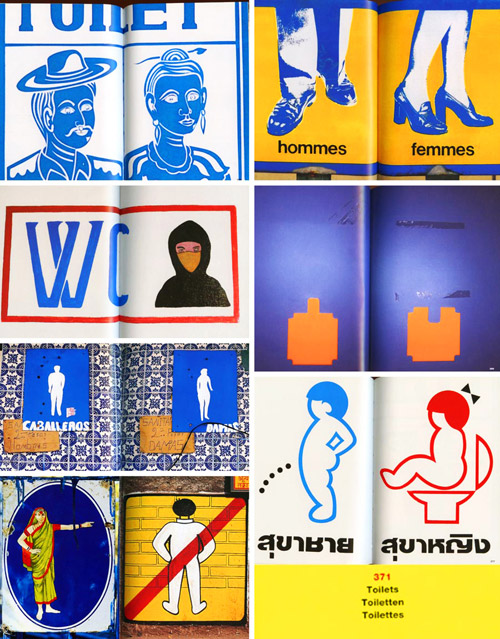
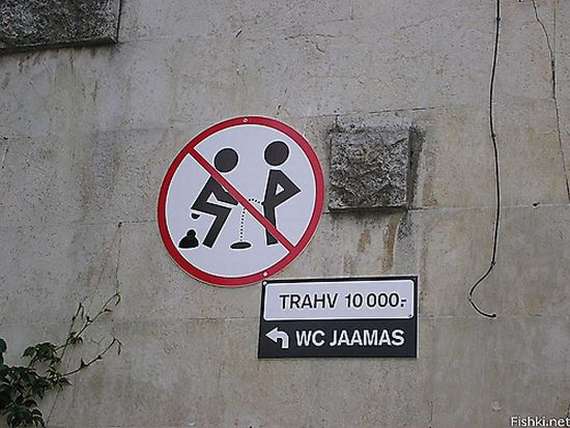
Some years ago I found in internet journey letters by Moskow designer Artemiy Lebedev (tema.ru). There was one thing I interested in: road signs, street signs, signal lights that surround us everywhere we go, but with national identity. So, last week I found in a library book, called 1000SIGNS, about same things, but with bigger collection of sign pictures from all over the world. I found it very positive and interesting, that, for example, toilet signs can look different and at the same time tells something special about the country or society they are from. I can’t add any other comment, you have to see it.


And there are also some funny signs about dogs and…

cat. nr: 754.9-mus-1

keyword: identity