Skip to Content Skip to Search Go to Top Navigation Go to Side Menu


"sound" Category


Signs and sounds – The way to communicate


Friday, October 26, 2012

If you talk about communication, you can not avoid Paul Elliman.

Paul Elliman is born in 1961 in the UK. He is a London based artist and designer, with works primarily focusing on communication and different ways of communication through language, sound and typefaces.

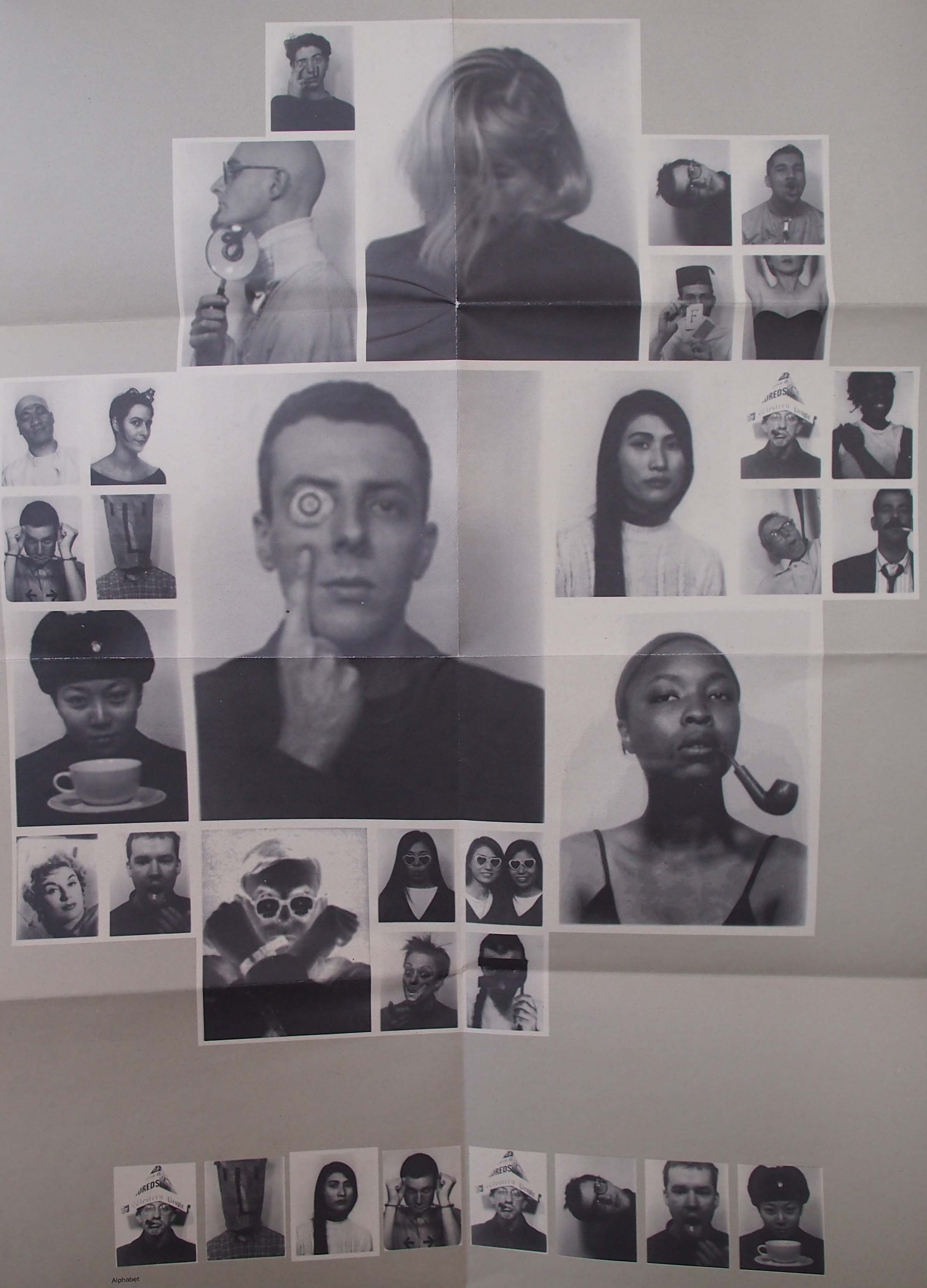
He is dealing with new looks and ways to use the written language. He has made a human alphabet, with people acting letters in a photo booth machine.


The original poster as Paul Elliman made it.

His work often involves collections of things. The largest project is his own font, “Found Font”, which is based on things from his everyday live. It is an ongoing project that already has been going for over 23 years.

(more…)

Multimediakunst


Thursday, January 19, 2012


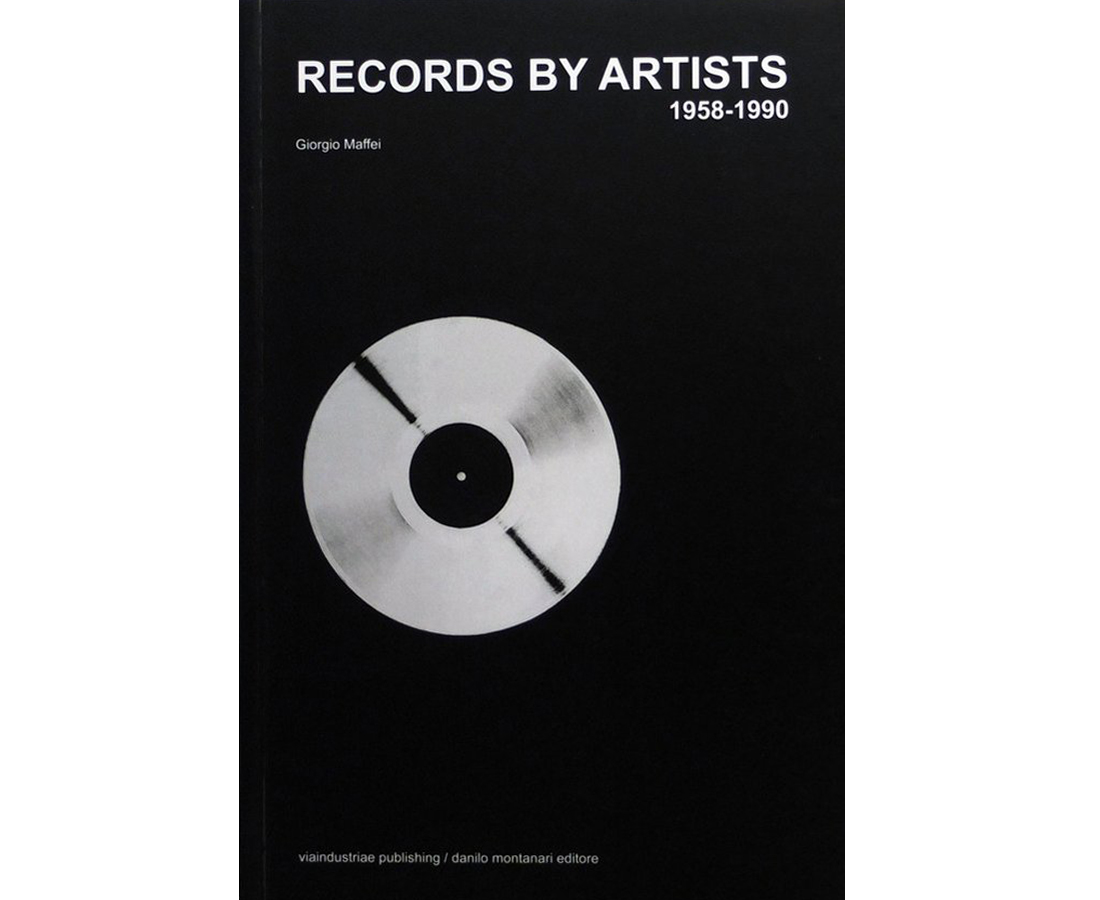
Kunst, muziek en technologie smelten samen in installaties waarbij de interactie met andere elementen centraal staat.
Het geluid reageert op beweging en beeld reageert op geluid. Het begon allemaal in 1958 met de videopresentatie Poème Electronique van LeCorbusier, ook wel het eerste ‘multimedia-kunstwerk’ genoemd, met als doel te laten zien wat technologische vooruitgang de mensheid oplevert. Een klankgedicht waarin architectuur, geluid en beeld samen vloeien tot een geheel.
Vanaf dat moment ontwikkelen technieken zich verder en daarmee de mogelijkheden voor deze installaties.
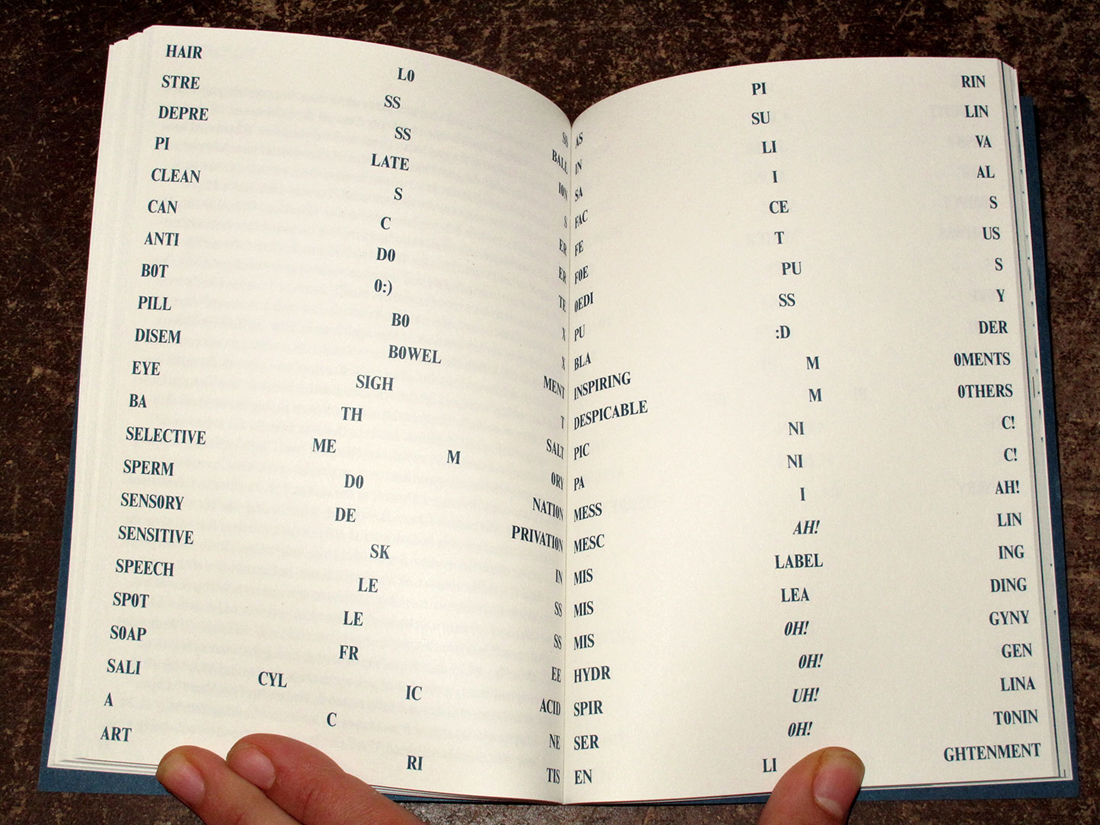
Dit boek bevat een overzicht van een aantal kunstenaars die zich vanaf dat moment zijn gaan specificeren in deze ‘multimedia-kunstwerken’.


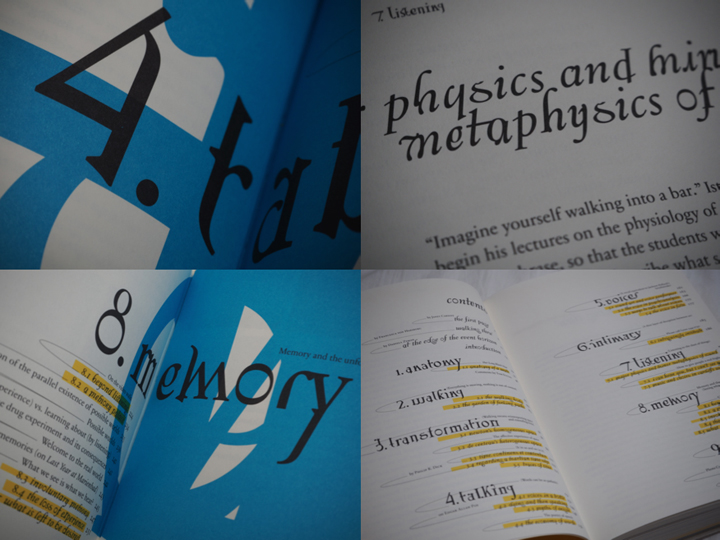
this post is part of he subjective library project "Unopened Book"
the book can be found at the Rietveld library : catalog no :

“Beethoven”


Tuesday, September 20, 2011

Simplicity, clarity, structure – to me, these words represent the core of Wim Crouwel’ style. In his works I find the intention of combining human emotionality with the precision of the machines. It is a systematic approach, a development towards digital forms

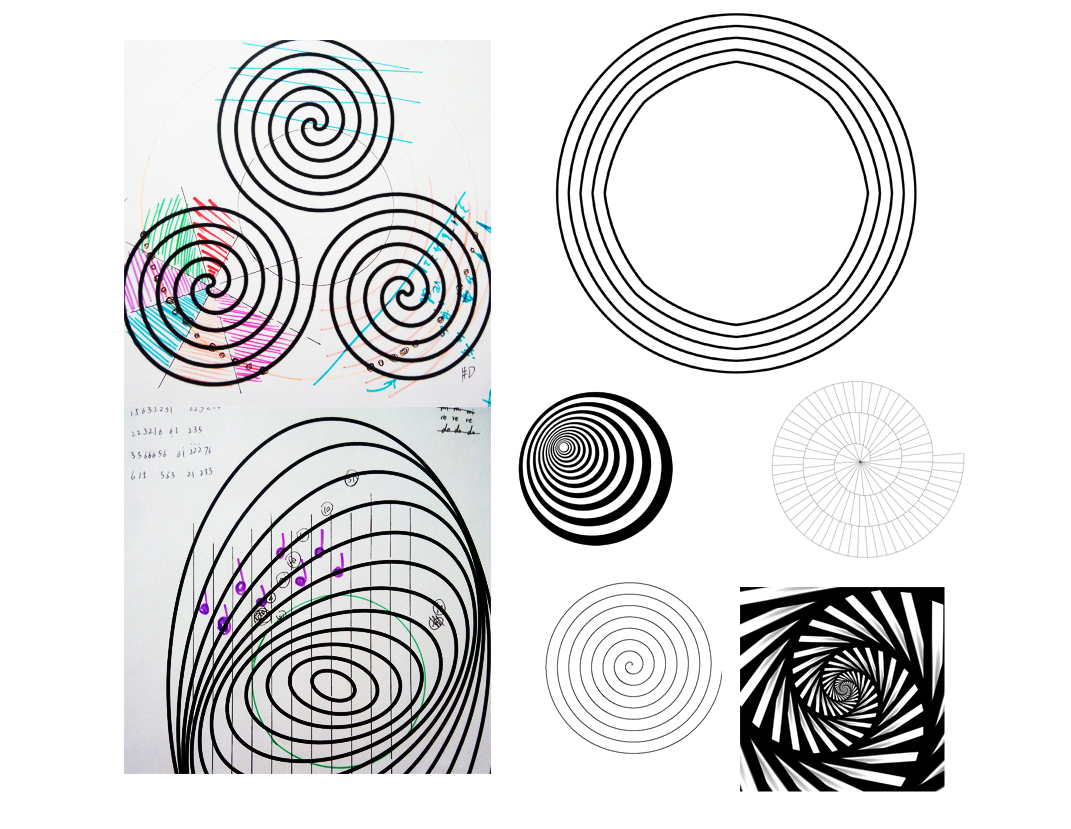
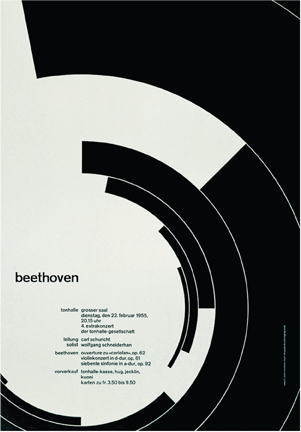
One of the design pieces in the exposition that I liked the most was the concert poster for the Zurich Tonhallen. It is made in a definitive and geometric, yet abstract style. It looks like Crouwel incorporated a mathematical method in organizing the spirals into a graphic work. It is the visual equivalent of music.

The poster portrays music through series of concentric curves. These incomplete closures focus our attention to the information on the poster, with no unnecessary ornamentation to distract us. There’s a certain strength in the simplicity and elegance of the forms, that makes it easy for the eye and brain to process the image in a single glance. Wim Crouwel also escapes the well-known combination of black-and-white by using beige instead. And he is bold, just like the music of the composer, but without the trick of eye-catching colors. Simply with the movement and structure of the lines.
What makes this poster memorable for me is the fact, that the first thing I thought when I looked at it was…..”This reminds me of sound-waves.” Only to find out afterwards it was really a poster for a concert.

Victory Boogie Woogie


Sunday, May 1, 2011

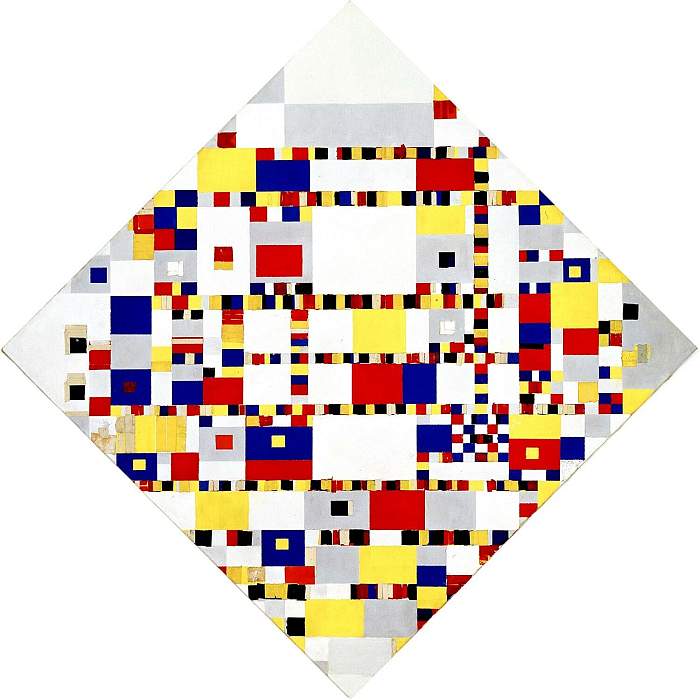
“Victory Boogie Woogie” is the last painting by the Dutch painter Piet Mondrian. It was made but not completed in 1944, the year that Mondrian died. Even though it is unfinished, the disposition of the image is still quite clear. It is a continuation of his last finished painting “Broadway Boogie Woogie”, which it has a distinct resemblance to, even though the canvas of the latter is a simple square, while “Victory Boogie Woogie” is lozenge-shaped and by this deals with space very differently. Still, both paintings consist of multicolored, different sized paint-, plastic- and paper squares, arranged in an asymmetrical pattern in horizontal and vertical lines on the canvas. They seem to be partly interwoven, or layered, which suggests an almost textile-ish feel of the surface, probably partly due to its unfinished state. For both painting Mondrian used only the primary colors and shades of grey. The yellow is much more dominant in the Broadway painting while blue and red are more prominent in the other one.

While it is implied, that “Broadway Boogie Woogie” represents the sparkling lights on Broadway, as well as the streets of New York, filled with the yellow taxis, “Victory” stands for the (New York) city life in general. The lights, the traffic, one might even see the grid of the cities map with its crowded streets and huge buildings. It is strange, since the painting is obviously not trying to portray the scenery realistically; it is more a capturing of an ambiance, the kind of mood you experience when you’re in the middle of a big city. Very intense and maybe even a little overwhelming, a lot of sounds, smells, images, multicolored stuff and people, vehicles etc. surrounding you like a cloud of a heavy metropolis-esque odor, making you a little bit dizzy and leaving you in a state of inexplicable physical fatigue. Especially in comparison with the Broadway Boogie Woogie it feels very crowded, maybe also connected to the shift of the canvas, since this way the squares don’t run parallel to the borders of the canvas.

The fading out of the squares towards the border of the “Victory” painting might be an indication for the non-finishedness, or just a contrast to the filled and almost hectic center. And really, the painting evokes a state of slight confusion, reminds of speed, circulation, movement in general. That is why it fits it’s title (which was not given by Mondrian himself, since he was already dead) quite perfectly, the boogie woogie, a subcategory of blues that came up and was popular in the 30’s and 40’s of the last century, was a piano based dance music, which was very up-beat and fast. Also a characteristic attribute is the frequently repeated leitmotiv, which is perfectly illustrated by the recurrence of the same colors and same shape all over the canvas.

Get the Flash Player to see this player.

This seems to be a bit dreary, it actually is exactly that to me, but I imagine that you can get pretty excited about it when you have the tendency to a passion for Mondrian, I just can’t really call myself a groupie. Yet I do admire the careful arrangement of colors and sizes, this is the most interesting part for me, not the connection to the city or explicitly New York, though I find it curious how Mondrian tries to capture it’s spirit in a completely abstract way. This might be an attempt to find a symbol for the city, valid not for the individual but in the “Universal Reality”. I think this is very nice, you do not have to see a  cab in every yellow square to feel the vibe that enfolds throughout the image. Mondrian sure knew what he was doing, everything is arranged and composed so pefectly that it feels like Mondrian in controlling the motion of our eyes with his Boogie Woogie Paintings. Concluding I would say that, because of my personal taste, I don’t think it’s a painting in front of which I would choose to contemplate a long period of time. But I consider it very interesting and important, since it manages well to transport the artists position towards the city. What is left is the strong impression that Mondrian was immensely infatuated with being infatuated with the Big Apple.

An Ornithological Recitation of Kurt Schwitters’ Ursonate


Tuesday, November 23, 2010

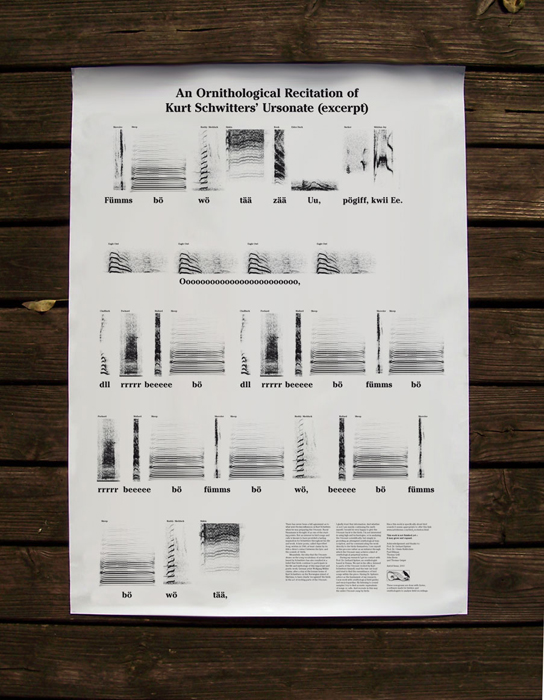
An Ornithological Recitation of Kurt Schwitters’Ursonate excerpt:
Get the Flash Player to see this player.

There has never been a full agreement as to what were the key influences on Kurt Schwitters when he was preparing the Ursonate. An interest in bird songs and calls is known to have provided a lasting inspiration for Schwitters. A later poem, called Super-Bird-Song, written in 1946, at least claims by its title a direct contact between the lyric and the sounds of birds. I gladly trust in this.

Whether or not I am merely continuing the myth myself, I would like to give the Ursonate back to the birds.

During my research I got in contact with Prof. Dr. Gerhard
Spitzer, an ornithologist based in Vienna. We met in his office, listened to parts of the Ursonate recited by Kurt Schwitters himself, read the text out loud and tried to find the resemblance of bird songs within the piece. Having Dr. Spitzers advice as the fundament of my research,
I now work with ornithological field guides and encyclopaedias. And try to recreate in this way the entire Ursonate sung by birds.

This work is not finished yet —
it may grow and expand.

Astrid Senne graduated from the "Werkplaats Typography" (WT) master program of ArtEZ Institute of the Arts.[x]

for more information about a preliminary excerpt [2'55"] on CD

go to: www.markpezinger.de

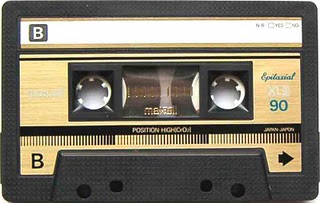
Maxell 90 Gold


Thursday, March 4, 2010

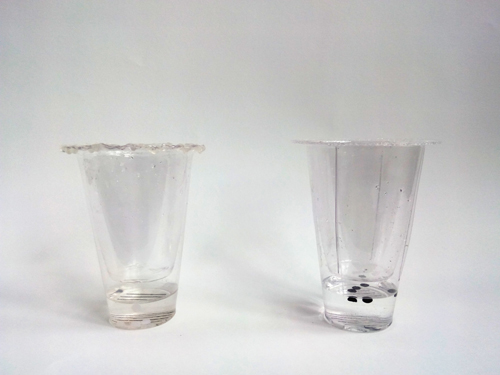
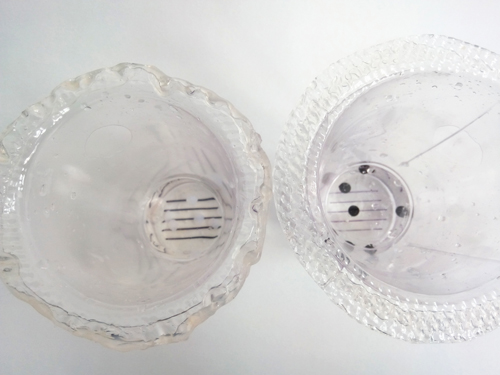
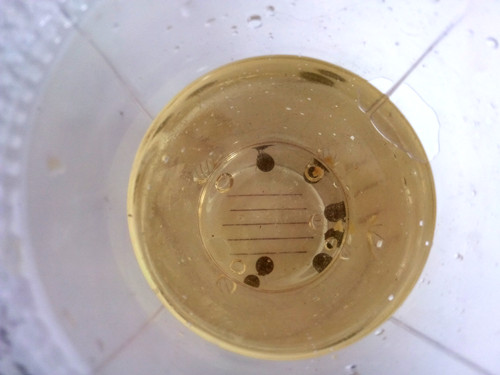
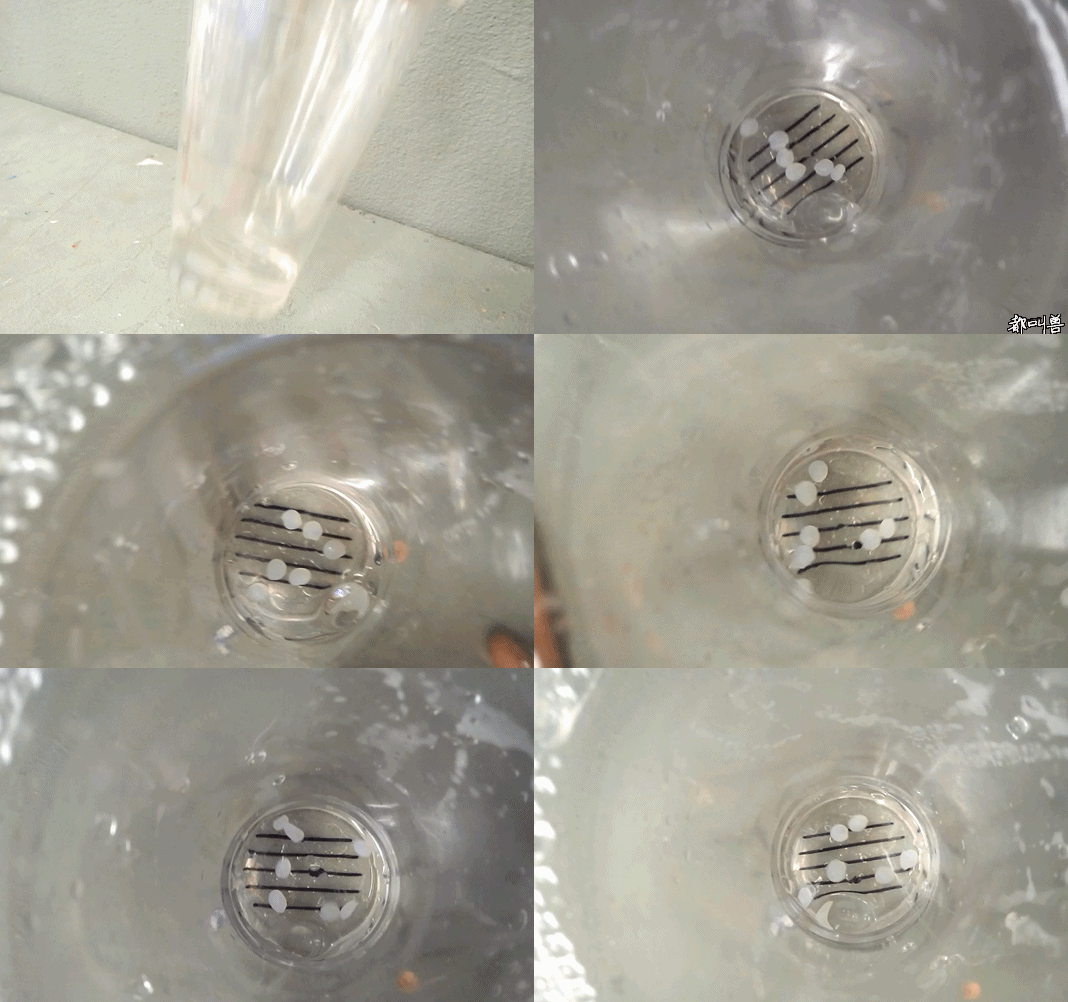
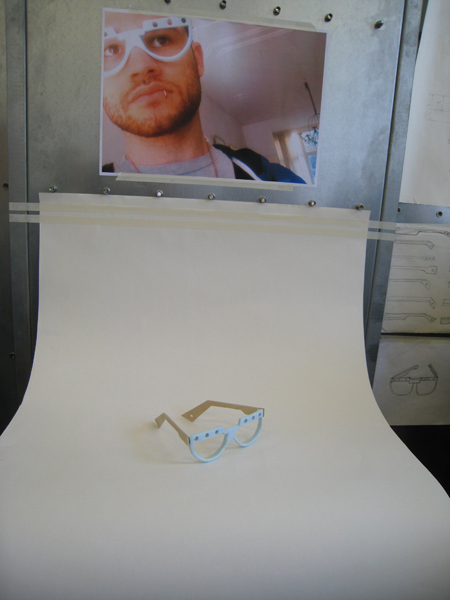
For me sound is something mysterious, because I’m deaf. during my childhood I was fascinated by music cassettes (casette-bandjes). People love these things. For me it was hard to imagine.
Something coming out of the cassette that I couldn’t see.
some more interesting elements:
– gold/black – variety volume of lines – symmetrical holes – two hole with teeth – rectangle with round corners – easy to put in pocket – parallel lines–

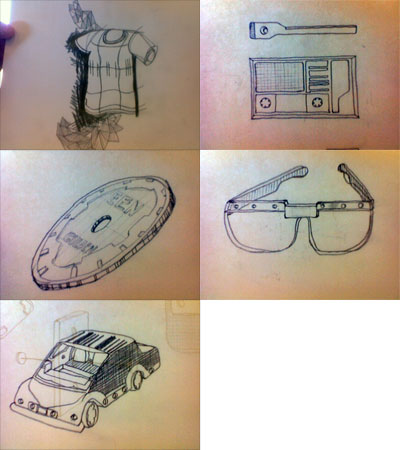
scale drawing “make invisible visible”

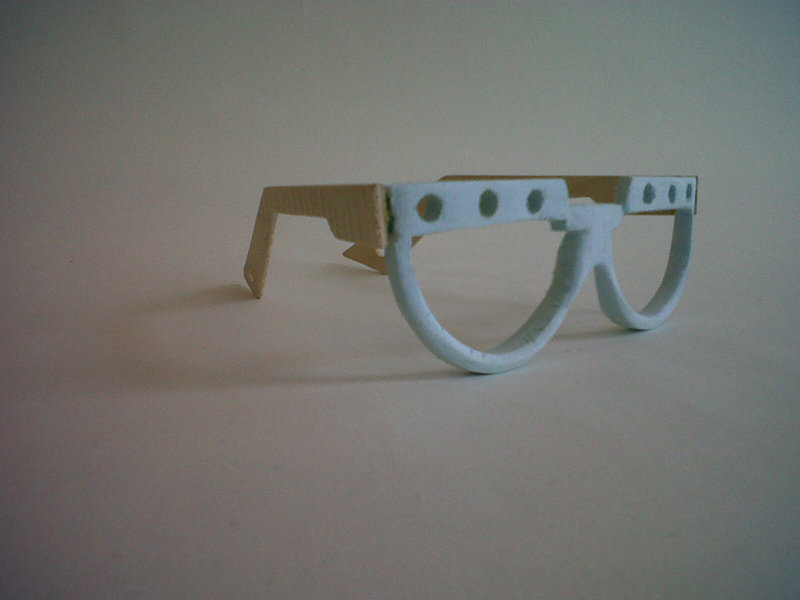
final presentation

Exploring the possibilities for translating the idea into a product brought me to a new space for viewing the designwork. I fell in love with the PET-foamboard material and thin woods. I could change the shape and lines (movement).
During the translating I solved the technical problems/errors that I couldn’t see in my scale drawing. I had to wear the showmodel glasses in order to solve these problems and find the right shape (nose-holding, hinge and degree angles).
I’m happy with my first design product translation from the (inaudible) cassette-band and I don’t mind wearing it.

Sound >< Time + Space


Tuesday, January 26, 2010

slowLinking: tagging slow design part 3


Monday, May 4, 2009

Welcome to part 3 of : tagging slow design. This is a worksheet on which all the link-topics and post-it tags collected on the “slowWall” are listed in relation to the research subjects as components of the ‘slow design project’. (researches can be downloaded as .pdf’s).

link topics.

Performance links the Morgan O’Hara research to the one on Julia Mandle. The Julia Mandle research links to the one on Richard Long on the topic street /nature & art, by slow movement to the Kunsthalle Bern exhibit and by sensibility & violence to the Psychogeography research. Psychogeography has the link topic urban life with the Karmen Franinovic research, consumption /destruction /life style with Futurisme, against and pro community with Wim Wenders, evolution of everyday life to Downshifting, and a anonimous link to Maria Blaisse. This anonimous link is not the only one linking Marie Blaisse. Link topics like art and left over, connect this research to Uta Barth. Karmen Franinovic links to Christian Nold by means of the topic mapping, and to Psychogeography by urban life, to Futurisme by life is getting faster & people are getting a social, to Julia Mandle by just stop & think and to Richard Long by the link a way to see. Richard Long links to many other researches: to Sophie Calle by self related art, to Christian Nold through a line made by walking, to Karmen Franinovic linked by the topic a way to see, to Downshifting by choosing slowness. Downshifting links back to Julia Mendle by the link topic us and them, to Psychogeography by revolution of everyday life, to Futurisme tagging the link with designed lifestyle, to Marie Blaisse by us and them, and to the Kunsthalle Bern exhibit by reflect /a closer look. The research on Futurism has some remaining links to Julia Mandle through the topic exploring / explosive / sculptural. Following links from Wim Wenders to Uta Barth is made possible by the topic notice the small things in life, to Christian Nold by moving /memories. Mapping links Christian Nold to the Ambient/Brain Eno research while that last one makes a link back to the Kunsthalle “The Half and the Whole” exhibit creating a take time to cook link.

Reading all the researches the links will surely start to make sense, as will their variety shed light on the specific nature of many of them. Some research subject however did not create any link at all, like in the case of Maison Martin Margiela. And it was 0nly after some discusion that the performance link was created between Sophie Calle and Karmen Franinovic. Uta Barth was anonimously linked to Richard Long which might have been an intuitively act

Post-it tags.

No links did not mean no tags. Time, Maison Martin Margiela for example was closely read and tagged with post-it. This created tags like memories, replica, time(less), can’t relate to it, time, physical picture of memory and the photographical tag to a picture by Mark Manders. Wim Wenders (present in our research list because of his beautifull documentary “Notebook on Cities & Clothes” about fashion designer Yohji Yamamoto) generated also many tags like sublime, I finally found time, hillbilly, surreal, the truth, place, moving. Sophie Calle tagged by the moderator with authorship, generated: life=art, stories, documenting life. Uta Barth looking was tagged: rainy day with half closed eyes, in between places, no left over, sunday. Ambient the research connected to Brian Eno tagged as big here long now was retagged as live the moment, loosing yourself, don’t think, sound. Christian Nold place-ness got tagged with keywords like biomapping, google earth, links, remapping memories. Linked to many, tagged by few. Julian Mandle pause, was tagged with pause from urban flow only. Morgan O’Hara gestures was tagged with trans, transforming, concert-art, transmission, energy of moments, reaction. Maria Blaisse architecture by border between self and not self. Futurism with fast life, life style, save time? Downshifting was tagged with life style too and change assumption. Richard Long tagged as a subject with landscape was enriched with the two tags: exploring fast and slow and perception of space, time and personal potency. Psychogeography with destruction of community, philosophy, socialism, anarchisme and urban live. Finally Karmen Franinovic subtraction, served as a hub for the tags: observe, spontaneous landscape, discover a realy nice place that never be online, easy fast, MTV generation, reflect, and observe. Some researches like Conditional Design re-mapping did not make “the slowWall” and were concequently not linked

added tags from the slow design lecture.

scale, gestures, measurements, relations, sustainability, evolving, creative activism, reveal, expanding awareness, reflect, engage, participal, deceleration, fresh connections, rhythm, probing, (im)materiality, metabolism, reflective consumption, live span, memories, community, record, tracing, (human) body, break (take a break), nothingness, inclusive, transparent, re-mapping, connection to scale

read also: >tagging slowdesign part 1
Ambient


Monday, May 4, 2009

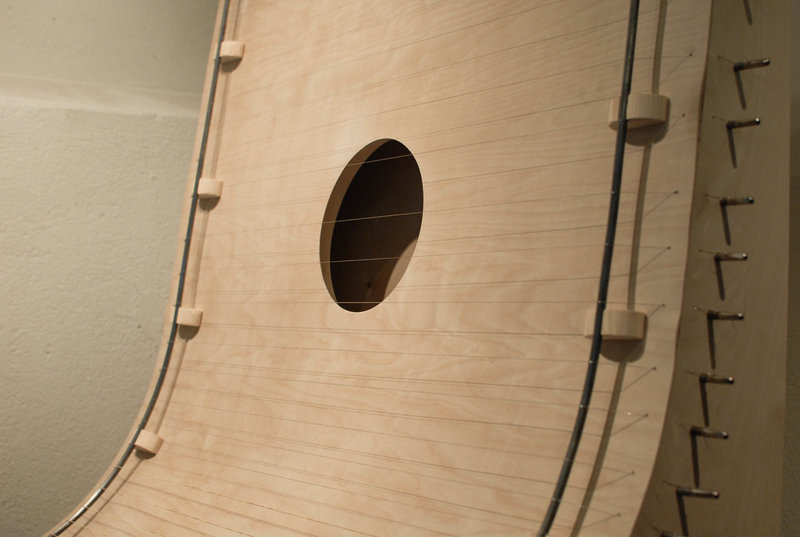
Brian Eno’s repetitive music. He is known as the creator of the so called ambient music which is a low volume music designed to modify one’s perception of a surrounding environment. That sentence is true in the fact that I stop being annoyed by all the people around me and I turn inwards. I notice my own heartbeat, the way I move through the crowd; all the little details around me seem beautiful and unique. Even the fat lady eating Febo is strangely hypnotizing.
That’s the thing about ambient music, as Brian Eno termed, it can be either “actively listened to with attention or as easily ignored, depending on the choice of the listener”. If you listen to it in your headphones then you are alone in your own world but if it’s in the background ,for instance in a restaurant, it turns into elevator music. Eno used the word “ambient” to describe music that creates an atmosphere that puts the listener into a different state of mind; having chosen the word based on the Latin term “ambire”, “to surround”.

The importance of living in the right now, in the moment, seems to increase every day. Like Brian Eno talked about in his essay for The Long Now Foundation

“Now’ is never just a moment. The Long Now is the recognition that the precise moment you’re in grows out of the past and is a seed for the future. The longer your sense of Now, the more past and future it includes.”

I think what he means is that we should all live in the moment because who knows what will happen in the next 5, 10, 20 years. The glaciers might have melted and we could all be living in boats. Well, I certainly don’t want to be that pessimistic and I usually think about the future in a positive way. But when I start to think about this type of stuff I prefer to live myself in the moment. The dinner I’m going to eat in a few minutes, I need to clean the table first and then I might go to the bathroom. I love the fact that I don’t know what is going to happen so I tend not to plan too long ahead, although I have a plane ticket back and forth Amsterdam and Reykjavík months in advance. I know that I will spend my summer in Reykjavík with my friends and family and I will probably get a work in my mothers business. I think I know those things, but they are still 3 months away. A lot of things can happen in 3 months. Making a plan gives you a false sense of security that if everything is going according to the plan then you are safe. A plan gives you also something to look forward to, then you know that you won’t be stuck doing the same thing months ahead. Living in the right now while making plans is the perfect solution, to always have something to look forward to and still enjoy what you are doing in that specific moment.

link to Big Here and Long Now
link to Brian Eno
links to Ambient Music: Music for Airports interview on this subject

Ambient is a posting by Thordis Zoega

I found a big book with posters in it


Wednesday, March 18, 2009

The book ‘The Art of Rock’ is about rock posters from 1955 until 1987, ‘From Presley to Punk’ stands on the cover.
I think. Only if you want a clear image of the atmosphere that these poster want to give you, you should not look at them closely. You should just brose through the book. Then you will find out that the atmosphere is mostly about drugs, endless summers and music. I like that. It takes me back to a few years ago when there were these cosy Friday and Saturday evenings with friends and no parents in the house when we just wanted to get as fucked as possible.

Another reason to not look to close at the posters is because most of them are not that good. When you do look good at them and look true all the tricks you will see there is a lot of graphic design creativity, which can work inspiring.
cat. nr: 754.1GRU

keyword: time

Repeat.


Saturday, February 14, 2009

listen to William Fitzsimmons while reading X

E-Magazine


Monday, February 2, 2009

read it online

read it in print

lines


Friday, January 30, 2009

how would it be to echo somebody?
how would it be to be echoed?
how does it feel, to be allowed to echo somebody?
how sensitive are you to get a good connection to his/her mind or presentation?
hoe does it feel to be echoed by somebody else?
is he/she sensible enough with your thoughts?
should everything be open, or is it better to hold something behind?
are there any rules or lines which should be followed?
i mean… is it really necessary to be always soft and sensible or what would change it, if you would cross the line?
about yourself, it is an easy question, i think you know your inner mine very well?
but how much do you know about the lines of the others?
or how easily can we meet in the middle of that line?

link: Osilloscope

Opzet geslaagd?


Monday, November 24, 2008

Voor Droog Event 2: Urban Play had architectenbureau NL Architects twee speelplaatsen ontworpen: de BoomBench en Moving Forest.
Moving Forest was een groep kleine bomen in winkelkarretjes. Eind september toen we langs de projecten van Droog Event 2 liepen waren de bomen al tussen stenen balken gezet, om ze bij elkaar te houden.
Het idee was dat voorbijgangers een karretje mee konden nemen en neer konden zetten waar ze maar wilden.
De gemeente Amsterdam vond de karretjes gevaarlijk en was bang dat ze midden op de autoweg terecht zouden komen. Helaas. Hierdoor kwam Moving Forest op mij absoluut niet geloofwaardig meer over. Het idee dat mensen hun eigen groene leefomgeving konden bepalen was ermee verdwenen en het enige wat overbleef was een dood gaand groepje bomen in ijzeren karretjes. Door de gemeente en hun ontwerpers op hun plek vastgehouden. Was het niet beter geweest ze nu weg te halen? Of het statement aan te passen?
Gelukkig had NL Architects dit zelf ook door en hebben de architecten hun project laten staan, maar achteraf de bomen verkocht voor vijf Euro per stuk. Zo voldeed het toch aan hun concept: de koper kon zelf de plaats van het groen bepalen!

Toen ik de bomen voor het eerst zag deden ze me vooral denken aan de consumenten-maatschappij en viel het dood gaan van de bomen in de ijzeren karretjes meer op dan het beweegbare van die karretjes.
Als je geïnteresseerd bent in mensen die zelf bepalen waar het groen is kijk dan vooral een keer naar de film Harold and Maude. Het is een detail, maar Maude besluit ergens in de film om een boom uit de grond te halen midden op straat, om hem mee te nemen.

De BoomBench van NL Arhitects was sowieso een geslaagd ontwerp. Hij wordt (haast) niet aangetast door vandalisme door het respect dat de meeste bezoekers er voor hebben. Hij veroorzaakt geen overlast en de enige klacht die binnen is gekomen is geloof ik dat hij niet harder kan! Hij heeft heel wat mensen geïnspireerd tot het maken van filmpjes. Check Youtube!

posting by Josje Kerkhoven

Street-art for Nerds


Monday, November 17, 2008

The Graffiti Research Lab, is a New York based art group with a technical twist. The GRL was founded in 2005 at Eyebeam Openlab where Evan Roth and James Powderly were both doing fellowships when they met and teamed up. Both of the founders have strong technological backgrounds  so it came as no surprise that they would use those skills in their creations.
The team works on new technological ways for people to express themselves through graffiti. Their best known products include the LED throwies which are little LED lightbulbs with a magnet that can be thrown  on to any metallic surface to either decorate or get a message accross and the Laser tag which involved using a prjocetor and a technology they developed with Theodore Watson , where  they had made a program that imitated the leaking patterns of real graffiti and were able to paint on big houses with a laser. The Laser tag had no long term effects so it was not hard to get a permit for making it when they first did it in Rotterdam and has since been recreated in various ways and always attracted an active, interested crowd.

Theodore Watson, who programmed the Laser tag I found especially interesting. He is a british artist with a very strong focus on technology and programing and is currently residing in Amsterdam.
Watson has a BA in Fine Arts and Design and Technology from Parsons and has had his work displayed at various high profile museums and art fairs such as the MoMa, Tate Modern, Sundance and so on and so forth.

Most recently Watson has been working with children, he designed with visual and motion graphics designer Emily Gobeille, an interactive forest program for children, called Funky forest. The project was premiered in 2007 at the Cinekid festival in Amsterdam. The installation lives and moves with the visitors, by pressing your body against the forest creates a new tree in your shape with different characteristics, by diverting streams of water flowing on the floor different parts if the forest grow, if a tree doesn’t get water it dies. The health of the trees in the forest controls the inhabiting creatures. The installation shows children how nature works in delicate ecosystems.

My favorite work by Watson is his work for a Michel Gondry exhibition. Watson made interactive installations around Michel’s new film at the time, The science of sleep. He made a cardboard covered, kitchen like room with built in screens and paper covered interactive cameras. In one part of the room you could stand facing a screen and pull strings to control the face of Gael García Bernal, in another you could move a camera and see parts of the room with strange effects. A special room with big windows that displayed scenes from the film as fake reality with moving lights and finally a video-piano. The piano had videos and sounds recorded and displayed them when the piano was played. http://muonics.net/
posting by Sunna Sigurmarsdottir

G group’s research subjects


Sunday, November 11, 2007

le poeme de l’angle droit corbusierbrasilia Oscar Niemeyer

Based on the general theme “Le Corbusier and Other Stories” we investigated a variety of subjects related to the content presented at this summers Corbusier Art and Architecture exhibit at NAi, Rotterdam. Research material was edited down to A4 sized guided tours into these subjects. All subjects presented in this list are available as hard copy prints at the Research Folders at the library:Primitivism, Le Poème de l’Angle Droit, Corbusier’s Christmas Gift, La Chapel de Notre Dame, Amedee Ozenfant, Corbusier in Istanbul, Varese’s Poème Electronique, The Candigarth Project, Modular, Language of Organic Form, Corbusier and Politics, The Bric, Ferdinand Léger, The Brasilia Project, Sandberg’s Experimenta Typografica 11, Koolhaas/Lagos, Nature Design Zurich, Constant’s New Babylon, Rietveld’s Academies, The Chaisse Longue


Log in