Skip to Content Skip to Search Go to Top Navigation Go to Side Menu


"Highlight" Category


Supplementary Design Show 2013 /Stedelijk Design Highlights


Monday, April 8, 2013

19 Rietveld Foundation Year students visited the "Stedelijk Collection Highlights /Design". Marveling at the many masterpieces, commenting on the applied or autonomous character of pieces in this highlight presentation, they arrived at the last part of this "depot salon", wondering what contemporary design would have in petto for them and how it would look like. To their regret the presented selection faded out without any opinion on the latest developments in design; social engagement or neo crafts
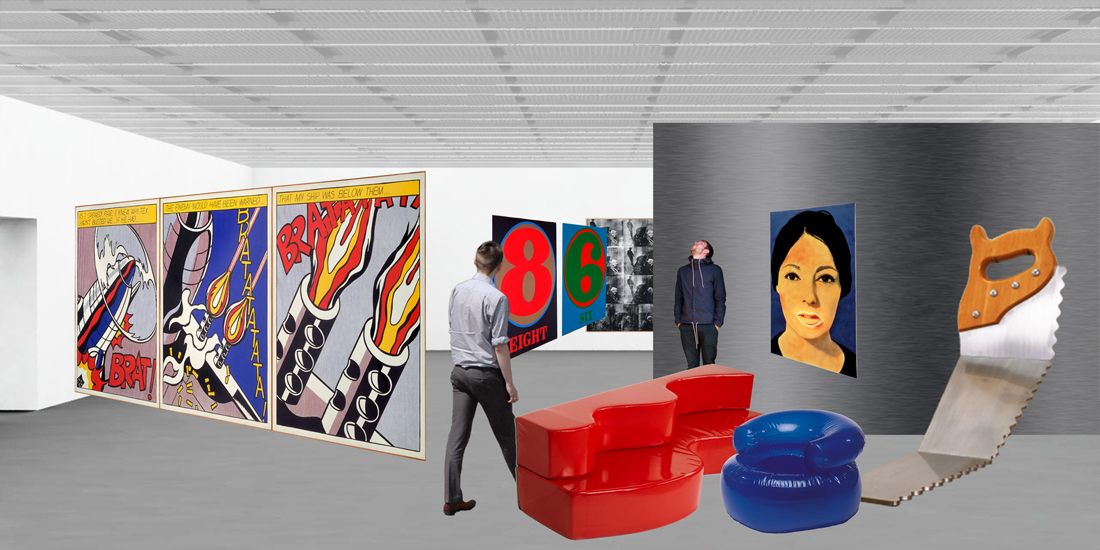
Researching contemporary design we propose this "2013 Supplementary" as a possible continuation, an imaginary online next exhibition space.

click on images to visit the exhibit


selected designers are: Mark van der Gronden /site • Daan Roosegaarde /site • Tauba Auerbach /site • James Dyson /site • Ferruccio Laviani /site • Mediamatic /site • Leonid Tishkov /site • Jonathan Ive /site • Liliana Ovalle /site • People People /site • Nucleo /site • Faltazi Lab /site • Michelle Weinberg /site


GRA DRESS-INDEX SHOW


Thursday, March 7, 2013

Get the Flash Player to see this player.

Group D of the Basic Year worked on the GRA DRESS-INDEX* project during the months of February and March 2013. Each student took ‘dress’ at the GRA as a starting point for new clothing designs. Each individual research resulted in one new outfit. These outfits were presented in the form of a fashion show at the staircase of the old GRA building (between 2nd and 3rd floor) on March 21st. It was an energetic – exciting – show, here a video synopsis of the show:

>> As one student said: People dress quite boring at the Rietveld, this is way more fun…. Why don’t we dress up like the GRA DRESS-INDEX outfits every day?

*GRA = Gerrit Rietveld Academy, Amsterdam
DRESS = Clothing in a broad sense; the way people wear, move around and behave in clothing
INDEX = List arranged usually in alphabetical order of
some specified data (as subject, or keyword)
<

a visual study of the Young-Helmholtz color theory


Thursday, November 29, 2012

Hermann von Helmholtz was a German physician who contributed greatly to different areas of science. In 1851 he made a color system that looked like this:

This color system illustrates how color is perceived by the human eye. The system is based on a previous study made by Thomas Young in 1802, the color system has therefore been named the “Young-Helmholtz theory”. Young’s study states that there exist 3 different types of photoreceptor cells in the eyes’ retina, who are each sensitive to a certain range of light.

Helmholtz then went a step further by assigning different colors to the wave lengths that the photoreceptor cells were capable of detecting. Short wave length, Red. Middle wave length, Green. Long wave length, Violet. If a color between the primary wave lengths is seen, the different cells will react to create a mixture that will create this color. For example, if yellow is seen, both the photoreceptor cells receiving red and green will mix to create this signal. The diagram underneath illustrates this. (1 red, 2 green, 3 violet.)

Colored light is additive, which means the more color is mixed, the closer one will come to white. This is why white is centered in the Young-Helmholz color system. The lengths represent the amount of color eventually needed to get white.

All in all this color system concluded that us humans are trichromatics, which means that we have, as mentioned before, 3 different cells in our eyes that can catch different wave lengths of colored light. So if you are missing one type of these cells, you are colorblind. This information eventually led to developing a color blindness test that is still used today, called PIPIC.

Being new to painting, and especially mixing colors, I was amazed that the three cells in our eyes mix the color that you see for you (and much faster and more accurate than anyone would ever be able to do by hand!)

Hoping to maybe understand how my eyes got so good at mixing color, I wanted to visualize this unconscious mixing trick that they apparently do. I learned from my color system that the mix of colors, which happens in the eye, is a mix of three colors; red, green and violet.

The three colors are divided into wavelengths, this is how the three different cone cells absorb them. Red, short wavelength. Green, middle wave length. Violet, long wavelength.

When we look at different colored things, our cone cells do the mix and our brain sees the  color. cool.


I therefore thought that I might have to put one monochrome item into focus, too boil the mixing process down to the core. I first thought I might make the cones the color of what they saw, to show how they, when mixed, visualized this color. I tried this with a cucumber and the 3rd floor of the rietveld building.


But it was simply to easy and felt repetitive showing the same color twice. colors are also such an ambiguous and individual experience, so giving the mixed color away this clearly was no fun.

I wanted to show how the eye really works on this almost incomprehensible subconscious level. The cucumber could stay, but the cones needed color!


I decided to draw a chalk circle (vision is ephemeral), with the object in focus centered. From the center I drew three lines, one for each colored cone. The lines are the same length and represent the amount of that specific color needed in order to achieve the mixed color of the object in focus. The closer they are to the object centered, the more is needed.

So far so good, But a cucumber does not just lie on the floor, a balloon might, but it still seemed too random. A cucumber is found in the supermarket or in your fridge and the balloon, maybe at a kids party. But drawing chalk circles at albert heijn or amongst 30 six year old kids on a sugar high also seemed random.

Chalk is an outdoor thing and so is color, luckily. So I went out in my surroundings and documented, with photos, the different objects i saw. I eventually made a book with all my outdoor color observations.

Click here to view it!

It starts with a green dust bin and then travels around helmholtz color system going to a yellow car and so on, until we reach another dust din, but this time blue. The circle has been completed. At the very end of the booklet we see a white cup, white being a mix of all the colors deserved a special place, so there you go white.


I am very glad i finally got out of my apartment and ended up working outside, because colors outside, or in public, as communication, is a big part of my color system. The colorblindness test that the Young-Helmholtz theory helped develop, makes sure pilots aren’t color blind, so they know what the light signals on the airstrip are trying to say to them. likewise this also goes on in our everyday public; traffic signals, which bin to throw the right trash in and where the best offers are in dirk. which is why i choose orange to be my screen printed color, featured as a signal cone in the book, because it communicates so nicely. thank you orange.

i brought my book home with me for the holidays, my family liked it.

Wieki Somers invites your fantasy – Listen to your eyes.


Monday, November 26, 2012

“A porcelain pig’s skull is a teapot. The tea cosy is made of rat’s fur. Imagine that bourgeois ritual moment, when tea is ready with several people already gathered around the small table. And than the furry animal skull lands. A delicious shock, a clash of contradictory thoughts. Horror and delight, celebration and menace. And while your friends silently wonder what kind of tea this might be and how it will taste, there is a moment in which the tasty and the unsavory, harm and delight, can no longer be distinguished.”


The High Tea Pot, designed by Wieki Somers in 2003, is presented in the Stedelijk Museum along with the story above. This storytelling is an important element in Somer’s design [x]. She has her own studio since 2003, and can be considered as a part of the second generation of Dutch designers who gained international reputation. Whereas the previous generation was focused mainly on the conceptual ideas, this new movement revalues the aesthetic element. Her works always contain a narrative element. She doesn’t like objects which are completely finished, to smooth, to ‘design-like’. Because, as she states; “in that case you can’t continue the story, you can’t get your fantasy going and can’t put anything of your own in it”. That is the reason why she attempts to design her products in such a way that the user can dream away. Like a story in a book can have an open ending.

She works on intuition, according to the question she wants to rise. She sees a story in her surroundings, designs a piece, and again creates a story. She makes people create their own stories. And so did I. My story started as soon as I saw this piece the first time. So therefore I have decided to make my research a visual story rather than merely factual text. I will guide you along my own associative journey.

Listen to your eyes.


I got a memory flash of a room I’ve been in. A medieval castle in Vianden, Luxembourg. It was autumn, windy and I must have been eight years old. The smell was humid, and came from the old wet bricks through the flaked off plaster on the walls. The candlelight was dimmed, as so was the sound of the thousands of feet which once walked the tiled floor. The large robust wooden table in the middle of the room was apparently meant to display how the previous kings of this castle had their rich meals. Therefore the table had an overload of fake food. Stuffed wild game lay on the stable. Glassy eyes of swines stared lifeless. Meat of the surrounding forest took their position of being decoration seriously. Some sporadic fake apples painted in a gold cover.

A display of luxury, covered in a thin layer of grey dust, the dust of the stories happened here.


It reminded me of other displays of dead animals, especially these two pieces I saw when visiting the Verbeke Foundation in Antwerp. It shows a typing dead hare. The dead animal is turned into a machine by a human hand. Think of words as ephemeral, fragile, organic, rattail.  Wieki Somers does the same, she turns it into a pig’s skull an object of use, with a functional purpose.


When talking about dead animals, roadkills popped up in my mind. How damaged and used their bodies lie ruffled up at the side of the road. With their wet fur stuck together in the dirt they look gaunt..


Then, think of fur as a luxurious product. Think of the ‘bourgeois ritual of having high teas’. The ability to afford luxurious products. Arrogance and superiority of wealth. To place ourselves above others, above animal living, degrade them to a decorative coat.


As I got deeper into the matter, and after I had associations relating to the Hight Tea Pot itself (the material), I thought of a spherical scenery in which it could fit. Sinister, wicked, fairy-tales with a dark twist. Images from movies as the Adams family, Tim Burton’s Vincent Price, and Lemony’s Snicket appeared.


As I sunk in these atmospheres I discovered a fascination I have for this High Tea Pot. Both the materials that Wieki Somers used are ‘cold’, by that I mean the deadness of the animals. But these remaining of different animals become alive again when the hot tea is poured in the pot. Then the skull heats up, the rat fur is warm and touchable. You feel the heat from the inside, like a breathing organism. And so, I stumbled upon Victorian post-mortem photo’s. These photographs portray recently deceased people. Sometimes the person seems deep asleep, or arranged to appear more lifelike, or even together with alive family members. These photographs contain the same weird mix of death and live, cold and warmth.


As a last note I would like to conclude that the High Tea Pot is a narrative object, and creates a room around it. The invitation to make your own stories, was resulting in this path for me. And whereas the starting point for every story is the design object every time, the paths can lead up to total different stories, so therefore there exist a lot of different endings.

Supplementary Design Show 2012 /Stedelijk Design Highlights


Monday, November 12, 2012

17 Rietveld's Foundation Year students visited the "Stedelijk Collection Higlights /Design" in the newly opened Stedelijk Museum. Marveling at some masterpieces of Interbellum design or surprised –a little further– by the Scandinavian design some of us know so well from our grandparents homes, we arrived at the last part of this "Depot Salon" wondering what a 2012 selection of Design could be.
Researching contemporary design we composed the "2012 Supplementary" which we present in this post. From the exhibit "Stedelijk Collection Higlights /Design" we all selected a personal best and made it the focus of the researches published as part of the project "Design-in-the-Stedelijk"


Poster No. 524 The Deconstruction of the Contemporary Poster


Sunday, November 11, 2012

For three months, Rianne Petter and René Put (teacher at Graphic Design) collected posters hung throughout the city of Amsterdam, a total of 523 different posters. They carefully studied and deconstructed this collection according to their most important features, researched certain elements such as text, image, color and composition, isolated and then reconstructed them to create new images. Poster No.524 makes clear how a creative research process works, and is designed so that more generalized meanings about posters and visual culture are made visible. Jeroen Boomgaard and Jouke Kleerebezem’s texts both deepen and contextualize Petter and Put’s individualistic approach, while at the same time exploring the historical meaning of posters in public space (including a history of poster design since 1900) [x]

The book > Poster No. 524 < presents their researches, revealing how a creative process unfolds, how art operates in public spaces and how one goes about creating a visual identity.

Material related to the project will be on display at the Rietveld library from Monday Nov. 26th till Dec. 5th /2012. The project was developed at the Research Group Art and Public Space at the Gerrit Rietveld Academie and the book is published by Valiz. They pursued this research with the support of a grant from Fonds BKVB.

The Erratic Life of Texts Made Public


Tuesday, October 23, 2012

[publication of graduation essay by Laura Pappa 2012


In the spotlight is a collection of books and book-related projects that are introduced through the subject of this essay: the erratic life of texts made public. This text takes a look at what happens to books after they’ve been published, and in what forms can they continue their existence. For this a narrative of sorts has been put into practice where at each step texts are subject to more and more deformation and alienation from the original content. This order defined the selection of projects to be introduced as well as the context for their analysis. This curated collection of books is subject to a close study through examining the different ways material can be treated and made use of, weighing the ups and downs of it and defining the core of these projects.
The text is divided into several different chapters titled by the act material is exposed to and under each title a handful of projects are introduced. Aside from individual critique of the selected examples, the text touches upon subjects such as publishing, authorship, appropriation, reading and books in general.
...... Alongside the disappearance of the material, somewhere between sharing and creating, uncommon types of publications and projects emerge that infuse (parts of) existing texts with new layers of information that begin interacting with the chosen content. The additions can be textual, image- or form-based where the selection of the source material can also often have a key role to play. All the models, no matter how simple or perhaps seemingly worthless, provide numerous possibilities for the creation of new publications. Through questioning and implementing the “originals” newer and better formats may emerge.
 
Download this thesis: The Erratic Life of Texts Made Public

[image thesis flyer by Laura Pappa]


from the jury rapport: “The Erratic Life of Text Made Public” by Laura Pappa of the Graphic Design department is an outstanding thesis because it is well written, has a good outline and gives original examples. The thesis describes and researches everything that can happen with a text, which takes flight from Laura Pappa’s own discipline of graphic design. The jury only found one blind spot in the thesis in that it doesn’t question what the – sometimes devastating - effect of the graphic designer him/herself can be on the text. Still it is a remarkable thesis in that it is one of the few that really shows an independent manner of thinking and a train of thought that is taken to its utter consequences.


Pharmakon, cure as well as poison


Monday, October 22, 2012

[publication of graduation essay by Marieke Berghuis 2012]

“Pharmakon: De magie van het schrift” is a thesis about the connection between the material world and the world of writing. This thesis investigates the question in two parts: the effect symbolic signs have on us as well as the effect of the manual activity of writing/drawing itself on the writer.


In Plato’s book Phaedrus, Sokrates tells a story of the Egyptian Pharaoh Thamus who is visited by the god Hermes, or Toth. Hermes is the alleged inventor of writing, and offers his invention to Thamus as a cure (‘pharmakon’) for memory. The king refuses the gift, believing writing would rather be poison (‘pharmakon’) to the memory, since memory needs to be trained. Without training their memory people will remember only by mere virtue of an external device. This story is firstly about writing, but the word ‘pharmakon’ also provides the key in this research’ conclusion. ‘Pharmakon’ means at the same time cure and poison. This ambiguity and lack of unequivocality is what renders writing, drawing or mark making, in a sense magical. In focusing on the performative act of writing or drawing, I found that artists such as On Kawara and Hanne Darboven, and writers such as Franz Kafka, Robert Walser and Walter Benjamin, created a certain beneficial rhythm for themselves by the manual, repetitive movements of painting, drawing or writing.


My research is illustrated by the personal story of me taking notes in a courtroom. Security guards removed me from the public gallery and confiscated my drawings for inspection as they posed a security problem. That was the starting point of a lengthy exchange of letters to discover the rule or regulation I had violated. Eventually, I was told that as long as the authorities knew what I was doing, could understand or read what I scribbled on the paper, there would have been no problem. My notes however, being illegible to the authorities and made without a clear-cut, understandable purpose, rendered my presence disruptive.
 
Download thesis: De Magie van Het Schrift [dutch language]

[image from graduation show and essay of Marieke Berghuis][www.mariekeberghuis.nl]


Why Can’t I Use My Ignorance


Thursday, October 18, 2012

[publication of graduation essay by Elisabeth Leersen 2012


In the following text we will dive into the notion of ignorance, in order to see what this could mean for the marginal areas of design. Hence the question Why can’t I use my ignorance? This is a question I will try to resolve, by walking past different subjects. Exploring the unknown, by shifting context.

First we will conclude what ignorance means: what it means in society, and what it means for me, personally. Next we will develop questions; in order to see how ignorance relates to the primitive, and we will see how the notion of anthropology has a say in this matter.
All we learned, I will transform into an abstract notion, which may help us to link my questions directly to my own practice and my own desires. And so, in the end we will deal with storytelling, truth, flickering perspectives, and finally a way in which ignorance has found it’s place within my design process.

You must wonder, Why ignorance? This is a question I ask myself regularly.
Inside of me lies a desire to call a bluff from time to time, which I guess goes for everyone.
In order to see what would happen if I were to invent a certain knowledge, and thus would put my ignorance to a different use. How far could I take someone along in this dreamed-up universe? And, why am I attracted to this invented ignorance? These are all questions we will deal with. Some we will answer, some we will not. I invite you to take this journey with me, and see where ignorance might take us.

"There are different ways of looking out, of looking for new perspectives. Perhaps my fascination with the ancient explorers and their narrations lies not so much in narrative, but lies in their approach. It does not interest me to revisit their voyages, but to commence my own. To adopt their naive, primitive, and subjective way of seeing the world, in the new encounters they made. Making many assumptions on the way, and never finding the entire truth; or any truth for that matter.
This narrative of transition, it is a fictive journey. Finding yourself opposite an unknown phenomenon, as in the explorers’ journals: the multitude, yet incompleteness. Many truths, many ideas, and much more assumptions. Diving into different disciplines, using them all; perhaps taking pieces that were not meant for me. I’m not looking for the strength of singularities; but for humble pluralities."

Download thesis by Elisabeth Leersen: Use Your Ignorance

[images by August Sander /Claude Levi Strauss /Galon & Gajek]

from the jury rapport: Elisabeth Leersen from the Textile Department provided the jury with a beautifully designed thesis that was also content wise very interesting. In her thesis Elisabeth researches how ignorance can be made productive. She takes herself as a starting point and arrives at original and lively references from different disciplines and gives her own creative examples. It is a search that ends up again at Elisabeth Leersen herself. At this point the thesis would require a little more self-reflection and more precise use of language, but the thesis remains one of the best.


Chain of Connections


Monday, April 9, 2012


Sometimes it happens when you think that you do not have any relation with something, suddenly you find a chain of connections with yourself.


Richard Niessen - graphic designer working and living in Amsterdam, the Netherlands. Since 2006  he works together with his wife Esther de Vries. The main focus was – search for a relations between Richard Niessen and Gerrit Rietveld Academie. Richard Niessen graduated from the Gerrit Rietveld Academy in 1996. Esther de Vries graduated from this Academy as well in 1998. I selected some fragments from interviews where they mention the Rietveld Academie:

“The class in which I graduated, in 1996, we all started on our own. I think there was a need for a new generation. We were the first generation of creatives that were used to using computers. I think there was also an economic boom; a lot of clients wanted to work with young designers. Linda van Deursen had been teaching us and she was very influential. Ajax won the Champions League in 95 so she called us her Champions League.” 

“It’s one of the best schools,” says Niessen, “because it takes students seriously. Also, great designers teach there. A lot of art schools in Holland are more like schools, but the Rietveld is different…”

“It’s also because there are lots of interesting students,” adds Esther de Vries. “Everybody wants to go there, so they get a great selection of people to choose from. It generates a lot of talent.” 

“Students at the Rietveld are taught that they shouldn’t ever expect to earn any money,” laughs Niessen. “Most people prefer to stay poor and do exciting work. Sometimes we’re asked to work with commercial clients but it never works out because they see a piece of work and say ‘we want that’.” 

“Rietveld is a quite particular school. Rather than being taught in a certain style, you are trained to have an attitude. Students aren’t given straightforward assignments like ‘make a letterhead’ or ‘design a business card’. You are encouraged to be autonomous, to adopt a more art-like approach, to work more conceptually. Of course at the time I wanted to make letterheads, but after I left I was thankful for the training. It’s attitude that prepares you for anything, and you have plenty of time to find your own style after you graduate. Now I always start by thinking about what is the most interesting aspect of an assignment for me.”

(more…)
“1-2-3 Jewel”


Monday, March 5, 2012

As part of the final exams and graduation show 2011, the Jewelry department of the Gerrit Rietveld Academie “Het Sieraad” published a wonderful triptych.
A successful effort to put the work of the 8 graduating students in broader perspective.

This triptych consists out of 3 layers in which the students present
1] their visual inspiration material, 2] parts of their theses in relation to the works, 3] the works itself.

The whole publication is beautifully designed by Anna Hennerdal a graduation student of Graphic Design herself. She managed in a very effective way to visualize these layers and their interrelationships. Most intriguing in this publication is the transformation of all the material through the miraculous technique of cyclo-style printing [x] causing an unique visual interpretation.


“1-2-3 Jewel”
a feel of the field / research & inspiration / final pieces

page 2 - 3 : chapter 1 / a feel of the field / index - Boris de Beijer

page 8 - 9 : chapter 2 / research & inspiration / Benedikt Fischer - Catherine Doyle

page 12 - 13 : chapter 3 / final pieces / Nhat-Vu Dang - Marina Elenskaya

 
The 40 page publiation “1-2-3 Jewel” of which 200 copies were printed can be bought for € 25 at the Jewelry department or can be downloaded as pdf below.

  download thesis: 1-2-3 Jewel” [english language]


E/MERGING PATTERNS – Khurtova / Bourlanges


Thursday, March 1, 2012

As part of the Foundation Years design-research project “New Energy in Design” based on the 2012 Boymans van Beuningen exhibit, Marie Ilse Bourlanges and Elena Khurtova were invited to present their work and research. As a sequel to an earlier presentation in the program 3 year ago [x], the development in their work over the years and the ambivalent state of design versus art presented the clear and inspiring ‘new energy’ in their work

E/merging patterns, challenges the Normativity of systems: a care for order, from which one can’t withhold (social, cellular or temporal system), and provides an access to an aesthetic of cancer, ‘beyond well and ill’.

The artists study the grouping of cells that emerge as a new system within a normal ‘baseline’ system. By applying the behavior of cancer cells (uncontrolled growth and invasion) as design parameters, Khurtova and Bourlanges offer an experience of the body that begins where the usefulness of healthy bodies ends.

The work consists of a series of 5 bone china cast objects, and depicts a flat garment pattern, in order to give a dry representation of the body. The flat surfaces are distorted with extruded patterns, relating to different organs or inner body systems. Those patterns are generated from detailed 3D mapping of tumor growth, by the use of algorithmic software implementing uncontrolled growth parameters. The obtained structures are manufactured by CNC milling machine, in order to produce mother-molds for plaster molding and precise slip-casting.

Realized at the EKWC, this project merges the material sensitivity of ceramics and the precision of CAD/CAM technology.

5 pieces – 28 x 62 cm – Bone China (ceramics)

2011


Make the bees work for you!


Saturday, January 28, 2012

I have always been fascinated by different kinds of materials and combinations of them as there are thousands of different possibilities of the outcome. And especially in art or design works where you can feel that the material was completely ‘understood’ by it’s artist or designer. It was exactly that feeling that I got when I saw Tomas Gabdzil Libertiny’s Honeycomb Vessel #2 in the Boijmans van Beuningen Museum in Rotterdam.

The Paper Vase or the Honeycomb Vases demonstrate a new way and approach of working with materials. This means that natural processes have to be understood and investigated from all different kind of perspectives. I like this thought and I think it is a crucial one for ‘sustainable’ design. We should communicate with our environment and understand it. Therefore it is important to take advantages of the things that are already there. The Honeycomb Vases symbolize this crucial understanding. In collaboration with beekeepers he found a way to make the bees build a vase like shape. The vases are created by placing a basic beeswax mould printed with a honeycomb pattern into a beehive. The bees then start to work with that pattern. It took 40,000 honey bees that worked over a course of one week to create one vessel! Libertiny himself calls this process ‘slow prototyping’. Every vessel has a unique form and they also vary in color and smell depending on the flowers that are in season.

(more…)
Unopened Books


Wednesday, January 25, 2012

click the orange folder to download pdf with all 'Unopened Book Stories'

In a library books are grouped together, kept on a shelf in a line with their peers. Their spines are the initial, first contact to a reader, crying for attention from the shelf, asking you to pluck them instead of their neighbors. The spine acts similar to a business-card, it communicates the essential information on a very limited space.
In being a repository of books, libraries motivate the multiplying of reading. They change the perception of each individual book in perspective of their placement in a subdivided and ordered collection. How do the neighbors define or shed a light on a book’s content?
Content is immaterial information, both images and words need a materialization either on a screen or through print. How do you represent immaterial, fictitious content (a blurb) in a material space (the vitrine)? How does one awaken a desire in the audience to get to know more about the represented content? How to present a book, an object that needs browsing through the material pages to be perceived, in a vitrine, a space behind glass where the object remains out of grasp?

You were asked to select a book from the collection based solely on its spine. Having been given only a short amount of time to make a choice, you probably made a very spontaneous and subconscious decision. We took your book away to make sure that it remains unopened. It will be kept together with the other unopened books in a vitrine in the Old Building for the time of the assignment. Now rationalize your decision: Why did you choose for this spine and not for another? What do you think this book is about?
Write a Blurb on this Unopened Book and visualize that imagined content in a vitrine!  An assignment initiated by Corinne Gisel and Nina Paim [graphic design] together with Henk Groenendijk and Matthias Kreutzer [supervision]


this post is part of he subjective library project "Unopened Book"
read all "Blurbs" and see all "Showcases" made for these selected library books

Private View


Wednesday, January 18, 2012

Ever wonder what it would feel like to be able to travel through eye to eye. Eyes of people that witnessed things that you no longer have the chance/curse of seeing. Being consisted of only eyes, feeling so round that you can travel everywhere by just a simple push? Without arms, legs, a belly button, a chest… looking at things that are not yours, never will be, moments that you were not suppose to be witnessed… “Private View” offer you the experience of being the surveillance camera where there is privacy of a mind. Minds of Robertson, Russell and especially Snowdon ……

Us as viewers, we usually don’t tend to see ourselves as peeping toms when it comes to documentaries. It requires a good artist to give its viewer the feeling of witnessing something very special either there are hundreds of people in the same room or alone in the comfort of a living room. When you seek through the pages as a grown up you start to feel like Antoine Doinel sneaking through windows, not just looking but actually seeing. As this book fascinatingly documents these minds, with a combination of text and image, you will not just witness a period in art history but you will also witness your alter ego taking over.

When it comes to judging a book by its cover “Private View” is also surprising. The domestic color scheme and the carpet like texture of the cover makes you wanna grab the book. But as soon as you touch it, you realize it is just a smooth surface. This sensation gives you the hint from the beginning that the actual experience is between the pages. The browns and beige will turn into bright reds and black, as the simplicity will leave its place to complexity and heart beat. Its like when you feel that the sound of machinery is more interesting in company of elevator music. Because what makes this book special is that you –as a third person- can always add the humidity, smoke, heat, actual color equivalents of the grey scale, smells, textures from your own experiences, memories and make it yours.

“Private View” will drag you room-to-room, face-to-face, leaving carpet burns all over your skin. Key hole-to-key hole giving you the guilty pleasure of voyeurism not just domesticity and how it can differ on someone’s face, in a room, on a painting but also the actual complexity of an artists brain. View your privacy among, in between, above others.


this post is part of he subjective library project "Unopened Book"
the book can be found at the Rietveld library : catalog no : 760.3-snow-1

Improvised dialogue


Wednesday, January 18, 2012

[publication of graduation essay by Zara Zerny 2011]


"Dialogue, Wendy, Robert, Anne" from Zara Zerny on Vimeo


about the movie: text in progress


[images Graduation Show, Zara Zerny]

The essay by Zara –as part of here graduation project– is an investigation and interest in approaching a method used in the moving image, film; the improvised conversation.
For years improvised conversations have mostly been used in independent films, which have a different focus and storyline then a traditional Hollywood movie. It is often noticeable to the viewer when a conversation is improvised; a specific atmosphere appears in which the random is made possible in a controlled environment; fiction becomes infiltrated by reality. A director works in a different way, when using an improvised conversation. Instead of following a strict storyboard the director designs a setting that allowes the actors to improvise within restricted environments.


download thesis: ‘Conversations and Design in Improvised Conversation’

Tussen Ruimte / Interspace


Monday, January 16, 2012

[publication of graduation essay by Mila Lanfermeijer 2011]


Op een lichte dag, als de zon schijnt komen we overal spontaan onze weerspiegeling tegen. In winkelruiten, glazen, lepels en de ogen van anderen. Het zijn niet alleen spiegels die ons vertellen hoe we eruit zien. De wereld bij daglicht is een omgeving van eindeloze reflectie. Omgeven door glimmende oppervlakken kunnen we niet aan onszelf ontkomen. In de scriptie ‘tussen ruimte’ word een fictieve ruimte beschreven en onderzocht waarin zich een aantal van deze reflectieve oppervlakken bevinden.
‘Tussen ruimte’ is een aanloop geweest naar het werk ‘ Vanya en Lara’ een portret van twee zussen. Niet alleen in de spiegel herkennen de zussen zichzelf maar ook in elkaar. Het beschrijven van het spiegelbeeld als ervaring gaf niet alleen inzicht in de ervaring van het kijken maar ook wat het betekend om te worden bekeken.

[images Graduation Show, Mila Lanfermeijer]

Vanya and Lara are sisters with two years between them. The girls are similar in appearance, have similar ways, movements, habits. Yet they are not more similar than they are different.
The girls become a good point of reference for the artist who has a sister herself. To what extent does my sibling other function as a mirror? Will knowing how I differ from her make me know myself? Or will our similarities tell me who I am?
The girls are filmed on several occasions. The first time without directions at their mother’s house. At one point they are asked to re-enact each other’s movements until they become synchronized. They perform a sequence of small movements; they practice and watch each other. Eventually, in turns, they are seated in front of a mirror as a life-sized image of their sister is projected over the sitter. They look at themselves and are now able to see the other at the same time.

from the jury rapport: ...., you were the only student from the Textile department that did not present your work in one of the greenhouses in the park outside our academy. Our jury members noticed you and your work anyway, partly due to the professionality with which you announced your work. You chose Textile as a startingpoint but your work was merely a thorough research of both yourself as the outside world. The relatedness was omnipresent and for every spectator there will be another interpretation. Our jury members were impressed by it’s intimacy, it’s colouredness and it’s futuristic thought. The multi-mirrors in your work are smart references to a world in which we constantly mirror ourselves to others. You have told this story beautifully and therefore the jury was pleased to nominate you.


  download thesis: Tussen Ruimte /thesis van Mila Lanfermeijer

[dutch language]

STILLS, The Frozen Image


Sunday, December 4, 2011

This essay by Elki Boerdam is about a new type of image: the still. A stopped movement. A scene frozen in time, a paused frame.
Its a mysterious image. Filled with references, context and suggestions. You feel there is more to see than that one frame, that there is a story. And that this is just a flash out of a bigger thing.
Its a type of image that requires intense participation from the reader. It asks questions about recognition, relation and reference.
This investigation explores this new kind of image. Trying to define it by placing it in an art environment. Could the still be seen as an autonomous artwork? Is the context the still gives us really important for the meaning of the image? And does a still always needs to stand still? The still is a sort of image not to be overlooked and that is getting more and more importance every day. For normal users as well as artists and designers.

www.elkiboerdam.com

download thesis: STILLS, Het Vastgevroren Beeld  download reader: STILLS, In Text [Reader]
publications will be translated in english soon. Use 'comments' for english request


Wendingen Crystal Issue


Monday, November 28, 2011

click the image to download this issue as pdf
Crystalline Fantasies in the World of Architecture is a co-production of
Lotte van der Hoef & Ralph Dennis

Networked Encounters Of The Nth Kind


Saturday, November 19, 2011

This thesis by Daniel de Zeeuw won the 2011 Rietveld Thesis award. The Jury rapport  said: “a very thorough research on internet and its relation to notions of conspiracy. A text in which everything is so well connected and hangs so good together that the reader starts suspecting a conspiracy. Daniel has such a complete knowledge of the field he is writing about and has such an extensive grip on the vast amount of literature he has handled that the text sometimes starts looking like a PhD dissertation“.


You could hear voices no mainstream media would ever dare to speak

With the rise of the Internet, a special realm of being has exploded and taken on enormous proportions. Between the mass-medial hermeneutic machines and the sub-medial everyday is now another world-historical playing field: below the thresholds of newspapers and television stations, but broadly distributed and encoded through visual formats nonetheless: a self-replicating and self-distributing of the General Intellect, including the infectious diseases that torture it. We are all potential witnesses and accomplices to what is going on anywhere, anytime, or so it seems. The structure of the Internet is like a conspiracy theory.

Download this thesis: Something Is Out there! Networked Encounters of the nth Kind: The Art of Conspiracy

[images Graduation Show, Daniel de Zeeuw]

from the jury rapport: Something Is Out there! Networked Encounters of the nth Kind: The Art of Conspiracy is according to the jury a very thorough research on internet and its relation to notions of conspiracy. A text in which everything is so well connected and hangs so good together that the reader starts suspecting a conspiracy. Daniel has such a complete knowledge of the field he is writing about and has such an extensive grip on the vast amount of literature he has handled that the text sometimes starts looking like a PhD dissertation.


Fashion and business – a sad love story


Tuesday, November 8, 2011

During the research of my subject there was one point where I got stuck.
I knew that I could read more about the designer, but never really understand what he is about. So I choose two ways of dealing with the subject.
One was the text and in the second one I tried a tailoring-procedure the designer is famous for called “deconstruction by myself”. I used the pictures of this second research to separate the text, so that they are naturally incorporated.


It seems almost unbelievable to start a career in the fashion-industry, to become famous and never get criticized for your work. Now written down it looks even more surreal. But at least one succeeded by achieving this: Maison Martin Margiela.

(more…)
Thinking within the grid


Thursday, September 15, 2011

There is something very appealing to a grid. It is a neutral base of regular units, and it invites you to create something within it. It’s a frame. it’s limited. But limitations can create freedom.

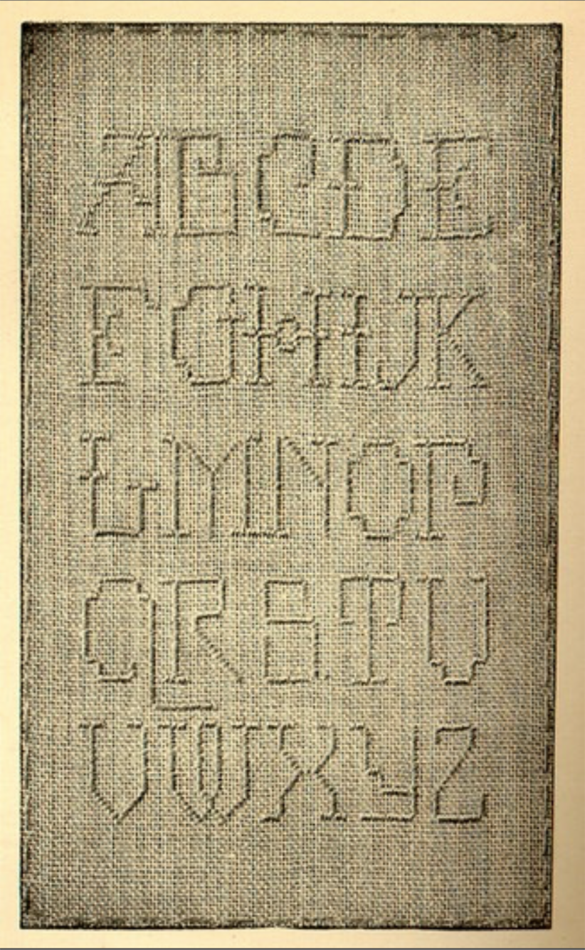
Graphic designer Wim Crouwel embraced the limitations of the cathode ray tube technology [x] when creating the type face “New Alphabet” in 1967. The type face only consisted of horizontal and vertical lines and drew, at it’s time, a lot of attention because of its modernity and radical difference from other type faces.

Seeing Crouwel’s sketches for New Alphabet, drawn on thin-gridded paper, evoked my autistic desire to get really really close to the paper and start filling in those tiny squares with a sharp edged pencil… There is a very comforting feeling in working within the linear walls. There is filled or empty, right and wrong.

In addition to the field of graphic design, grid-based systems are being used in numerous areas, in order to organize and visualize things. Looking closely to my laptop screen, I can see the grid, in which #000000 colored pixels form these letters…

My fixed information resource Google, tells me cartography is a significant area within the grid-world. I fall into tacky new age web sites and read with curious eyes, and a half open mind about alternative planetary grid systems, made throughout history. Critical of the conventional longitudinal/latitudinal geography. One of them is The Becker-Hagens Icosahdron Projection [x] (The name in it self is impressive). It’s a mapping of all the megalithic sites around the world. The results showed to form a pattern of an icosahedron [x]. I also came across an implied connection between UFO phenomenon and magnetic-vortex-gravity anomalies in the Grid(!) Even though this information is highly questionable, it is always good to put the existing order into question.

8.000 slides; Gray Magazine #5


Thursday, September 1, 2011

In 1977, the office of Charles and Ray Eames made a short film
depicting the relative scale of the Universe in factors of ten.
The film begins with an aerial image of a man lying on a blanket; the
view is that of 1m2, then slowly zooming out to a view of 10m2,
revealing a man and woman enjoying a picnic in the park. The zoom-out
continues at a rate of one power of ten every
10 seconds, ending with a field of view of 10m24, or the size of the
observable universe. The camera then zooms back in
at a rate of a power of ten every two seconds to the picnic, and then
slows back down to its original rate into the man’s hand,
to views of negative powers of ten—10m—1, and so forth—until the
camera comes to a proton in a carbon atom at 10m—16.

The analogy of cropping to and fro in the film suggests both an
interpretative view of an archive and an insight into provenance,
panning back to view it as continuously evolving means.

Slides function as a tool for teaching and this magazine presents
itself as a series of translated lectures by eight teachers from
various fields of study within the Gerrit Rietveld Academie. 8000 of
these slides were digitally scanned and structured as originally on
the shelves, then printed collated and dispersed to the teachers as
contact sheets.

On 8th April 2009, the new interpretations were presented and
recorded. After transcribing, the lectures have been edited into a
printed report of the day.

  download Gray Magazine # 5 [this is a 44 MB document] :
For more information on this and other lecture projects based on the same archive, read Gray Magazine #5. Get your own hard copy from the Library

.

What matters is a matter of perception.


Monday, May 16, 2011

When I heard about the powers of ten I thought it was some highly complicated scientific theory that you had to read really carefully and with much mathematical understanding to comprehend.
But in fact the ”Powers of Ten” is a 1968 American documentary short film written and directed by Ray and Charles Eames, re-released in 1977.

The film depicts the relative scale of the Universe in factors of ten.
It illustrates the universe as an arena of both continuity and change, of everyday picnics and cosmic mystery.

It presents the profound idea of orders of magnitude, with the subtitle of the film being:A Film Dealing With the Relative Size of Things in the Universe and the Effect of Adding Another Zero.

I want to show you one of the many remakes that have come up since 1968.

A little bit more cheesy, Americanized than the original with Morgan Freeman’s voice.

It shows the part of space we (humans) can see.
it’s stupendously big!!

Cosmic voyage – the power of ten HQ on YouTube

The theory of powers of ten tries to comprehend our world in numbers.
It fits everything from the atoms in our cells to the outer universe into a simple scheme of multipliing by ten.

By depicting this scheme the film gives a portrait of the various perspectives we can have on our world.

Our brain is capable to perceive the world on so many levels.
We can think a lot further than of what we actually know or have experienced, like the universe for example.


But we can as well think about the ungraspable development of thought .
Our brain can think about itself thinking.

There are many different levels of perceiving the world we live in.
Starting from ourselves I could think of the following levels:

The material level (what we consist of)
The personal level
The closer social level
The cultural (society level)
The global level (political/environmental)
The universal level ( seeing the world as a spot in the universe/ a world of constant change)

What matters to us changes violently depending on in which level we are thinking about things.

(more…)
The Designer as Artist !?


Friday, January 14, 2011

“Designer as Artist is an article written by Louise Schouwenburg [x] for the art magazine “Metropolis M“. After reading this article it became a source for our research project investigating the position and role of designers and their relation to art. After visiting the exhibit Hella Jongerius “Misfit” held in the Boymans van Beuningen museum Rotterdam, we decided to invite the author (also writer of the Misfit catalog) for a discussion. This discussion focused on the new trend in design where more conceptual freedom emphasizes a new role for the designer. Students of The Rietveld Academy Foundation Year’s E_group research and opinionated this subject as you can read in their individual posted contributions on this Designblog

The article mentioned and the choice of this subject is not without reason. Last September 2010 the Sandberg Institute (Rietveld’s own Master program) appointed one of the Dutch leading designers Jurgen Bey as their new director. This internationally acclaimed designer takes an outspoken position in this debate. “We need contemplative visionars. The changing world asks for critical artists and designers who can work together and make themselves subordinate to a greater cause”, say’s Bey

Looking out of the window of our class room we see his office at the Sandberg Institute an opportunity we could not let go. Time to get acquainted. We invited Jurgen Bey to come and visit our program as a mutual exchange and tell us something about himself within the context of our subject “the designer as artist !?”. Before this was arranged we had a great opportunity to meet him in person as part of a program organized by the museum of modern art Temporary Stedelijk Museum Amsterdam. Their program “Talking Film” #5. In this program Jurgen Bey presented a selection of films showing how artists and designers create and capture their own world. Indirectly he used this evening to present his attitude in directing art, design and architecture at the Sandberg Institute.

We tried to re-create the program presenting a mock-up of the films he showed and some of the statements he made:

(more…)
Being Motion


Wednesday, July 14, 2010

Get the Flash Player to see this player.

I find, first of all, that I pass from state to state. I am warm or cold, I am merry or sad, I work or I do nothing, I look at what is around me or I think of something else. Sensations, feelings, volitions, ideas – such are the changes into which my existence is divided and which color it in turns. I change, then, without ceasing. Henry Bergson

Being Motion is a graduation thesis by Charlotte ten Raa, and won the 2010 Rietveld Thesis Award. It consists  out of different texts. They circulate around the subject, the self; as a movement with the possibility to reflect. I wanted to bring the subject motion close to yourself, so close as to our consciousness. How we see the movement of a train passing by as well as how we can see our consciousness as one constant motion. How the self makes up stories from what it sees and how we form an image of yourself, seeing yourself as a subject  and as an object.  How there are different perspectives on time and space, looking from the starting point:  the self.

Our way of being in the world is very much about predicting what’s going to happen, taking tiny fragments and putting them together. William Kentridge

http://charlottetenraa.blogspot.com/

download this thesis: Being Motion

image: Etienne Jules-Marey

The jury was unanimous in its decision: Because it is a thesis that involves the reader in an interplay between form and content in an amazing way. Because it is very well written, keeping a careful balance between the personal and the objective, between anecdotal and philosophical, between thinking and doing. Because it shows that it is possible to deal with a very complex theoretical problem in a very light way.
It might be called a special coincidence that this thesis and its excellent understanding of the philosophy of Henri Bergson has been written in the spirit of our theory teacher Raoul Teulings [†2010] who we all miss very much, and in whose memory this first Prize for Best Thesis is given.


Something Else . . .


Saturday, May 15, 2010

THERE ARE RULES BEHIND COMPLEX AND ORGANIC CIRCUMSTANCES

This is the opening sentence of “Rules” a graduation essay written by Ayumi Higuchi in which she investigates the impact rules have or can have on the process of cause and effect in the creative process. A story that drags you into the exiting process of research where every question or statement leads to two others.
Using interviews as a platform to ask questions and create interaction, she involves Jan Groenewold (physician-chef), Luna Maurer and Jonathan Puckey (graphic designers), Snejanka Mihaylova (philosopher-writer-artist) and Peter van Bergen (musician-composer) to talk about the subject from the perspective of their specific discipline.
Look for yourself how she illustrates this story with many images and quotes dragging you deeper into the matter every page, creating in depth understanding. Munari, Wittgenstein, 9/11, John Cage, mixing politics with art and science with nature to get her point across.

Ayumi visited us in April 2010 to present a workshop in which she planted the seed of understanding using Bruno Munari‘s observations; [...] We can establish a rule of growth: the branch that follows is always slenderer than the one before it (Drawing a Tree).
Providing us with a trunk and applying two simple rules to it: The branch that follows must be slimmer than the one before -and- the tree must be symmetric, it quickly became clear that there are many rules behind complex and organic circumstances.

download this research essay: “RULES”, there are rules behind complex and organic structures

Conditional [Design] Painting


Tuesday, October 27, 2009

Conditional Painting is truly happening in the van Abbemuseum Eindhoven! They call it the Vitruvian Paint Machine.

As part of  “Take on me (Take me on)” /Dutch Design Week 17 to 25 Oct 2009, Luna Maurer and Edo Paulus executed a mural painting on pre determined conditions based on the proportions of the body and visitor interaction.

The act of designing is based on rules they say. So Luna and Edo, together with Roel Wouters and Jonathan Puckey, created a manifesto of explicit rules for design.

Visiting their lecture, as part of the “Take on me (Take me on)” event, they made it clear that setting strict conditions does disconnect you from subjective standards and creates awareness in the process. A beautiful time based movie of their “machines” made this crystal clear.


download this research essay: by Jules Esteves: “Conditional Drawing, Conditional Painting” questioning the practice of Conditional Design.


Slow Textiles: Marie Ilse Bourlanges


Monday, February 16, 2009

Traces of the everyday embedded in textile

Rietveld graduate (2008 TXT) Marie Ilse Bourlanges visited the Slow Design research class on Thursday 12 February to present about her graduation project, ‘Decay,’ a collection of sweaters exploring complex relationships of time, the body and materiality.  By taking the class through her project from concept to final product, Marie Ilse revealed the deep and mindful processes of research, design development, experimentation, and production that enriched her project.  She talked about sources of inspiration: the work of writer/biologist Midas Dekkers, the concept of Time in the work of Belgian fashion designer Martin Margiela,  the symbiotic relationship of crumbling architectural forms and the natural forces that overtake them, patterns of cellular growth and decay, and the hidden treasures of a threadbare teddy belonging to her niece (among others).  She also described the evolution of her pattern, which derived from capturing subtle, everyday body movements and subsequently was subjected to fractal geometry, while also providing instructive detail about her various stages of experimentation with materials and techniques.  Marie Ilse’s project is a beautiful example of Slowness as a process of designing, and also Slowness as a more engaged and reflective experience of a designed artifact.  Her work on this project demonstrates how Slow Design tools and persepectives were supported and enhanced by the atmosphere of the Rietveld, and it hopefully was reminder to the Basic Year students about both the opportunities and intrinsic responsibilities of creative education.

 
download this thesis‘Decay’  by Marie Ilse Bourlanges was

the Winner, of the GRA Thesis Award 2008


Log in