Skip to Content Skip to Search Go to Top Navigation Go to Side Menu


"book design" Category


Hands up here comes the paperback traveller


Wednesday, April 10, 2013


There is at least fifty books on each shelves. Fifty title, and probably as much authors’ name. Maybe less actually if on have more than one book in this section. Go for a stroll among them is quiet random. Your eyes get caught and release instantly. The purpose is not to look for something. The quest without no goal has something relaxing. Maybe the atmosphere of the library is issue from that. A group of lonely loafer in between an ocean of lonely writers. If choosing imply the end of the journey, I might go on a bit longer.

Eyes flying over the cover. Plans among dead trees, I keep traveling. Suddenly I try a different contact, I touch. As the first encounter to this unknown world, my risk is huge. Infinity of lines, cliff to climb up and down. My first handlers is a soft old cover. The time is entering the journey now. Should I old to that?

I must take a precaution. Let’s stay simple and small. The comfort is not something to underestimate in trip. Over the practicality of the diary the relation toward the pocket map is always different.

Bending over, to put it back down. Rock and roll over the wooden shelves. Hold on sailor the storm shall end soon. A riff of page, this might be the end. It cant be that. Not now, the exploration started the dream catcher. The fingers are getting more grip as the training goes on. A ballerina step to the right, and the right hand got catch at the bottom left. Two flip, and a perfect landing on a monograph. But the local topics miss eccentricity. Layers of clouds over paper skin and the way thats getting more fogy. There not wet season forecast, but the time run on my watch. Straight turn to the left and larboard all sailor. Here it is, pocket size and soft paper. You must move rocks to find some precious grass. But the harvest isn’t always a success. But a web start to catch the essential. Title, destination, impossible choices. The hands go down the mine. No pity, scratch, move, rip it off to catch it. The lonely traveler is now isolated.

Unsatisfactory  feeling of beautiful emptiness. No more drift. Camping isn’t aloud on this land. The eyes get back on the track. Catch a pattern, them two. Hundreds of maps in my small hands. The plastic shield doesn’t matter anymore. The balance in the right arm sounds okay. The secret isn’t reveal and the quest over. There is always a next season to picking books. Run, run, booty in the hand and new journey to begin.

Rietveld Library cat.nr: 6247

Supplementary Design Show 2013 /Stedelijk Design Highlights


Monday, April 8, 2013

19 Rietveld Foundation Year students visited the "Stedelijk Collection Highlights /Design". Marveling at the many masterpieces, commenting on the applied or autonomous character of pieces in this highlight presentation, they arrived at the last part of this "depot salon", wondering what contemporary design would have in petto for them and how it would look like. To their regret the presented selection faded out without any opinion on the latest developments in design; social engagement or neo crafts
Researching contemporary design we propose this "2013 Supplementary" as a possible continuation, an imaginary online next exhibition space.

click on images to visit the exhibit


selected designers are: Mark van der Gronden /site • Daan Roosegaarde /site • Tauba Auerbach /site • James Dyson /site • Ferruccio Laviani /site • Mediamatic /site • Leonid Tishkov /site • Jonathan Ive /site • Liliana Ovalle /site • People People /site • Nucleo /site • Faltazi Lab /site • Michelle Weinberg /site


Studio Gonnissen en Widdershoven: Fransje Killaars (1997)


Monday, March 11, 2013

Fransje Killaars is a Dutch artist who graduated from the Rijksakademie in 1984. She started with a lot of paintings, but is now well known for her installations of brightly colored textiles. Both the paintings and textiles share the importance of use of color. She is fascinated by the power of color, the relationship between people and textiles and the way textiles are bound up with daily life. Her artwork is characterized by her use of fields of bright colors placed next to or on top of each other. The colors hardly ever blend together.
The book was put together by Nikki Gonnissen and Thomas Widdershoven. It is composed of pictures and different pieces of bright textile. When Fransje went to India and visited the different textile workplaces the bright colors inspired her and convinced her to work more with textile. Her trip there directly lead to this work, where she filled an attic space with bright hand woven carpets.


I picked this book because I was attracted by the bright colors. The format of the book brings out Fransje Killaars’ style very well. By adding a page of colored fabric in between pictures of her installations it gives the audience a sense of the touch and the brightness of the carpets in the room. The pictures in the book are also pictures of the textiles in more every day environments rather than a lot of the pictures which you see when you Google the artist. I find the pictures in a more natural environment far more interesting than in a gallery space, which I believe brings more justice to her work because she is interested in the way textiles are bound up in daily life.

I personally love the physical use of color for example in everyday objects, clothing or textiles, especially bright, hard colors more than pale or pastels. I am also very attracted to the contrast between the colors, which Fransje Killaars also uses in her work. As you can see the bright shades are placed next to each other, striped or polka dotted. This emphasizes the difference and variety of the colors, rather than blending them together. This in combination with texture is even more appealing to me. Being able to hold the color and attach the sense of touch to it, moving them around and placing them next to new colors I find very exciting and this is exactly what Fransje seems to be doing in her textile works.


THE WAY OF A HANDWRITING


Sunday, October 28, 2012

cover of the book Well Well Well containing his differents works, 2010


Letman. Behind this nickname hides a former student of the Rietveld Academy, Job Wouters.  He represents well a very illustrative part of graphic design and type design. This young artist is currently becoming quite famous, with some impressive institutions as clients like Monoprix, Heineken, Tommy Hilfiger, the New York Times Magazine, Playboy, or more recently a collaboration with dutch artist Dries Van Noten for a fashion show. In addition he has just published a book in collaboration with Gijs Frieling, and received the Dutch Design Award for his series of posters called Undercover.


Wouters first started to practice his drawing passion with friends and his brother, sharing their discoveries together. He still often collaborates with his brother Roel, or his childhood friend Yvo Sprey. He was quite intrigued by graffiti, practicing a lot and was particularly interested in street art lettering. This was his first step into the world of typography. In an interview, he said: when I was a youngster I was especially interested in graffiti-writers, who could write their names flawlessly in different styles. The communicative potential of type style was already of great interest to him. It is ironic to start looking at different styles that could communicate your personality through graffiti and finally do the same for corporate firms or advertisements. Later Job entered the KABK school of the Hague in the typography department and then carried his studies further at the Rietveld Academy in Amsterdam, where he graduated in 2004. His great passion for graffiti and handwriting was already very present during his studies. His graduation work was for example made out of 500 posters displaying each name of his classmates, they were handwritten thanks to a huge panel of graffiti styles. Job is definitely interested in underground handmade style of graphic design always keeping aesthetic problems, finalization and communication effects in mind. It is impressive to see a designer like Job who found his way so early, and then sticking to this fundamental base, staying true and evolving all the way.


(more…)

A Printed Book History X : A Visual History Of The Printed Book


Wednesday, May 30, 2012


The Rietveld Library acquired a copy of the book [x] “The Printed Book : A Visual History”. The book of “The Printed Book” is compiled by Mathieu Lommen, and designed by Cees W. de Jong. It gives an impressive overview of 500 years western bookdesign [x]. Read this article in the New York Times for some background [x]
So for all who missed that exceptionally beautiful and well designed exhibit at the Special Collections of the UvA (University of Amsterdam) can still dream away online at home because students from the Foundation Years D_Group went there for you and selected their favorites, . Scroll down and enjoy…..

poster, catalogue and exhibition design by Experimental Jetset


A Printed Book History 16 : Modern methods of book composition


Wednesday, May 30, 2012

Practice of Typography: Modern Methods of Book Composition

A treatise on type-setting by hand and by machine and on the proper arrangement and imposition of pages.

by Theodoor De Vinne [1904]

The form of the book itself is somewhat flat and stale.
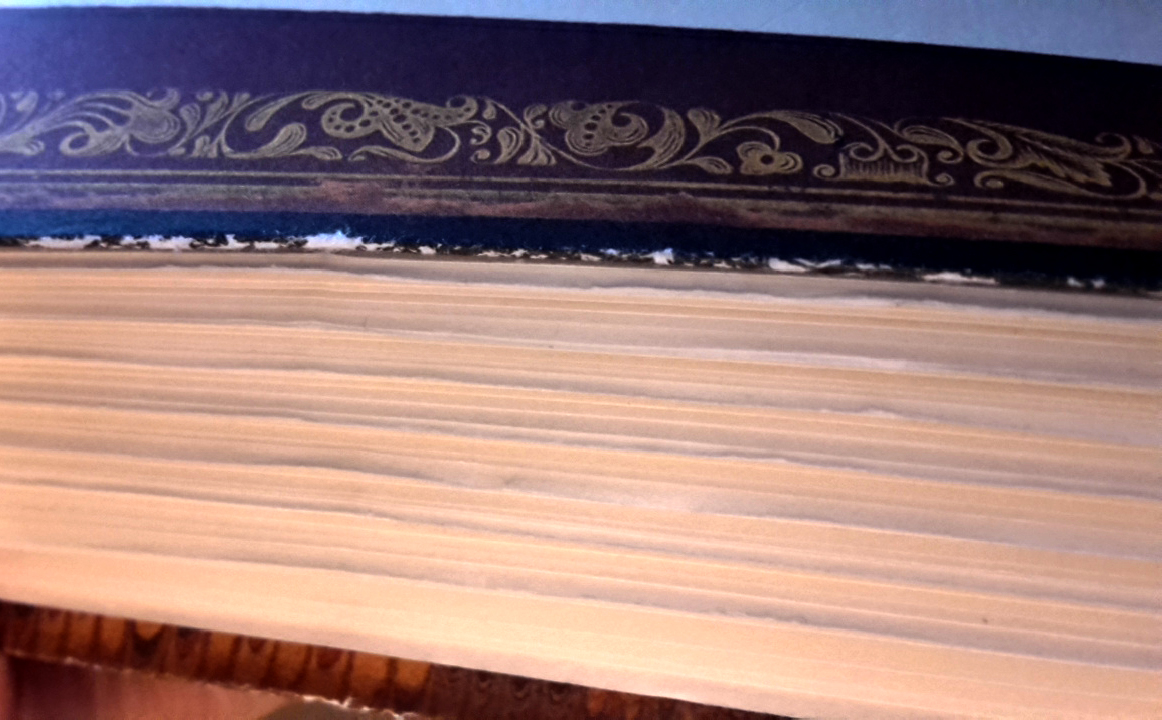
The cover is made with a bleak brown, the color of mud that is unpleasant to see.
One thing on the other hand, is that it is combined with beautiful golden linings and an old fashion design of type letters,
which also is one of the only things inviting of this book cover. A bit ironic, knowing that the book is based on design of type letters and typography which tell us absolutely nothing about the book from the outside.

only tiny detailed letters sown and marked in the book.

What interests me about the book was its content and a brief clarification of
typography and the history behind it. The simplicity and detailed work of type
design, arranging type in order to make language visible. It gives you some
understanding of the detailed design letter types and the needed guidelines on
how to make these various designs in your work.
Examples of equipments to use during this process. for example different kind “stands” (open framework of pinewood to support the cases of type) measurements, thickness of the fonts, and how much gaps should be placed, and so on…
basically it is an ideal book for “how to” to authors, giving specific rules and certain explanation of type design in the early 20th century.
Now off course that is different, type design has progressed in different area’s of art and literature making more creative and appealing for the readers.

For me, it is an important element in the wide field of the arts especially for design and graphic design.
Typography and Type design is is the core process of the work from beginning to the end, and the key element of it all.
Its an easy decision but hard work, from authors deciding on the letter type, writing an email for your mother, or designing a poster for the next party. With Typography and Type design we are our most oblivious, and lacking an active conscious of what really is letter type and where does it come from.

anyway, i just think this is good start on learning of typography,especially if you’re in graphic design, to understand how they managed in the early years from the first equipments to now.

post by Pri Lalcé


A Printed Book History 15 : Universal Communication


Wednesday, May 30, 2012

Als ik terug denk aan Vrijdag 11 mei, 13.20, UVA special collections, alleen en de laatste dag van de expositie “The Printed Book A Visual History” komt het werk van El Lissitzky als eerste op in mijn gedachten. Niet alleen vanwege mijn voorliefde voor het Russische alphabet, maar ook de simpele en moderne typografie en de duidelijkheid van het bericht dat wordt doorgegeven. Ik spreek geen woord Russisch maar toch is het boek zo begrijpelijk en universeel.

De karakters worden in sommige gevallen zo vergroot dat het abstracte vormen of illustraties worden. Evenals in de Thumb-index aan de rechterkant van de paginas worden de letters als symbolen gebruikt.  Een boek geschreven door de Poët Vladimir Mayakovsky met de titel “Dlya golosa” (For the Voice) uit het jaar 1923.
Mayakovski wordt gezien als een dichter die zijn tijd ver vooruit was, hoe El lissitzky daarop heeft gereageerd vind ik erg goed. Beide hadden ze een moderne abstracte visie op hun werk.

Dit werk heeft mij geholpen en geinspireerd om een opdracht voor school (Sculpture) te vervolgen waarin communicatie heel belangrijk was. Het versimpelen van bepaalde factoren was uiteindelijke het belangrijke aandachtspunt.

post by Jessy van Dinther


A Printed Book History 12 : a visual identity


Tuesday, May 22, 2012


the edition Suhrkamp designed by Willy Fleckhaus, 1963

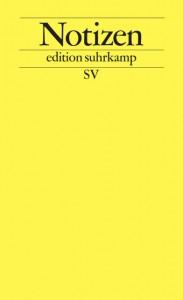
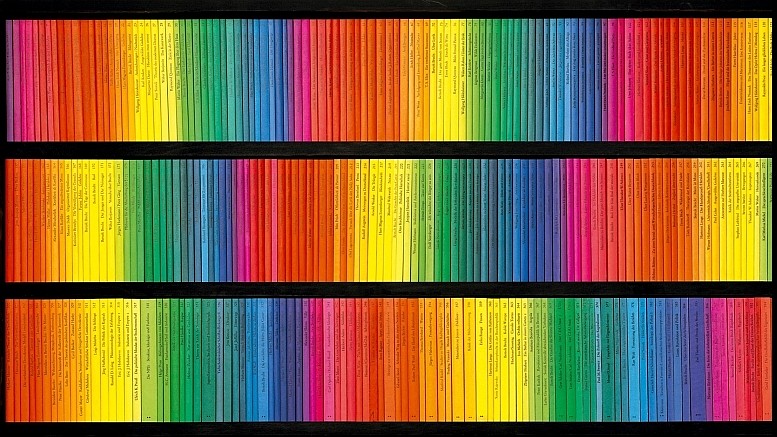
The book I want to write about was actually a series – the edition suhrkamp from Suhrkamp Verlag. Willy Fleckhaus designed it in 1963 and it remained unchanged till 2004. He managed to create a very basic visual identity which consists only of colour and typography.
The covers of the 48 books which are published every year are held each in a different colour of the visual spectrum. No pictures can be found on the covers – in fact it is reduced to the name of author, title and publisher put into a grid of lines in the width of the cover page and at the bottom of it. The books are affordable and therefore popular in literature class in school. For a lot of pupils in Germany a certain title is very strongly connected to a certain colour.


Edition Suhrkamp books were a forum and inspiration for leftist-intellectual discussion in Germany for years, which came apparent as well in reviews written by its protagonists for the edition’s 40 year anniversary. It has published texts from Adorno, Brecht and Barthes. As well as the texts, the daring design stays in the minimalist style of the avant-garde. I see it as a metaphor for the development of the 68-generation that the complete collection can be bought inclusively made-to-fit, white design book shelf for the avant-garde living room. Ideals and individuality are important, but it comes with a surprisingly open attitude towards consumerism and must-haves.
From this text it may seem a rather impersonal approach to my choice of a book from “Printed Matter“, but I am mostly fascinated by the role of edition Suhrkamp as a publisher in society and as one of the most important forums for intellectual discussion in German. Adding to that I like timeless design which became fact here and it is as an example next to for example Otl Aicher‘s pictograms [x] for the 1972 Olympic games. At the same time, because of my impression that all books in “Printed Matter“ stood in a modernist interest of solid, timeless, well-designed books and me being familiar to that 60s rainbow colour design with typo, I chose Willy Fleckhaus‘ series also with a bit of irony.

post by Nicola Arthen


A Printed Book History 10 : Two equals One ?


Monday, May 21, 2012


‘Traité des fougères de l’Amérique’, Charles plumier (1705), Imprimerie Royale, Paris

This book is a collection of ferns found on the American continent. It was printed one year after the death of the author. Through the thin paper we see that every fern has it’s own leaf (Ironically). What I like about the book is that the Ferns seem to have adapted to the form of a book. They seem to have sprouted somewhere outside the confines, out of the eye and “grown” precisely inside the printing ratio and reached a perfect 1/?2 scaled size. I like how the fern leafs function as separate columns on the sheet. And the little leafs on it function as lines, and the dots on these leafs as unreadable letters.

Traité des fougères de l’Amérique is printed on lain paper, a paper that was very often used in the 19th century. This paper has a watermark, thin lines of a thicker paper as nerves over the sheet. The lines are formed by a dandy roll. The lines on the paper suggest that the paper also has nerves, the same as the leaves lying on the paper. Next to that the book has a limp binding, animal skin that is prepared to print and write on functions as the cover of the book. Where the animal skin again has a pattern that can be seen as patterns of plants.


The arte povera artist Guiseppe Penone compared the skin, mostly very enlarged, to the bark of a tree, and his fingerprint to leafs. His drawings, partly printed as this book is, are the best example where all these aspects come together. The printed leaves with their, in Penone’s work, very outstanding nerves on a soft sheet of heavy paper and rough fibered paper. They are directly connected to the mouth as forming one plant.

In this book where leaves are growing in the books shape, but also the other way around the book, looking like a plant too, aspects are mixing up creating a bit of an unlikely but beautiful image.

post by Naomi van Dijck


A Printed Book History 9 : looking at Sagmeister

Monday, May 21, 2012

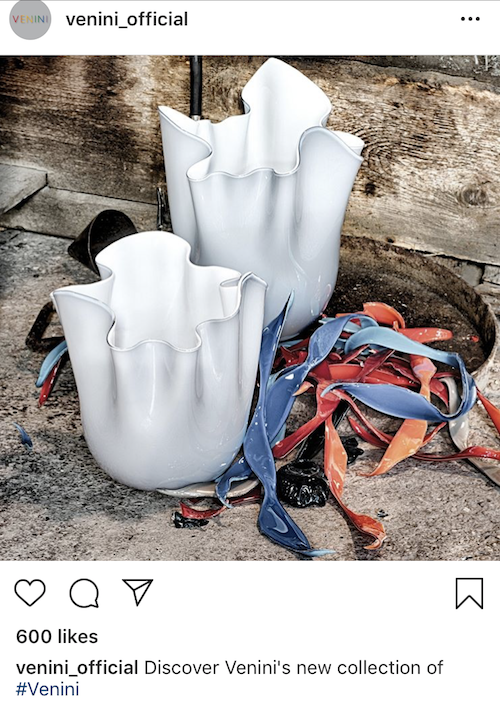
The first time I saw his book was at a gallery, which let’s agree it’s not the most intriguing place for displaying books since we didn’t have the chance to go through the pages, but the positive side of it was that it made me even more curious about the content of the book and helped me to analyze my primary choice I had to choose among an array of books from different ages, designers, concepts and styles.
Why did I chose this one? Sagmeister’s book was one of few books lacking any text on the cover meaning that for it’s representation
it relies only on its visual qualities. But not only that, it lacks any hint of subject on it as well so it triggered me to step closer.
At first look I saw a book with a portrait of an animal referring to a wolf, but the closer I went to the image the more information started “appearing” on it by different layers.That combination of overlaying made me curious even more. When it is in it’s red plastic cover a perfect, friendly and appealing portrait of a German shepherd is displayed on the surface, but once you remove it, the mood of the dog changes by an added green layer and it doesn’t even look like dog anymore. It adopts a dualistic grotesque-creature shape which fascinated me instantly.
I found this interaction between all the elements very intriguing. Further in my investigation I figured out that it’s a book covering 20 years of graphic designs by Sagmeister, INCLUDING THE BAD ONES.

‘Made You Look’ by Sagmeister 2001

Cover and content, the duality of our showing on the surface what people want to see, but giving them the chance to look on the other side as well.

post by Jenela Kostova


A Printed Book History 8 : like early comix books


Monday, May 21, 2012

The Nuremberg Chronicle 1493

Nurenberg Chronicle, from 1493 written in Latin by Hartmann Schedel and illustrated by Michael Wolgemut, is a biblical paraphrase (incunable), world known because of it’s impressive woodcut illustrations, and the impressive quantity of them, making it the most richly illustrated book of the incunable period.

I chose this book mainly because of the woodcuts, and their (religiøse fortællinger-ord?!) value. The illustrations were colored afterwards (mainly with watercolors and tints), by different artists, and I like the lightness of the colors, compared to the heaviness of the text-printing, which is dense and firmly detailed. The coloring makes the illustrations (subjects) more digestible and vivid. Still the illustrations are very strong and loaded with absurd, fairytale-like figures and settings.
The images work with the text in a very active way, and has almost more importance/prevalence then the text itself, that gives the book a more artistic and aesthetic value, than only the literary value. It reminded me of the fist comic books.[x]

The fact that the images are so strong and prominent made me think in the beginning, that the book in it’s time, the 15th century, was somehow not elitist, as was the case in general for books- if one couldn’t read, there was no access to the content. With so many images, the book invites the illiterate to understand the stories and messages. But on the other hand, the book must have been such a luxury, so only some certain groups of society had access to it. Though the Chronicle was also published shortly after the Latin version, in a German one, what might have spread the notion of it in the countries closer connected to the German language. I would have liked to have an impression of how approachable the text might have been, compared to the immediateness of the images.
So, I made my choice by instinctively being attracted to this (both imagery and textual) classical, mastodon piece of historic religious literature.

post by Francesca Burattelli


A Printed Book History 7 : Außen – Innen : was ist drinnen?


Sunday, May 20, 2012

When it comes to the background of my choice, I pick something that is organized, especially when I pass the day which is quite unfocussed. What I mean ‘Organized’ in this context is, something simple, straight, and propagating a messages well whatever it is. On the way to the exhibition place, many different things on the street were distracting me a lot. Also the fact that i need to see many things at the place, made me think about only rest. Fortunately, a scale of the exhibition was not that large, besides the thing that i wanted to see was very clear. Although there were tons of texts that had enough power to give me a positive impression, I was looking for a book which had a story or visual language as simple as it can be.

In the last part of the exhibit place, I found the image that i was looking for.
It was a book with a simple Isotype image with few colors but very skilled way of drawing. The image was telling a story very well. The only pity was, that the full text was written in German, which I can not understand. However, the Isotype-styled image was intriguing enough for me to look at. Even though it was based on a spontaneous choice, I liked it quite a lot. Because of a connection between the motive of my choice and the memory from my childhood, imagining the time, I was drawing a number of sketches for my dream house and played a game about building a house and making a story out of people living in that house. I enjoyed telling a story with a basic image, which gives a hint to what kind of upcoming story will be expected. The memory of mine and the image from the book in front of me were connected very well. That is why I felt interested and considered this book to be my favorite among other books. Maybe the Isotype drawing was simply nice. It was a simple thing but made me feel happy on that occasion.
The book I found was:’Außen – Inne’ : was ist drinnen? ( what’s inside? ) by Marie Neurath Vienna 1956.

Marie Neurath (1898-1986 and husband Otto worked according the “Vienna Method”. which was later renamed Isotype: International System of typographic Picture Education.

post by Boyon Kang

A Printed Book History 6 : Een regenboog aan epistemologische verlangens


Friday, May 18, 2012


the edition Suhrkamp designed by Willy Fleckhaus, 1963

In de collectie viel me op hoe vroeg sommige visuele elementen en experimenten al voorkwamen, hoe secuur en grafisch de encyclopedische tekeningen uit de periode voor het gebruik van fotografie waren, hoe imposant tastbaar en onhandelbaar de grote boeken met hun uitpuilende handgelegde papieren waren. Maar ik heb iets heel simpels gekozen om de overgebleven 300+ woorden aan op te maken:


Een serie boeken die bestaat uit uitgaven in verschillende kleuren waardoor de boeken samen een regenboog vormen. De boeken spraken me ook inhoudelijk aan, bij elkaar vormen ze een collectie waar je behoorlijk cultuur kritisch en radicaal dan wel wijs van zou worden (de collectie bevat een aantal niet canonische filosofen en figuren en leek me daarom des te interessanter). De serie is een selectie die door zijn vormgeving compleet probeert te zijn maar duidelijk niet conventioneel is. Voor mij is deze regenboogcollectie een simpele maar daarom niet minder mooie manier om te appelleren aan het verlangen om een serie boeken te hebben gelezen en ze herkenbaar en toch gedifferentieerd in de kast te hebben staan. Bovendien vormen ze een geheel, zijn ze bij elkaar een ‘compleetheid’, een overzicht. Ze lossen het epistemologische verlangen in van ieder die een boek koopt en daarmee hoopt alles of tenminste alles van iets te weten te zijn gekomen.

Los van elkaar zouden de kaften zomaar een kleur zijn, of zou het je juist op kunnen vallen dat de kleur bijzonder is, een tussenin-kleur, de ene kleur noch de andere. Ook zullen een aantal boeken uit de collectie steeds een ander kleurenpalet vormen. Dat palet ontstaat ondermeer door de voorkeur van iemand voor bepaalde boeken uit de serie. Het heeft ook iets kinderachtigs of oppervlakkigs om boeken op kleur in te delen, op ‘vorm’, niet op ‘inhoud’. Ik denk dat gezien de inhoudelijke zwaarte van de boeken juist de nuance van de verzameling als complete verzameling ?het hele scala wat je ermee te zien en te lezen krijgt? wordt benadrukt.

Wat de tentoonstelling me ondermeer duidelijk maakte is dat er bepaalde dingen bestaan die aantrekkelijk zijn en blijven, en dat het misschien die dingen zijn die grafisch kunnen worden genoemd als je er mee breekt of speelt. Sommige grafische clichés kregen in de tentoonstelling voor mij als het ware hun oprechte bron of context terug. De regenboogcollectie had een dergelijk cliché kunnen worden, maar misschien is het daar te aantrekkelijk en te uniek voor gebleven. Na wat onderzoek op internet kwam ik erachter dat op een paar andere regenboogboekuitgaven en een op kleur geordende boekenwinkel in New York na, vooral juist andere dingen op kleur gesorteerd worden. Vele collecties bestaan uit objecten uitgegeven in alle kleuren (vooral objecten waar je er meer van nodig hebt of kan hebben, zoals glazen, pennen, sokken, groente en fruit etc.) Rangschikking op kleur wordt veel gebruikt om wellicht functionele redenen. Maar ik vind het idee of vermoeden dat een regenboog collectie ook als een poging kan worden beschouwd om compleet te zijn interessanter. Dat idee laat zich ook illustreren door het werk Wonderkamer (2004) van Arnaud van den Heuvel. Vooral de ondertitel maakt de poging om een alomvattend overzicht te geven expliciet.


“An installation with all the images of the World in a room, sorted by color”.

concept
Visitors of the Wonderkamer (Miracle Room) enter an image-flow: a collection of thousands of images taken from their original context on the internet and arranged in a coloring scale from black to white.”

post by Victorine van Alphen


A Printed Book History 4 : Judge A Book By Its Cover


Friday, May 18, 2012

“Those lips, those eyes” by Edward Z. Epstein & Lou Valentino.

Designed by Paula Scher, New York, 1992


They say “never judge a book by its cover”, but I do.

I judge books by their cover all the time, but not only books, I judge everything buy its cover (at list at the first impression).

This book is full with beautiful black and white photographs of the stars of Hollywood’s Golden Age, people who were screen legends who burned up the screen and captured the very embodiment of sensuality with a special emphasis on their eyes and lips. I’ve chosen this book because it is full with covers to judge, both literally and metaphorically.  Each photo to me looks like the cover of some book\magazine or like a poster\advertisement, and each iconic figure is also a “cover to judge”. That makes the book twice as interesting to me. I can look at each page or each photo and think about it, do I like the photo? Is it well made? What does it tell me? And so on. But I can also look at each character and have my thoughts about them, about their looks, do I recognize them? What do I know about them and what does the picture tell me about them? This book with it pictures still gives those feelings even after so many years, these photos are still so sensual and glamorous which makes them relevant even today.

Besides, when something is concerning the mysterious and tempting life of old Hollywood, that is reason enough for me to choose it.

post by Tamara Aharoni


A Printed Book History 3 : Complutensian Polyglot


Monday, May 14, 2012

The Complutensian Polyglot Bible, 1514

With my clothes still wet and after being forced to leave all my stuff in the lockers, I was finally ready to be impressed by one of the books in the vitrines. We were the only visitors at the whole “UvA Special Collections”, and after the difficult and rainy bicycle ride we were no more than 10, a small group from different nationalities which in a way resembled the layout of the Complutensian Polyglot Bible.

Printed in Alcalá de Henares, Spain in 1514, it was the first bible made in more than one language, Hebrew, Latin and Greek. Translation is always a problematic thing to do, specially in such as “precise” text as the Bible but not only in terms of meaning, using the same book for more than one text seems like a pretty risky design work. The first example of such a hard labour would probably  be the Rosseta stone [x], that became the most useful tool to understand the hieroglyphs from old Egypt. Made in 196 b.C and as well in three scrips, Egyptian, Demotic, and Ancient Greek, but with a pretty classical way of arranging the different languages, in three different paragraphs.

The main characteristic that makes the Polyglot Bible specially appealing is precisely the way that the text is arranged in the page, in parallel columns of different sizes that also combine different ways of reading (as it happens with the Hebrew and the other two languages). That idea seems really modern, and the look of the page looks quite similar to the once of a modern newspaper. If I think in contemporary polyglot texts the first examples that come to my mind are the magazines from the airplanes or the mails from the school, and in both cases one language follows the other, so the same meaning never shares the same space with all the troubles that come with that. After a small mental struggle trying to remember a similar graphic structure I realize that now we can find it in something that we all use, Google Translate.

post by Juan de Porras Isla

A Printed Book History 1 : De letter… n


Wednesday, May 9, 2012

“De letter… n” by Remco Campert and Wim Crouwel, 1966

At “The printed book : a visual history”, I was most interested in the book “De letter… n” by Remco Campert and Wim Crouwel. What attracted me most was its’ hard, yet clean graphic style. The book was opened on a page that read ‘raket bom mes oorlog’, ‘rocket bomb knife war’, in thick black letters of various sizes on an orange and white background. ‘Raket bom mes oorlog’: every word gets its’ own separate line. The opposite page displays an orange ball that may remind us of the sun or, in this context, may just as well be a nuclear explosion.

As the books in the exhibition are set up in glass cases, I wasn’t able to flip through the book so, maybe because of the content of this particular page, the graphics in “Het gejuich was massaal”, a book about dutch punk the the late 70s, immediately came to mind.

Looking at the page again, something else comes to mind.

Paul van Ostaijen was a Belgian poet who started experimenting with typography in his poems in order to translate, among other things, rhythm and sound to the reader. He started in the 1910s with quite safe try-outs, mostly experimenting with different letter-spacing and word-spacing. In the 1920s, he went all out and experimented in a big way with font types and sizes. His best known example is “Boem paukeslag” from his 1921 book “Bezette stad” (“Occupied city”). In this poem, single words – keywords really – are connected and form some sort of narrative through the use of typography. In a similar way, raket bom mes oorlog are keywords but form an understandable whole due to the rhythm and context that is created through the graphics and typography.
post by Lieven Lahaye

Hans-Peter Feldmann’s Artist Books


Wednesday, May 9, 2012

Hans-Peter Feldmann (born 1941, Düsseldorf) is renowned for a distinctive use of photography and ready made objects in his work. At the end of the sixties Feldmann started to collect series of images from widespread visual culture as well as his own photographs. These series are displayed differently in printed matter as well as exhibitions.
From 1968 onwards Feldmann produced artist’s books, comprising a substantial part of his oeuvre and of major influence on the development of artist’s books as an independent medium.  In the first period Feldmann made Bilder Hefte, a series of tiny books at times containing only one image. Some books demonstrate a photo series of a single theme, like Die Toten, press photos of victims of political terrorism in Germany, and Alle Kleider einer Frau, a sequence of individually photographed objects. Other examples encompass disparate imagery without any enforced interpretation.
In 1995 Feldmann founded the magazine Ohio together with fellow photographers. This exhibition includes six issues of Ohio magazine that were made by Feldmann himself. Ohio magazine and Feldmann’s artist’s books greatly inspired younger generations of artists.

The exhibition is curated by Frank Mandersloot from his own collection supplemented with a loan from the private collection of the c/o Konrad Fischer Galerie, Düsseldorf, and organized in close collaboration with the librarians. Feldmann’s work is displayed on exhibition tables specially designed by Mandersloot for this occasion. From the 12th May – 2nd June 2012 the exhibition ANOTHER EXHIBITION: artist’s books by Hans-Peter Feldmann takes place in the library of the Gerrit Rietveld Academie, Amsterdam, with about hundred books on display made by Feldmann between 1968 and 2012.

Chain of Connections


Monday, April 9, 2012


Sometimes it happens when you think that you do not have any relation with something, suddenly you find a chain of connections with yourself.


Richard Niessen - graphic designer working and living in Amsterdam, the Netherlands. Since 2006  he works together with his wife Esther de Vries. The main focus was – search for a relations between Richard Niessen and Gerrit Rietveld Academie. Richard Niessen graduated from the Gerrit Rietveld Academy in 1996. Esther de Vries graduated from this Academy as well in 1998. I selected some fragments from interviews where they mention the Rietveld Academie:

“The class in which I graduated, in 1996, we all started on our own. I think there was a need for a new generation. We were the first generation of creatives that were used to using computers. I think there was also an economic boom; a lot of clients wanted to work with young designers. Linda van Deursen had been teaching us and she was very influential. Ajax won the Champions League in 95 so she called us her Champions League.” 

“It’s one of the best schools,” says Niessen, “because it takes students seriously. Also, great designers teach there. A lot of art schools in Holland are more like schools, but the Rietveld is different…”

“It’s also because there are lots of interesting students,” adds Esther de Vries. “Everybody wants to go there, so they get a great selection of people to choose from. It generates a lot of talent.” 

“Students at the Rietveld are taught that they shouldn’t ever expect to earn any money,” laughs Niessen. “Most people prefer to stay poor and do exciting work. Sometimes we’re asked to work with commercial clients but it never works out because they see a piece of work and say ‘we want that’.” 

“Rietveld is a quite particular school. Rather than being taught in a certain style, you are trained to have an attitude. Students aren’t given straightforward assignments like ‘make a letterhead’ or ‘design a business card’. You are encouraged to be autonomous, to adopt a more art-like approach, to work more conceptually. Of course at the time I wanted to make letterheads, but after I left I was thankful for the training. It’s attitude that prepares you for anything, and you have plenty of time to find your own style after you graduate. Now I always start by thinking about what is the most interesting aspect of an assignment for me.”

(more…)

The man and the sea


Thursday, September 16, 2010

Sea. Water. Home. Words you said minute ago is gone. It disappeared in an endless space. Somewhere in between 0°55‘.654N 40°25‘.522W and 15°00‘.411N 28°51‘.315W, or maybe somewhere else. It just a spot in a middle of the ocean. You reached that point and went away.


Eleonoras first Atlantic crossing. A kind of logbook“.Two books, different size but the same landscape on a cover. The sea and a small line of the sky, blue color mixed with a calmness and secrets. The coordinates on a book cover looks like a silhouette of a ship on a horizon line, just passing through. Pointing the space. There is something very mysterious about this book. Finger print on a side of the book, its like a signature of a man who went all the way from Gibraltar to Rio de Janeiro, but also it reminds me the look in to the sea from above. Also it shows that this book is personal, and important for a man. It could be a logbook, but somehow it looks like a diary of a man and the sea. What makes this book really interesting, is the difference between two books. At first you may think that small one is the same as big one, just the different size. But the small book has all photos made on the trip, big one only the sea scapes. I imagine how it really looks, for now I cant see that. Just a space where you can catch an image and let it go, into the endless space.

Micro-organisms living in these typographies


Thursday, September 9, 2010

Hurry Up. Pick a magnifying glass before you miss it. Before you flip your page and the dust on the left corner falls off. Deeper in that letter. Deeper in the ink there is a whole other story to be told. A story that might or might not explain why these tiny books aren’t bond for the human eyes. It’s something to make you question. Raises up curiosity. Something to make you intrigued to dig deeper for results. You start to question why she wants you to believe that from these tiny dots a new creative perspective can be born. You can almost see yourself behind a microscope. Ready to believe that there is a tiny living organism in the “E” that spells Essence. The essence of what you have been missing with your eyes. It makes you want to wish that Alice’s potion existed.

It makes you want to be your fingertips. It makes you want to slip right through the glass box.  A glass box filled with tiny dots and endless possibilities. Just laying there. Ignorant of your presence. Not for you consumption. While you still look through the lens of the microscope. You can almost imagine that there’s these tiny species living together. Compromising with the closeness of each other. Zooming in, you can see why she wants you to make an effort and research. By discovering this you’ll look back and give credit to what you can’t read with your naked eyes.

Look for the unusual (1)


Wednesday, September 8, 2010

The SHV Thinkbook was the book that catched my eye, because of the passionate story Henk told us and also because of the vitrine that showed some try out versions of the book, experimented with paper, way of binding, the cover size. It made me look up to the wall and back to the vitrine all the time, to try to find out the story of the book and to try to see the problems she met and the way she solved them.
I think it was important to me get get to know the book in some way before liking it. I see books as object were you don’t only look at, you want to feel the weight, you want to feel the structure of the paper went you turn the page, you want to have a close up to see how the ink is printed on the paper, you want to smell the book you might even want to make a little loving fold in the corner of a page you want to remember.

The only think that i had in the back of my head all the time when i looked at the SHV Thinkbook, was this sentence that i read or heard which was the instruction Irma Boom got for making this book and that was; ‘Look for the unusual’
Maybe in settled book, and publishers land this is a very unusual book, but in my perspective books can be way more unusual.

Some thoughts about books being an object that store information, in a handy, clear, protected and unusual way…

unusual books

unusual books 2

Pandora: de draagster van alle gaven


Wednesday, September 8, 2010

Er is toch niets spannender dan een mysterieuze box met een onbekende inhoud?

Precies dat is wat me zo aantrok tot “Dubai Renaissance” door Irma Boom.

De inhoud volstrekt onduidelijk, maakt het verlangen om de box te openen en het boek eruit te halen alleen maar groter.

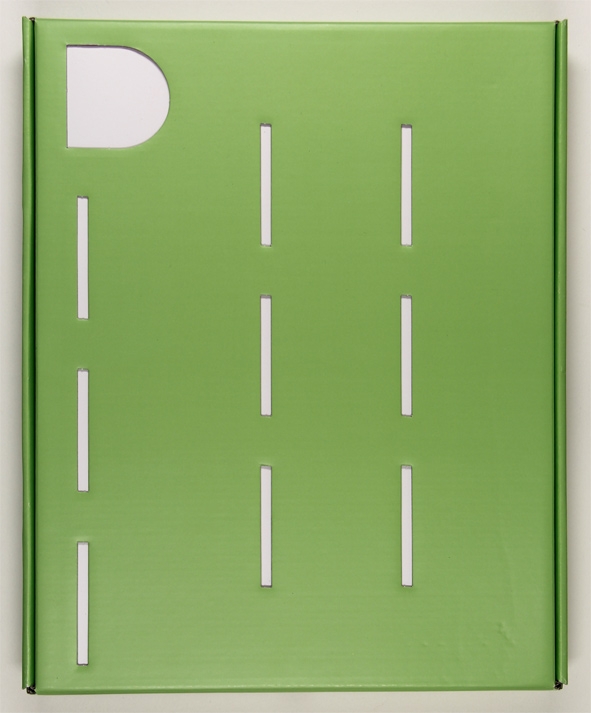
De box, die zilver van kleur is, vraagt maar om aandacht. Met de gaten laat de box al kleine delen van het boek zien, maar niet genoeg om enige vorm te herkennen. De gaten, die op een afstand een bol vormen, vragen er om dat je met je neus tegen het boek wilt om te zien wat er in zit.

Precies zo stelde ik me als kind magische boxen voor. De doos van Pandorra. Een box waar alles mogelijke in zou kunnen zitten.

“Dubai Renaissance, 2005

Box (and booklet) for an OMA building in Dubai.

A presentation of building in mini size.

The box is in the same proportion as the building.“

De box fascineert me nu nog meer.

De doos verbergt de inhoud maar vertelt tegelijk zó veel zonder dat de kijker het weet. Het is immers een representatie van het gebouw.

De doos van Pandorra. Mocht die bestaan, dan zeker in deze vorm. Mysterieus en alles zeggend tegelijk.

Every Thing Design


Wednesday, September 8, 2010

When I was looking for some really nice book to look deeply, this thin white line peeler design caught my sight. Also this small black book was in between two big books-It was grey cover with big white letters and two book that can see back and front side-white cover with big black letters and front side, there is blue colour picture). That is why I can see it right away at that moment.

This really thick and nicely painted black colour book is attractive for me who really like simple design with only black and white colour. And drawing of peeler with thin white line on the black colour cover was so amazing, because that peeler seems making me peel-off the page by page and discover new pages afterwards. I have to peel-off one design if I want to see next design. Like I am looking for something through page by page. Even I feel the first page is the oldest one and last one is the latest one.

Also at the side of the book, not the book cover, there is big and thick white letter which interested, too. It can be simple white letters on the black background, but it looks not that simple if I see little bit closer. Because of the paper inside, black background is not same black as book cover. Also when I look at it little bit more closer and closer, I can see there is other colours, not just white and black. It was very funny that I discovered something I don’t really want to discover from that black and white book.

HOT SHOT


Wednesday, September 8, 2010

One of the first things that strikes Me is the enormous amount of love and energy Irma Boom manage to include within her books. The endless dummy samples to find the right presentation format, the anti-commercial printing and binding methods and the endless corrections are all part of it. It almost feels like the books of Irma Boom are from another planet.

For that reason I found it hard to pick out one particular book, so I asked myself the question; what is for Me the most important part of a good book, the reason to just grab the book and get lost in it. For Me a book is really about a good cover at the first place, one that strikes my attention by being unusual or reminds my of something else I’m interested in, so after I realised what is important I picked the CAR GIRLS book by Jacqueline Hassink

Car Girls

That particular book immediately reminded me of the LP “Grand Prix” by the Belgian band Vive La Fête.The cover (and also the cover of the LP) gives me a kind of exciting feeling, the idea that it’s really cool to drive really fast ( I don’t even have a car) and to have a sexy “Car Girl” like girlfriend behind the steering-wheel.

Passion , Inhumanity + Transformation


Wednesday, September 8, 2010

I was so touched by one book named “ SHOT ‘’, published on 2009 ( I didn’t find the name of the writer ) and it is about hurting pages transforming from green to red and hunting. Men aiming their guns towards the flying birds.. carrying chickens  ..these are the pictures that symbolizes the passion of human. And the transformation of green to red  symbolizes life and death. The voice in writer’s work is speech that passes through us, that comes from another times and place and whose destination is unclear even while its tone is often insistent, perhaps violent
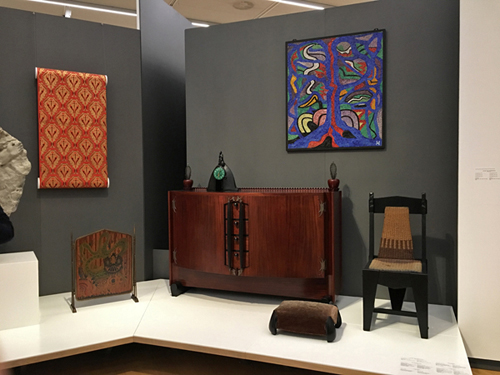
I think the book is very seriously written against the animal killing. I questioned, why don’t they just shoot the clay instead of the real animals? Is it a social or biological passion? I really found that human beings are continuously being away from the line of humanity. What a nightmare !

The cover is red in color ( symbolizes the blood ) with ten holes with some big writing on it and I felt the holes are the eyes of the animals and looks very sad and are pleading human for help. If you look the holes continuously, you can feel the environment of fear, grief amd tears. The book looks like a closed box. Its opening is not like the normal book as we have to open the lock first. And the right side of the book ( from where you starts turning ), is locked by one iron like metal tool in the shape of an arrow. I think this has very special meaning as arrow always kills. The semi round side symbolizes the expansion of the life and the point part, end.

It was a great moment to be the part of an  book exhibition of known artist Irma Boon in Amsterdam.

Little red


Wednesday, September 8, 2010

Adults are used to collecting big toys like cars or antique furniture.
Kids are used to collecting small toys like puppets, useless crystal balls or colorful stickers.
When I was a kid I also collected small postcards and teddy bears.
They lived in an old candy box that I got from my grandma.
Now there is something lying in may hands that reminds me of those dearest small things that are so valuable for every adult.

These fragile memories from the past childhood help grown ups to keep a child in their souls.
Otherwise if a pure and cold rational view of the world dominates it’s going to kill that sparkle.
I think that Irma Boom with her tiny books reminds adults of the small child that still lives in their souls.
Even when it’s buried somewhere deep inside.
Just holding this tiny book in someones hands inevitably brings a childlike smile to their face.
I find these moments very important in someones life.
Even if that book is about Ferrari engines or the latest research in nanotechnology.

My best friend lives in Russia. She is an artist and a photographer.
She sends me these “children’s” gifts that she has made herself.

Take care of your childhood.

///design and the elastic mind!///


Tuesday, September 7, 2010

///moma 2008///design and the elastic mind!

A highly unpredictable book. The design is complex – not easy to categorize while a lot of the other books made by the same hand where based on the idea of creating something that *looks so simple but is still such a cool idea* or at least somehow fit into the composition of the exhibition.

————————————————————————————————————————————————
So this one (and also one or two other objects I found really cool>>thinkbook!) seemed to have something outstanding to it. The complex structure of lines indicating some kind of DNA-String or 3D-Animation and forming the letters in the title and then suddenly the space in between in the subtitle – nothing you would do in the first place since it makes the titel harder to read — I find that really interesting.

————————————————————————————————————————————————————————————-

Maybe this is too much interpretation, but it seems though the designer had consciously created a problem by using one media (ex.: in the graphic on the cover: there is a lot of white space to the the top and bottom parts whereas the sides are packed with black lines) and used another media to balance this problem (the texture of the pages on the top and bottom uses the same pattern as te graphic and gives the white space a reason to exist) –

———————————————————————————————————————————————————————————–

ps: Also have a look at the see-through print on the cover that you can only feel or see if you look at it against the light, it creates a really cool contrast to the the design on the cover which is supposed to look 3D but in the end is only ink on a flat peace of paper!

everything is design, design is for everybody!


Tuesday, September 7, 2010

Every Thing Design is a book by Hatje Cantz which presents a large number (more than 700) of design works from the collection of Zurich Gestaltung Museum. It mainly shows prints and posters, but includes also a wide range of other objects from many famous designers. The book is, among books designed by Irma Boom (and some of her own library), on display at the Bijzondere Collecties Gallery, in Amsterdam.

everything design!

First of all the cover: it’s all black, with a white cheap potato peeler; visually it makes concrete what the title say: everything is design! Design is for everybody! The layout of the book presents the objects making interesting comparisons and associating them in couples which have a sort of connection. What’s interesting, in this couples, is that they do respond to a logic that can be less obvious than expected, as a time, place or artist order, but very explicit. Mainly, they are similar objects and visuals from very different periods and uses but with the same strength, the same conceptual value, the same way to visualize the zeitgeist of the period. So the cover of issue one of the magazine “Neue Grafik” (1958) showing the text perfectly insert into a square grid, is associated to a typeface from the early 20s’, the “new graphic” of the time. Two more recent comparison: the first shows the (famous) poster from Obey’s art for the electoral campaign of Obama in 2008 and the (as much) well known poster of Bob Dylan drawn during the 60′s by Milton Glaser, while the second present the famous Levi’s commercial with the Michelangelo’s David dressed up with Levi’s jeans short, with a more recent HnM’s poster of a beautiful and sensual girl wearing a tiny bikini. In the first couple is explicit the high moral value of the person represented, with the “Che Guevara alike” glance of Obama in the “hand-crafted”, old school appearance of the poster, and the streamy colorful hair of an outlined-comic looking Bob Dylan which transforms the pacifist songwriter into an icon. In the second there also is an iconic value which is a bit “debunk”, and while 30 years ago this value was embodied by a masterpiece of art, nowadays it is just the body of the women to be sold.

What i liked the most is the comparison that offers, which i think it’s a fundamental way of thinking in art and design, and the general look that encourages, contributing to shape better the word “design”, depicting the spirit of the time and taking it away from the idea of a competition between world known designers to create the most posh version of a lemon squeezer, and giving it the role of a discipline which applies to many levels and fields, a way to better resolve mankind problems. Design must be everything for everybody!

Thinking over the Thinkbook


Tuesday, September 7, 2010

When going inside the exhibition of Irma Boom I decided to look for the one book that made me want to grab it, huddle in a big fluffy chair and disappear behind it.

The SHV Thinkbook attracted me because it is plain black on the outside, like in the past many books were. Some of these ancient books also being on display (part of the private collection), I can see where she might have got her inspiration from.

Books to me are objects I love being around. They often bring back sentimental memories of a snug warm house and evenings spent divulging my favourite books again and again. And so does this book designed by Irma Boom.

I always thought there is something fascinating about books that are plain on the outside. They hardly reveal any of its mysteries at first glance and thus makes me curious about its contents. When you open it a whole world opens up before you. I wasn’t disappointed now. When you open the SHV Thinkbook you find colourful page after beautiful colourful cotton page, 2.136 pages of them! Within the letters of the title are hidden. Also, on the edge of the pages you can read a poem by Gerrit Achterberg.

Irma Boom wanted the book to be a voyage. For me the voyage already starts with goggling at its cover. Alas, that is as far as I am going to get, since it wasn’t allowed to touch any of the books.

All I can say is: it is a mighty shame I wasn’t allowed to take it home with me and discover its many secrets.

the information man


Tuesday, July 20, 2010

Project based on a story told by American artist Ed Ruscha in an interview in NY Times 1972. Experiments inspired by this story were conducted and filmed. Project by Christopher West and Alban Schelbert [click image for movie]

Quoting graphic designer Julia Born from ‘Capsule over Kunst boeken’…

The information Man is an interesting story of artist Ed Ruscha, who tries to imagine what happens or has happend with his books. It deals with the live of a book. How it is used (or not), the book as an object etc…… This is what I always find interesting. The book as mass product, which starts to lead an individual life due to its distribution, changing its appearance too. I used this story for an assignment once and later it became the theme of the book ‘Beauty and the Book‘ resulting in a visual essay in coöperation with photographer Johannes Schwartz


Log in