Skip to Content Skip to Search Go to Top Navigation Go to Side Menu


"social behaviour" Category

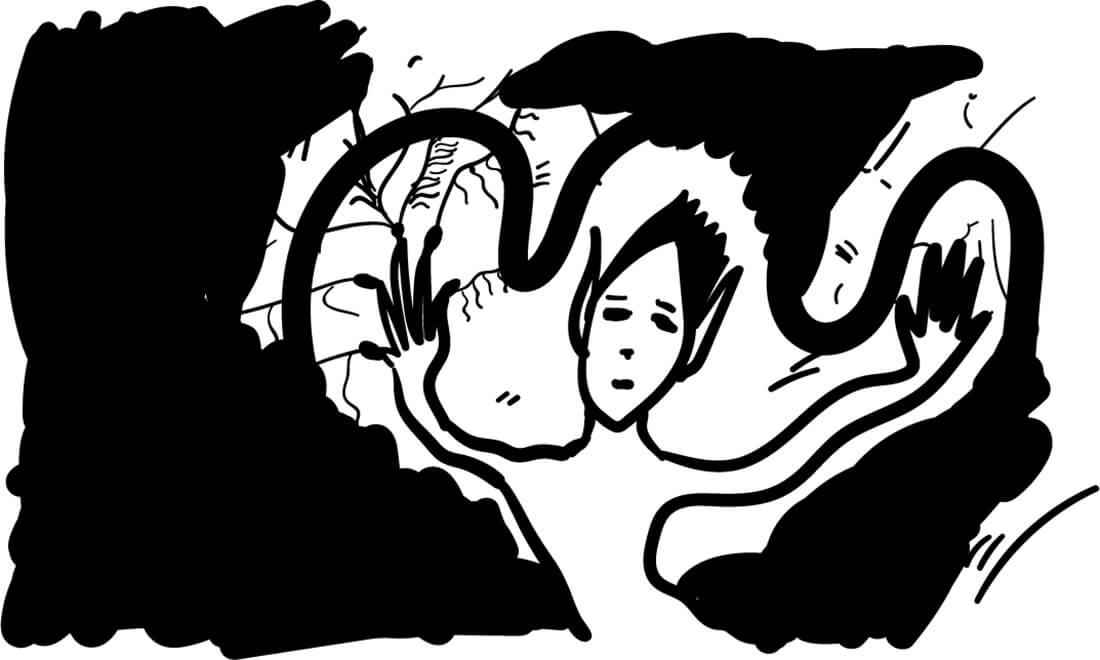
a small conversation between a Man and a Woman, starting from the workshop “Rules” by Ayumi Higuchi; rules in nature vs. rules in human beings


Saturday, June 5, 2010


To get to this conversation, I asked people around me to question something about the other gender, something the person questions the most (and if they didn’t know, just sOmething)

My grandmother and her weave


Friday, May 28, 2010

I want to tell you about my grandmother and needlework.

My grandmother had a big house and in one of the rooms she had a weave. On the weave she made tablecloths and carpets out of old sheets and fabrics. She ripped the fabric in to long thin strings and weaved them in to carpets. Some of the carpets she made where for her own house, some for the summerhouse and others to give away to family and friends.

My grandmother had an education as a nurse but after she married my grandfather she became a housewife. No busy work life for her but instead she had time to do different kinds of needlework an of course be a wife and mother. After her children moved out of the house she also developed new interest such as hunting to spend more time with my grandfather who was a keen hunter. But enough about her life story so far because this text is about the needlework she made and her as an example for a generation of woman and design.

The carpets she made are called kludetæpper in Danish, which directly translated means rag carpets in English. A better word for it in English would properly be patchwork carpets. The technique is that you ripe a bunch of old fabrics such as sheets or bed linen into long thin shreds about one centimetre wide. You then weave the shreds together again into rectangular carpets. The results is colour full thick carpets. When weaving you can also make patterns or motifs in the carpets by selecting the specific colours and then applying them in a pattern. The more traditional look of the carpets is a wide blend of colours without a specific pattern or motif.

A patchwork carpet my grandmother made

(more…)

Ants at Mars


Thursday, May 27, 2010

Ant robotics

During our first talk of a guest teacher, in the last design-period, I got interested in the way one could reach something really complicated by following some simple rules. We made tree-kind of forms according to a few rules, and however these rules where really simple we created quite complicated structures. I was questioning myself if this way of reaching complicated goals was also being used by non-artists, scientists, researchers, architects and maybe in nature as well. This is how I started my investigation and got to a website of a scientist named Chris Melhuish. He has got a lab at the university of Oxford, where he’s investigating ants ad robot’s together with ant-researcher Ana Sendova-Franks.


From a distance an anthill seems to be a lot of chaos. All the ants are just running around without a clear common goal and without noticing each other. If one would look more closely, his opinion won’t change that much. One ant is carrying some food or a larva to a nice looking place and another ant will just as easy bring it back to the beginning point. They just care about finishing there own tasks, and don’t care about what the other ants are doing.
An Ant has no sense of a higher purpose, and doesn’t know for what reason he is actually working. Therefore the organization of an ant colony is far too complicated. Nobody has got the survey and there is no unified management. Even the queen hasn’t. Some scientists are looking at ant colonies as being one organism, which exists out of a lot of smaller animals.

And so does Chris Melhuish, however some ants aren’t working that effective, as a whole, an ant colony seems who work quite well. After all they are living on planet earth for millions of years now. This antsystem has a lot of advantages for robots as well. Using a lot of small stupid robots solves for example lots of miscommunication if all the robots are just deciding themselves what they are doing, because mistaken tasks of a higher power won’t exist anymore. They are also more vulnerable when a higher power is deciding everything. If this higher power would pass away or something, they won’t know what to do any longer. Another big advantage of using a lot of small stupid robots is that it won’t cost lots of money to build them.

U-bot, one of the ant robots of Melhuish

Scientists are now thinking about the use of these robots at another planet or for the use of nanobots. In the case of nanobots, which are really small robots, it would be very useful to use simple robots that don’t need complicated soft- or hardware, because you just don’t have the space for it. You could for example use these nanobots in paint for bridges or buildings to discover small cracks in the paint or even to find weak spots in the iron. When using Robots on the moon or another planet it would be a really big benefit to use a big amount of cheap and simple robots. It won’t matter if one or two robots wouldn’t work or would get destroyed by landing at this planet.

Besides the technological use of these robots I think there are also great possibilities to use them in art. For example interactive art, because you can easily instruct these robots to complete certain tasks, while they will never complete this task in the same way. There will always be a certain randomness in the way they will complete their task. A second benefit to use these robots in interactive art is that it doesn’t matter in which kind of environment you will place them, they can work in any kind of environment because they react on the things that are happening around them.

The beauty of this system for me is that you don’t have to be effective to create an effective system while a lot of futuristic city-systems like Aurovile, discussed earlier at this blog, are based on pure effectiveness. One ant can carry some food or a larva to a nice looking place and another ant can just as easy bring it back to the beginning point, however at the end they will reach there final goal. Actually it’s a kind of anarchy, there is no higher power to check or instruct them, they have got all the information they need since their creation.

Eat sleep create?


Thursday, May 27, 2010

Detail from the flee
Detail of the Bayeux Tapestry,c.1066. People eat, sleep, breed and create.

In this post I will quickly address to a specific example and a specific theory that goes into this subject. Even though we do not see art as a necessity to life, as long as we life there tends to be creativity. Apparently they go together, they feed each other. How are they linked? Besides sleeping, eating and breeding, do we need culture? If it does not contribute to surviving, why is it there? Man has been carving in caves, painting in sand and weaving threads to tell stories that will survive us. You could say this is a pattern in human existence. If storytelling or archiving in either books or objects is a pattern, is creation equal to basic need? Researching this subject I found the Bayeux Tapestry to be a nice study case. Tapestry’s made at the time of the Bayeux Tapestry are often described as folk art. Folk art, a concept that is very well explained by Jean Dubuffet, typically embodies traditional forms and social values. It originally suggested crafts and decorative skills associated with peasant communities in Europe – though presumably it could equally apply to any indigenous culture. It has broadened to include any product of practical craftsmanship and decorative skill. Folk art has also a utilitarian characteristic to it. Utilitarian because it displays the life events of a collective, rather than an individual experience. This social or collective aspect of it makes it interesting to research in association to social behavior. When looking at cultural history there are bluntly put two ways to look at the history: through folklore culture and through ‘elite’ art culture.
Art in the 14th century was a male dominated field. Artists worked a lot for commissions, and painting can be seen as the biggest medium. It represents an elite culture because the elite financed most paintings. On the opposite the folklore culture deals with a great collective history. Woman, left on the shores while their man went out for wars or exploration, stood together and shared their lives in many ways. It is no wonder then, that most of the folklore art, made by these women in particularly, is usually subject to a specific event in their lives. The documentation we know nowadays, is the same as the folk art way of storytelling of these long last centuries.


Greec Vase 570 BC, Trajan Column Rome, Captain America vs the Axis of Evil, a message from the Minestry of Homeland Security.

Although you could argue that the Bayeux Tapestry is not an example of folk art, I would say it is. It is true that the tapestry was made as a commission and the ‘team’ of people who made it where highly classified workers who were selected to work for the state of England. But think about it. It is not about who made it that much, it is about the specific choice for this medium. Each medium talks and feeds our minds differently, not only visually. So the English King and Queen wanted to document this period of Great War. They could also have chosen any other medium besides tapestry. They could get a painter to make a huge war scene; they could pick a hero from the battlefield and give him a statue. But they chose for the medium of textiles. And there is a reason for this choice. The Bayeux Tapestry is made in this form so that the people could relate to it. It is made as a form of propaganda to underline connections between the English crown and the bishop at the time in England. Also there are small references to the Normandy regime, undermining their power and choosing a more heroic English version of the battlefield. The Bayeux Tapestry, or actually the real technique is embroidery, is like a modern propaganda youTube movie. Looking at it shows no difference to ‘real’ amature paste-up movies. In this case there is surely a strategy behind it. I do not want to go into this too much, or make it a conspiracy story, but it seems not more than logical to me that a mass medium is not always just directing the masses of the people. It can also be used to address the elite, because it appeals so much to the mass. Susan Sontag already wrote it in on photography. Amateur pictures and art photography are different. They talk different. But this difference is a strength you can use.

So from which desire does folk art come? In researching the essence of why we create the basic question first is what is there to create from? Philosophers have written many theories about how we perceive the world. Choosing one of the many, I focus on the theory of Lacan. It describes three ways in which the world is ordered. It is interesting because it suggests that the way we life, think, and create are prior to eating, sleeping and breading. This all comes from Lacan’s theory on the three world orders, being the real, the symbolic and the imaginary.

Lacan’s order of the Real finds a lot of similarities with the well known philosophical term ‘die welt an sich’. The real order is the objective outside world, known as a whole, without any conceptual boundaries set by language. This order always remains invisible for the subject, never to grasp. The symbolic order is the world the way we experience it through language, image, story, and so on. Every conceptual possibility in words is used to give form to the imaginary order. That imaginary order is the world of desire and fantasy. It is not only desire and fantasy as we know it in de Freudian way.
In Lacan’s theory the imaginary refers to every single subjective experience through the real. In the three orders it is clear that the imaginary order is something that is fundamental to our being. We think, or at least we would like to believe so. Every thought, desire, fantasy or whatever you experience non-materialistically fits into this order. But it did not come there by a gift of god. Like I said above, the three orders feed each other. Our experience comes from the real world, but what we notice of this is depending on the symbolic order. In a way the symbolic order determines what we explore of this real order. Then again, the imaginary takes all these concepts deriving from the symbolic order into consideration and is able to give some output.
This output needs a concept, definition, or even materialization to be noticed and to be justified. And this is the point were culture comes in. From this I understand that culture is like a snowball. It takes along things that stick, it leaves out things that don’t.  It starts small but picks up along the way and grows and grows and grows. When accepting this theory it is very logically that creation is a fundamental part of our existence, because we need concepts and objects to think. Without thinking we cannot react.
What for example the Bayeux Tapestry is showing us, is in a way nothing new to what we already know: we shape and create our own existence. This does not come after the first basic surviving needs of eating sleeping breading etc; it goes parallel next to it.

Idealistic intentions


Friday, May 7, 2010

Idealistic intentions

All over the world idealistic ideas about ecological, peaceful communities and city’s rise up with the intention to create a new world and to design a new society and mentality that would chance the world. Nature supporting architecture, religious like rituals, education, economic and social structures are developed to amplify the realization of this new and “better” world. In every such project that was developed until now, cultures come together in a fusion of art, education, rituals and tradition. It is clear that a lot of people have the desire of a new structured, new spiritual and in every aspect more organic and ecological world. One that gives us the peace of mind that we will not use up our energy sources, that we will not exterminate our nature and therefor importantly to most humans ourselves! Every kind of media is trying to inform us to be aware for the need of change throughout the hole world. To raise the question of awareness, in what way do we go on manipulating the world, in what way can we change our living conditions. It is even a big inspiration for the art world, television series that create science fiction out of it, writhers, designers, architects etc…

Utopia’s

Some reactions to all of this have bin the design and building of Utopia’s. Still up until today non of these “Utopia” projects seem to really succeed. It is an interesting question to why these projects fail time after time and still why so many projects are rising up. It is a question that I will give my own perspective on. I will take two cities as an example for the experiment for the improvement of a better quality of live.

Auroville

“Auroville wants to be a universal township where men and women of all countries are able to live in peace and progressive harmony above all creeds, all politics and all nationalities. The purpose of Auroville is to realize human unity”. In there philosophy they try to wave cultures and societies together with traditional and modern lifestyles. In that way Auroville has become a playground in many area’s such as architecture. Not only does Auroville have an interesting architecture it has it’s own economical structure, a research area for renewable energy and recyclable energy and elements, it’s own social structures and developed education.


The sketch of Auroville ‘1965’ begun with Mirra Alfassa (who was collectively called “The Mother”) she laid down the basic concept for the town. Here first sketches are called “The Galaxy” in witch she tries to lay down all the important activity areas that would fulfill the vision of making it a universal township.  It was to be a city that would totally intergrade and be submissive to nature. Then in 1970 Mirra Alfassa asked Roger Anger to begin with the design of the center “Matrimandir” the hart of Auroville. This is the most and very important  building of Auroville. It is called the “soul of the city” and is situated in a large open space much like an arena called “Peace”. Inside the building there are 4 pedestals that all belong to a wind-region North-East-South-West and symbolize characters. And also a mediation hall, this contains the largest glass globe in the world. Above it is a hole in the roof so that the sunlight shine’s s straight line into the globe by daylight. Witch gives it a extraordinary glow and light spectacle.


Every building has a symbolic meaning. The city exists out of 4 zones (cultural, international, industrial, residential) and a green belt. The movement of the city became to be intergraded in the nature it was build in. Around it other communities came into existence. Thus a kind of double city gradually developed. Auroville starts weaving into a structure of it’s evolution and become one pattern. The city has relied on the possibilities that nature trees and plants gave room for to build, and because of that a very natural shape became to be, almost tornado like, if it was made and shaped by nature itself.

This all came to be in the order of a charter of rules that where developed to the being of the City. Some of the architectural rules:

  1. Not to Harm nature or its existing habitants in the build of the city
  2. Eco Friendly Architecture
  3. Climate responsive architecture
  4. Architecture integration with natural surroundings

The following link is to the architectural aspect of Auroville: http://www.auroville.org/thecity/architecture.htm

Chandrigarh

Here I want to make a bridge to Chandrigarh another city that was build in India. This city came to existence because in 1947 Punjab was divided into a Pakistani and Indian part the new Indian state therefor needed a new capital city. The architect is Le Cobustier who also created the Modular formula and his own charter’s of rules for architectural constructions.

Some of Le Cobusier values:

  1. Architecture that has a moving relation with light, shadow and space.
  2. Provide of cheap and high quality buildings
  3. To contribute to a more comfortable and easy lifestyle
  4. To connect people by the use of elements and natural senses

These formula’s had everything to do with the natural elements.Le Corbusier had an aversion for industrial like cities, he thought it led to crowing, dirtiness and lack of moral landscape. He tried to intergrade a way of architecture that suggest and encourage people to have a certain lifestyle. He was also very concerned with the human body responding to its architecture. Also the feel and touch of materials and shapes, color, space, sounds, light where all even as important. The city Chandigarh pronounces itself as a city where modernization coexists with nature’s preservation. Tree and plants are as much a part of the construction plans as the buildings an the roads. And he city is surrounded by a green belt.

The most important and symbolic monument is an metal 85 feet hight open hand that rotates in the direction of the wind and carries out the message of peace and unity “open to give and open to receive”. Much like the symbolic meaning of the centre building “Matrimandir” in Auroville. Also Chandrigarh is divided into different area’s witch are self-sufficient neighborhoods, that are linked to each other by roads and path networks. The zones are numbered from 1 to 47, with the exception of 13 (since it is considered unlucky). The shape of the city is much like a patchwork blanked. It is clear that the city, roads and networks are organized and designed for practical use and comfort.

Failure and Succes

Both cities show in some way’s a lot of resemblance to each other but are also very opposite to each other in a lot of way’s. Both city are divided in sectors that have there own function, witch is also very important to both city’s is the richness of nature. In both city’s the architecture is build with a very friendly approach to the human body and environment. And both cities contain symbolic elements. But where Auroville wants to be a total new economic, ecological and self sufficient city and break loos of commercial and mass production companies, Chandigarh has companies like Mc Donalds etc… The mentality and philosophy differs in a economical, spiritual and educational way. Auroville tries to contribute to a solution for our problems of pollution of our environment, our energy sources and the quality of our mental and physical health. Chandrigarh tries to have a quality of living environment but does not in the hole try to change the use of economical and commercial consumers with the outcome of a more nurturing use of our environment. Still Auroville has not provide a solution and is now surviving on neighbor-villages. If you look at the world as a symbiotic organism it is clear that one can not survive without the other, everything is linked to each other. Even within the smallest organic cels and atoms there is linkage to everything around us. We humans have designed and created a world full of problems that are totally linked and symbiotic to each other. If we take one of them away the survival of function as we created it is in danger. In order for a concept like Auroville to work there has to be a chain reaction throughout the hole world to maintain that symbiotic relationship that we have with the world in order to survive.

It is very clear now in the scientific world, the spiritual world, the business and economic world, that a change and chain reaction like that is very necessary for our survival. Money became digital and lost its value and creditability. Banks are falling, oil one of our biggest sources of energy is running out. There is a big hole in the ozone-lear that damages our  bio culturals. We have to find a way to make a solution possible. And finding this way is very inspirational for designers all over the world!

“Prenez soin de vous”


Monday, March 15, 2010

For the first time in fifteen years an overview exhibition on the work of the French artist Sophie Calle is organize in The Netherlands. Central work in this exhibit is “Prenez soin de vous” (Take care of yourself), in which Calle invites 107 women from a ballerina to a lawyer to use their professional skills to interpret an email in which her partner breaks up with her.

Sophie Calle is part of the April 1st BasicYear Design Trip
look for more on Sophie Calle
newspaper article NRC  9/5/2008 (dutch) pdf

from ((Gothic Hightech)) to ((Favela Chic)) and Beyond


Tuesday, January 19, 2010


Cultureflock: source, Atelier Sophie Krier

50 years after Willem Sandberg defined his vision on curating by inviting the audience to look inside the museum through the windows of his “New Wing”, the SM is in a state of comatose transition towards becoming the future’s best tourist attraction. The old adage “time flies, space stays” does not count anymore. Space moves too and a new generation of digital natives moves with it. About time to think up new directions.

The Graphic Design Museum takes the lead again with the symposium “me and you and everybody we know is a curator” about quality in an age of visual overload, after an idea by Sophie Krier and Mieke Gerritzen. How do we present and preserve quality to this new generation of “digital natives”. Sophie Krier presented this tentative diagram (above) about the main question behind the symposium  ”me you…”, namely “what is quality online? – The diagram represents culture as a flock of migrating birds, always on the move, and the connected dots as our mutlifaceted attempts to make sense of that dynamic whole. In her presentation she compares it with the well know “designproces scheme” by Charles Eames in which he presents the believe of the Eames office in working from genuine interest only- in this diagram, he maps the partly overlapping interest zones of society as a whole, of the client and of his office.

The program consisted out of two stimulating culture-philosophical lectures by Bruce Sterling and Andrew Keen illustrated with case studies presented by researchers, artists, designers, critics and of course curators. Among these quality speakers the opinion surfaced that a transformation of space from physical to digital will lead to a revival of the physical quality. I would call it a reassessment of deja-vu in which the internet replaces the subconsciousness.

Designblog provides the links to a summary of the symposium by Liselotte Doeswijk (source designhistoryNL), but like to emphasize the provocative introduction speech of Bruce Sterling (Cyberpunker and blogger for Wired)  “Gothic Hightech in the Future Favela”. download a full transcription by Morgan Currie

More Human, Less Machines


Sunday, December 6, 2009

My second search in the library, this time with a whole list of tag-words in the back of my head. I try not to search for something precise, but rather let it come to me. I pick up a lot of books, not knowing what feels right. Then I see a book with an interesting structure on the cover. It looks like a computer-drawn structure, like a cheap 80’s wallpaper. On the first page I read that this publication is part of a numbered series, from 1-1000. While making this book, by using different techniques, 1000 different books were made. Each unique book has its own number, this one is numbered 756. I expected this book to be about production techniques, but instead it’s about human behaviour and how we perceive things. More human than the cover. More human, less machines.

772.9 suy 1b

Modern folklore: local traditions versus global subcultures


Thursday, October 15, 2009

Do contemporary subcultures replace folklore in our globalized world?

modern_folklore

Hoofddeksel geliefd bij gelovigen


Wednesday, October 14, 2009

(Headwear popular with believers)

Why do people, both men and women, cover their hair or head for religious purposes?

Do they all have the same reason? Why are the rules different for men and women and what does it mean that we all want to cover this part of our body that is in first appearance not the most intimate one?

And finally what do have the differences between religions, but even the differences within one religion, to do this?

religious_headwear

The Dutch House Scene


Wednesday, October 7, 2009

The Netherlands is well known for its liberal thoughts and its sense of the ability of living a free life. I would like to go back to a period in time where I believe that this feeling of freedom started. Well, at least for me it started in this period. And after having seen in the Zuiderzeemuseum some memories came back to me.

In the beginning of the 90s a new form of dancing and partying was developing worldwide: ‘The House scene’. The Netherlands, and especially Amsterdam, was an important spill in this scene. Clubs like ‘The Roxy’ and ‘The It’ were internationally well known and formed the basis of experimenting within all boundaries of partying. In these clubs it felt as if all things were possible and all different types of people were accepted. This also attracted many homosexuals from all over the world to come to Amsterdam. Which led to an extravagant gay scene that gave these dance parties a free and exceptional character.

This video was embedded using the YouTuber plugin by Roy Tanck. Adobe Flash Player is required to view the video.
(house scene back in the early 90’s filmed in The Roxy)

Until today many people try to redevelop the feeling we experienced back in the 90s by organising the same types of parties. Dressing up, drugs, gays, extravagant shows, and all other sorts of things are organised in order to recreate that great sense of freedom. In my opinion: ‘Dutch folklore that developed into a worldwide dance scene’.

The Law of Jante (Janteloven)


Wednesday, September 16, 2009

You shall not think that you are special

You shall not think that you are of the same standing as us

You shall not think that you are wiser than us

Don’t fancy yourself as being better than us

You shall not think that you know more than us

You shall not think that you are more (important) than us

You shall not think that you are good at anything

You shall not laugh at us

You shall not think that anyone cares about you

You shall not think that you can teach us anything

This concept was created by the Danish author Aksel Sandemose, in a novel from 1933. In this novel he is describing the mentality of the Danish people as he observes it, and the core of this mentality is described in the law of Jante. There are Ten Commandments which makes a reference to the authority of the Ten Commandments of the bible. “The Law of Jante” is part of the ironical self-concept of the Danish people and is an expression for the collective pressure on, and limitation of the individual. In spite of the fact that “The Law of Jant” has become a big part of the Danish mentality, culture and folklore, most Danish people hate this concept.

Het Mooswief


Tuesday, September 15, 2009

Folklore, traditionele gebruiken, leven ze nog?? Tradities veranderen vaak in herinneringen, die dan weer als inspiratiebron kunnen dienen voor kunstenaars, zoals we konden zien in het Zuiderzee museum. Jonge kunstenaars blazen de traditionele klederdracht een nieuw leven in. Zo laten we ons verbazen door voorwerpen die vroeger tot de orde van de dag behoorden. Mijn folklore ligt in het zuiden, in een kleine stad genaamd Maastricht. Het Mooswief, wat vrouwtje van de markt betekend, is zo’n herinnering die weer tot leven kwam. Ze stond altijd symbool voor de plattelands vrouwen die naar de stad trokken om hun producten op de markt de verkopen, maar sins enkele jaren is er een enorme papiermarche pop van haar gemaakt waarmee jaarlijks de ‘Vasteloavend’ wordt ingeluid. Tijdens carnaval hangt ze dan boven het vrijthof waar ze neerkijkt op alle mensen die carnaval komen vieren.
Behoort folklore tot de geschiedenis of is iets enkel folklore als het nog steeds leeft? Carnaval leeft, dat is zeker. Het hele zuiden kijkt er maandenlang naar uit. Verenigingen worden bij elkaar getrommeld, moeders worden ingezet om kostuums te naaien en enorme hoeveelheden bier worden door café eigenaren binnengesleept. Voor enkele dagen wordt de hele binnenstad omgetoverd tot een andere wereld, een wereld vol felle kleuren en fantasiefiguren. Het verbaasd mij elk jaar weer wat het effect van carnaval is op mensen. Alles mag en kan op eens, zo wordt er in elk geval gedacht. Drie dagen lijkt de wereld op z’n kop te staan, maar daarna is alles weer zoals het was. Het papier op straat en de bergen met glasscherven zijn het enige bewijs voor de losbandigheid die een paar uur geleden nog normaal leek te zijn. Een ochtend later gaat iedereen gewoon weer naar z’n werk, de duivel van gisteravond moet weer terug naar zijn advocatenkantoor en Zorro moet weer broodjes bakken in de bakkerij.

FROM NETMENDING TO NETWORKING


Sunday, September 13, 2009

Netmenders are immediately connected to the concept of folklore.
Now we do it industrially, there is no need of preserving this kind of
techniques in order to have sea-nets. Nowadays it’s more convenient to
buy a new one than repair a broken one.
For this reason it's said that technologies are destroying folklore.
It's like saying that we shouldn't live the present
because it leads too far from the past.
Folklore is (in one of the numerous definitions) a word to define
that part of the culture that deals with popular more or less spontaneous
habits and beliefs.
The word was introduced when there was still a strong relationship
with folks, villages etc.
Now that society has changed we find it difficult to apply the term folklore
to contemporary matter.
The zuiderzee exhibition confirmed this idea.
The contemporary-times involvement wasn't about contemporary folklore,
but about reinterpretation, modern design inspired by old dutch folklore.
While taste, style and aesthetic values are continuously evolving
human behaviors don't change that much in time, they just adapt.
I think we can find these recursive characteristics on the internet.
And here comes my "involvement".I found out that just as I've never been into
my country/city traditions, i also (do not) relate
with current habits on the internet.
I'm just geographically connected, trough my ip, to the rest of the network
like a 18th century's person who was not participating to
its village folk's habits and celebrations.
On the other hand,
all the people always up to date with memes and myths on the internet,
using social-networks, blogs, forums and chats,
corresponds to the folk of that time.
Different context, different medium of transmission, different people,
same dynamics.
We will see

franconian silence


Friday, September 11, 2009

Moving again

and as usual somebody elses home – not mine. Strange place again.

They will not tell me about their tales, nor teach me their songs, nor share their wishes. Keeping mum like the puppets in a museum.

It is just what I see.

Their slow thoughts gahtering together behind the fences, which seperate their belongings. There into the woods. Closed faces, stubborn and the city people are not worth it anyway. And steps you hardly hear, sound is disappaering in thick layers of fallen spruce needles. Who shot the dog, the roaming, the strange one? It starts getting cold. But one stays. One does this and this and this – but never this. This girl, on the photo – you don´t know her anyway. This is mine – this is yours. Don’t dare a step.

I ask who is closing all the window shutters a long time before dawn? Who draws the lines? Who is hiding all the storys? Who is stealing the whispers about the people who did never return? And I ask who is removing the walls of snow and who is bringing the brothers to remain violently silent while sharing their lifes? Why do they stay calm when they see what they should not?

I ask questions, but the answers I get back, I can not be satisfied with.


Present, Past, Future: Tree Thieves & Pagan Customs


Thursday, September 10, 2009

It was in the middle of the ‘Walpurgisnacht’ (the night from April 30 to May1) when a small group of German teenagers sneaked to the marketplace of a neighbouring village in Oberfranken to steal the ‘Maibaum’ which was supposed to be erected there during the festive gathering the following morning. If they succeeded the villagers would have to pay, according to this Bavarian custom, a tribute of beer and food in order to retrieve it.

It is believed that every ‘Maibaum’ has a blessing effect on its town. It is a symbol of fertility and prosperity. Although its contemporary form dates back to the 16th century its real origin is far older: Germanic tribes already worshipped holy trees long before they were christianized. Presumably these cults have their seeds in ‘Yggdrasil’, the mythologic Norse ‘World Tree’.

The Zuiderzeemuseum in Enkhuizen / Holland exhibits a modern chintz which also shows a ‘Tree of Life’. To some extend it might have the same mythologic background as the German ‘Maibaum’.

Generally the ‘Tree of Life’ is an archetype which is deeply rooted in the psyche of almost every culture. But what does it really mean to us today in our high-speed society in a more or less globalised world? And will it still have a meaning in the future?

Bon voyage!


Wednesday, September 9, 2009

Burning paper money (also called Hell bank note or joss paper) to worship deities, honor ancestors or rest ghosts in peace is one of the most common rituals being practiced in Taiwan. The ritual is related to the belief that after the paper money is burned, it travels to the other worlds where deities, ancestors or ghosts reside.

There are different sorts of paper money, each varying from another in terms of size, pattern and purpose; however, in general it can still be divided roughly into two categories: gold and silver, which indicates the color of the square-shaped foil attached to the center of each paper money. The gold foil represents the higher rank of the deities while the silver one is therefore only used for ancestors or ghosts.

As a child, I had always been fascinated by the act of burning paper money because it somehow added more fun and interesting factors into the whole religious ceremony and summed up the whole ritual as a climax in the end.

*inspired by: Borststuk Souvenir, 2008, Robert Smit

Bride of God


Wednesday, September 9, 2009

This picture was taken at my First Holy Communion in the Roman Catholic south of the Netherlands, where Catholicism has become more like tradition than religion (although one can ask whether religion is not always more like tradition than anything else).

The style of dress in this picture is quite representational of what I remember most about this ritual. Girls got dressed up in the most outrageous princess-like dresses and boys looked like forgotten side-kicks in their little monkey suits. Only later did I see that the girls were really dressed up as brides of God, and the boys, I don’t know what to make of. This cultus of female dress, as is also visible in the historic Dutch attire that is now on view at the Zuiderzee Museum exhibition “Gone with the Wind”, is a jumble of mixed messages of virginity and seductiveness, sobriety and decoration, even in children’s holy rituals.

Rietveld & Beatles, Identities with a content


Wednesday, May 13, 2009
Building & Identity became subject of plans to move Amsterdam’s Art & Design Academy (The Gerrit Rietveld Academie) to an other location.
Academy and building named after the same conceptual visionair Gerrit Rietveld cause an interesting concourse, in which the identity of our renown academy building is suddenly confronted with an evenly famous and internationally renown educational identity. (link to student research)

As part of a teachers and students protest against the “ad hoc” plans, celebrating the 42nd birtday of the Rietveld building, a T-shirt was designed after the famous “Beatles” T-shirt by Experimental Jetset, to emphasize this realation between content and identity. Rietveld is building and students and teachers as the Beatles still are John&Paul&Ringo&George. link

Rietveld for Rietveld
www.rietveldforrietveld.org
The goal of this website is to open the discussion on the preservation of the historical Rietveld building for the Gerrit Rietveld Academy, Amsterdam.

Read more about this and all ongoing facts and publicity  ¿GRA becomes GAK?

NEW FREEDOM?


Wednesday, May 6, 2009

To investigate a designwork, i chose the advertisement-poster „PSP ontwapenend“ designed by George Noordanus in 1971.
When i saw the poster, i liked the spirit and the freedom it shows! It has something light and joyful. At the same time it also has something humoristic to me. The photograph might stand for the new freedom at that time, won from the 60‘s: the possibility to show nudity in public and even the use of it in advertisement.
Further more, the design and composition of the photograph struck me. The image shows a lot of (formal) parallels: the nudity and vulnerability of the woman and the cow and the pattern of darkness and lightness. Also the setting of the woman and the cow show parallels. And in the end, of course, the context of the slogan „PSP ontwapenend“ in connection with the image is important and interesting to find out more about it!

ANOTHER TIME-SPIRIT

The political background of the poster back then, in the seventies (it raised many controverse reactions), is already discussed so many times. So I decided to relate the poster to recent times: living today, I want to reflect on the poster in the context of today, on the combination of nudity with politics nowadays…. continues as pdf

slowLinking: tagging slow design part 3


Monday, May 4, 2009

Welcome to part 3 of : tagging slow design. This is a worksheet on which all the link-topics and post-it tags collected on the “slowWall” are listed in relation to the research subjects as components of the ’slow design project’. (researches can be downloaded as .pdf’s).

link topics.

Performance links the Morgan O’Hara research to the one on Julia Mandle. The Julia Mandle research links to the one on Richard Long on the topic street /nature & art, by slow movement to the Kunsthalle Bern exhibit and by sensibility & violence to the Psychogeography research. Psychogeography has the link topic urban life with the Karmen Franinovic research, consumption /destruction /life style with Futurisme, against and pro community with Wim Wenders, evolution of everyday life to Downshifting, and a anonimous link to Maria Blaisse. This anonimous link is not the only one linking Marie Blaisse. Link topics like art and left over, connect this research to Uta Barth. Karmen Franinovic links to Christian Nold by means of the topic mapping, and to Psychogeography by urban life, to Futurisme by life is getting faster & people are getting a social, to Julia Mandle by just stop & think and to Richard Long by the link a way to see. Richard Long links to many other researches: to Sophie Calle by self related art, to Christian Nold through a line made by walking, to Karmen Franinovic linked by the topic a way to see, to Downshifting by choosing slowness. Downshifting links back to Julia Mendle by the link topic us and them, to Psychogeography by revolution of everyday life, to Futurisme tagging the link with designed lifestyle, to Marie Blaisse by us and them, and to the Kunsthalle Bern exhibit by reflect /a closer look. The research on Futurism has some remaining links to Julia Mandle through the topic exploring / explosive / sculptural. Following links from Wim Wenders to Uta Barth is made possible by the topic notice the small things in life, to Christian Nold by moving /memories. Mapping links Christian Nold to the Ambient/Brain Eno research while that last one makes a link back to the Kunsthalle “The Half and the Whole” exhibit creating a take time to cook link.

Reading all the researches the links will surely start to make sense, as will their variety shed light on the specific nature of many of them. Some research subject however did not create any link at all, like in the case of Maison Martin Margiela. And it was 0nly after some discusion that the performance link was created between Sophie Calle and Karmen Franinovic. Uta Barth was anonimously linked to Richard Long which might have been an intuitively act

Post-it tags.

No links did not mean no tags. Time, Maison Martin Margiela for example was closely read and tagged with post-it. This created tags like memories, replica, time(less), can’t relate to it, time, physical picture of memory and the photographical tag to a picture by Mark Manders. Wim Wenders (present in our research list because of his beautifull documentary “Notebook on Cities & Clothes” about fashion designer Yohji Yamamoto) generated also many tags like sublime, I finally found time, hillbilly, surreal, the truth, place, moving. Sophie Calle tagged by the moderator with authorship, generated: life=art, stories, documenting life. Uta Barth looking was tagged: rainy day with half closed eyes, in between places, no left over, sunday. Ambient the research connected to Brian Eno tagged as big here long now was retagged as live the moment, loosing yourself, don’t think, sound. Christian Nold place-ness got tagged with keywords like biomapping, google earth, links, remapping memories. Linked to many, tagged by few. Julian Mandle pause, was tagged with pause from urban flow only. Morgan O’Hara gestures was tagged with trans, transforming, concert-art, transmission, energy of moments, reaction. Maria Blaisse architecture by border between self and not self. Futurism with fast life, life style, save time? Downshifting was tagged with life style too and change assumption. Richard Long tagged as a subject with landscape was enriched with the two tags: exploring fast and slow and perception of space, time and personal potency. Psychogeography with destruction of community, philosophy, socialism, anarchisme and urban live. Finally Karmen Franinovic subtraction, served as a hub for the tags: observe, spontaneous landscape, discover a realy nice place that never be online, easy fast, MTV generation, reflect, and observe. Some researches like Conditional Design re-mapping did not make “the slowWall” and were concequently not linked

added tags from the slow design lecture.

scale, gestures, measurements, relations, sustainability, evolving, creative activism, reveal, expanding awareness, reflect, engage, participal, deceleration, fresh connections, rhythm, probing, (im)materiality, metabolism, reflective consumption, live span, memories, community, record, tracing, (human) body, break (take a break), nothingness, inclusive, transparent, re-mapping, connection to scale

read also: >tagging slowdesign part 1

Dust


Sunday, April 5, 2009

Under dust of ages I’ve been here, waiting. After years, years and years I grow tired of me and mine. I guess that’s happened to my readers a long time ago. though my facts remain true, my language gets older. I have always been wise but slowly I was forgotten…

cat. nr. -corr-2

keyword: wisdom

Beond shelter


Thursday, April 2, 2009

It is possible for the human being to adapt to all kinds of environments and situations, but without a stimulative environment, inhabitants easely get the feeling of lonelyness, boredom and estrangement. “Beond Shelter” is a publication published in connection with the Dutch contribution to the 1976 Venice Bienale in which Tjeerd Deelstra, Hein Reedijk and Gijs van Tuyl give a comment on –current housing– situation at that time in the Netherlands.

As a result of the construction projects of the Dutch suburbs in the 70’s, the architects no longer knew for whom they were designing. They no longer had the same importance in the final say of their projects. It was more up to the construction companies to decide the size of the projects and architects kind of forced in to massive scale buildings. Whole suburbs where competed in few years, leaving no space for inhabitants to give their own charm to the area.

If the speed of construction for new dwellings could be more critically planed and the scale reduced, it would be possible to experience a direct contact between the inhabitant and the architect, or even architecture without architects to let the neighbourhood grow organically and let it have the characteristics of the inhabitants.

cat.nr: 719.1-cat-1

keyword: freedom

take care of myself


Thursday, April 2, 2009

And again repetition. It’s also ironic, to repeat a search for repetition. But this time it’s different:
this time it’s art;
this time it’s pink;
this time it’s really big;
this time it’s Sophie Calle.
But still it’s repetition

A letter, over and over again, but the same letter. 30 women from different ages, professions, layers read it, interpretate it into what they think is the content. Now suddenly it seems not to be about the same letter anymore, but it is!
Repetition in language apparently is different than repetition in forms and shapes.
Language has a personality to it that by the slightest (miss) interpretation or (miss) understanding, the content seems to change. So now it’s not a repetition of the same letter 30 times, it’s about 30 different letters.
I get confused now, because I seemed to think that our interpretation of forms, prints and products would be more alike for everybody. Because a form is a form and a product is a product. Because we learned a cup is to drink from, we see a cup to drink from.

We also learned the meaning of words, but somewhere through life these meanings seem to form itself into (slightly) different ones.
Our idea about forms and products are also changing through life, but it somehow seems to me that there is more of a conventional thing to it, or al least a less personal one. At least the function.

cat.no. -call-2

keyword: repetition

outsiders?


Wednesday, April 1, 2009

Constructing patterns, all around the world.
That’s what they do in my last book also.
But now in a more emotional way, rather than functional.
Here its more clear what their dreams, fairs and thoughts are.

Outsiders,
as we call them,
just because they see it from their own vernacular perception.
More pure, more spontaneously, out of visionary need.
They are more independent from what we consider art.

cat.no: 705.9-car-1

keyword: culture

things as they are and things as they were


Wednesday, April 1, 2009

“things as they are” is a book reflecting photojournalism of the last 50 years.
it is a documentary about the development and change in this specific genre, but also very useful as an overview of of social, political and enviromental topics, concerning the media in this timeperiod.
Its definition as an artbook functions, because it is dealing with the medium photography itself, aesthetics, how they change, but also with the investigation of reality and how it is and has been shown to us.
It’s great flipping through it for the matter of inspiration, information, investigation, interest and the aestetical experience.

cat.no. 761.6-pan-

keyword: overview

unconditional brand communication


Wednesday, April 1, 2009


you should not pick up “guerilla advertising” if you don’t have at least an hour to flip through this book.
it is reporting about advertising campagnes of various kinds.
numerous firms and organisations (e.g. nike, addidas. mcdonalds, the protestant church, the united nations, amnesty international, unicef or oxfam) with different approaches such as provokation, investigation, simply advertising or social criticism are represented in this book.
the methods are new; investigation of space and the use of human habits in western society are part of the adverting strategies.
there is several opinions about the capitalistic aim of advertising itself, but in my point of view is this book dealing with a lot more than only the selling aspect of it. definately worth a glaze… or two.

cat.no. 754.5-lue-

keyword: overview

Safety first


Wednesday, April 1, 2009

If there’s one thing that is always important it is safety. Trust me I know. If there is one thing that is taken for granted it is safety. trust me, I know. but does anybody ever listen. No! I’m too old to make any sense in this modern world and heavy iron locks are not enough in a digital age as ours. trust me, I know…

cat. nr. 777.1-era-1

keyword: wisdom

Metal Balls


Tuesday, March 31, 2009

For this book, I need to cheat. I will add a tag to my previous entries. Maybe like every book, this one is also a time related book.
The images in this book are trying to give you a certain feeling of action and adventure in the 1970’s. You, standing in a bar, always playing with your metal balls. Sometimes you are a cowboy, killing Indians. Other times an astronaut looking for new worlds in outer space.
I didn’t read any text, but I think to people have really interesting stories to tell you about how it is in the pinball business.
You should read them.

Sharpe PINBALL! Hamilton
cat.no. hami 1

keyword: time

Elastic minds


Monday, March 30, 2009


The choise of projects, which are presented in this book is very various and reaches almost any kind of design. Many international designers are introduced with their latest works.
A lot of the projects are highly conceptual and touch the blurry spaces inbetween design and art.
I found the title “design and the elastic mind” very appealing in opposite to the cover, which is rather scary.
Therefore I posted a picture of Elio Caccavale’s project “Utility Pets”.
He is concerning himself with the verious effects, that interspecies organ transplantation might have in our lives in the not-so-distant future.
The tools he invented, presented on the picture, are supposed to generate an intense contact/relationship inbetweeen the donor (in this case the pig) and the receiver.
From the upper left to the lower right:

- Smoke Eater- Toy Comunicator- Memento Service- Comforting Device

cat.no. 772.9-ant-

keyword: overview

Shelters; the joy of self- sufficiency and freedom


Thursday, March 26, 2009

In the earlier times of human kind people built their own homes, grew their own food, made their own clothes and tools. They where self sufficient and the knowledge was passed on from generation to generation. With industrialization and increasing population, this knowledge has been put aside and most of it now lost.

It´s kind of impossible and pretty utopian idea to turn back to these old living habits, especially here in the west,  but maybe we could try to find a balance in our lives between what we can make with our own hands and what still must be done by machines. So before running out to the store we could think twice and see if we really need to buy this item that we need.

The more we can create for ourselves, the greater will our individual freedom and independence be.

cat. no: 710.9-kah-2

keyword: freedom

psycho.path


Thursday, March 26, 2009

It expresses alternative .It is graphic design it does say many things but it’s a chaos .Other levels of thoughts ,the same point of discussion .No solution,just view to a protocol of becoming machinery that doesn’t want one.
From philosophy to corporate identity…Corporation is considered as a person in eyes of law. Lets use psychiatry to make simple conclusion based on analytic view of behavior of this already established individual in society.

High ambition.Although there are some basic rules of behavior that you have to embrace.
Smile means –fake
devastation-chance
offer – manipulation
improvement – tactic
wealth – private property
choice – marketing
necessity – money

770.6 vos 1

keyword: invention

Downtown Woah


Wednesday, March 25, 2009


There is a blatant connection between my first and second choice.

I started out with a book by Rem Koolhaas called Project On The City which is a collaboration with several students from the Harvard design academy where he holds the position of professor. This Project investigates the consequences of the unbridled urbanisation taking place all over the world. In this context the meaning of the word urbanisation go’s further than just the focus of human inhabitancy in city’s but also refers to the cancerous growth of commercial landscapes which are framed by concrete walls becoming the centre and at the same time the banks of a river of ongoing development. One of the problems stated in the book being that the design professions can not keep up and apply outdated methods to the urban landscape creating a chaotic and unpleasant maelstrom of overlapping visual and audio stimuli with which the citizen (caught up in this maelstrom) is forced to deal.

Then I found my second book. City Signs and Lights by Stephen Carr (almost completely) coincidentally dealing with the exact same problem but focusing it’s attention on the problem with -and the potential of (the name says it all) City Signs and Lights. Rarely have I seen two books that complement each other more (although not always in the most constructive manner) and the focus on the bewildering aspects but also the potential of urban public space is a connection that fascinates me deeply.

cat. nr: 754.5 carr

keyword: develope envelope

Small parts


Wednesday, March 25, 2009

In the library I found the book: ”Jewelry – concepts and technology”.
It’s about Jewelry. It’s not a small book.

I’m not really into jewelry.
- but, oh all this nice detail. I need a closer look at that book.
What kind of system is it?
All these possibilities that I didn’t know about.
How can there be so many possibilities?

A new way of understanding. A new system to see through the working process.
Extract from the book: ”A joint is a place where two or more parts are united or made to fit together.”
- is this about silver or people?
Will I, after working with this “joint”, understand the social connections between people better?

I am looking for the answer of simple, or maybe not simple, questions.
I am looking for information about other stuff than jewelry, it has to be here in the book somewhere.
It is.

cat.nr: 777.6-unt-1

keyword: connection

the good old times


Tuesday, March 24, 2009

Of all the books you see here, I’ve been here the longest. That doesn’t mean I’m the most important.
Of all the books, I’ve seen the most students but that doesn’t mean they’ve read me. I’ve seen every single one of these books come and I’ve seen a lot more of them go but I’ve tried my very best to be a warm and loving leader and to be an example for the younger ones.
Throughout the years I’ve tried to be useful by being a source for research and taking part in the creation of the young artistic mind.

Wether they’ve kept me for my value or they simply forgot to get rid of me, I’ve
been here the longest

cat. nr: 778.1

keyword: wisdom

Thank you, LEGO


Sunday, March 22, 2009

You start playing with plastic cubes…
for now, they are big… easy to fix…

they get smaller… it s time to play more precisely…

they are really tiny… play really precisely…

50 years later… still playing with cubes…
but now, they are huge… really huge…

cat. nr: 710.9-cat-6

keyword: playground

B.C. Rout Fat Thing


Thursday, March 19, 2009

I browse dusty books signified by typeface and the often great level of deterioration.

Title, Title, Title, stain, Title, stain, tear and of course a nagging pain in the neck caused by the uncomfortable positioning of the head, necessary to read the titles on the afore mentioned dusty books with ugly typeface justifying their own existence by amazing amounts of crappyness meant to be intriguing.

I browse dusty books and I am very impatient and yes, very annoyed.

I have an assignment to fulfil.

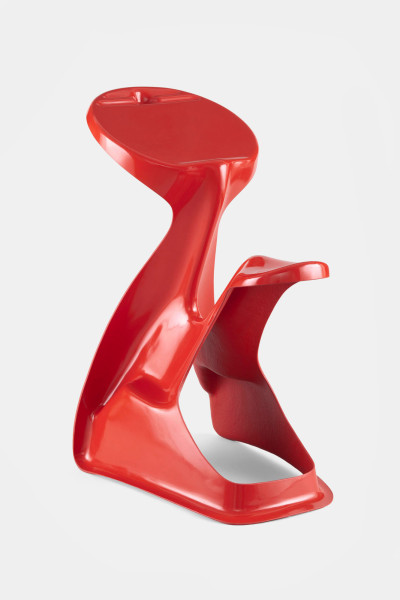
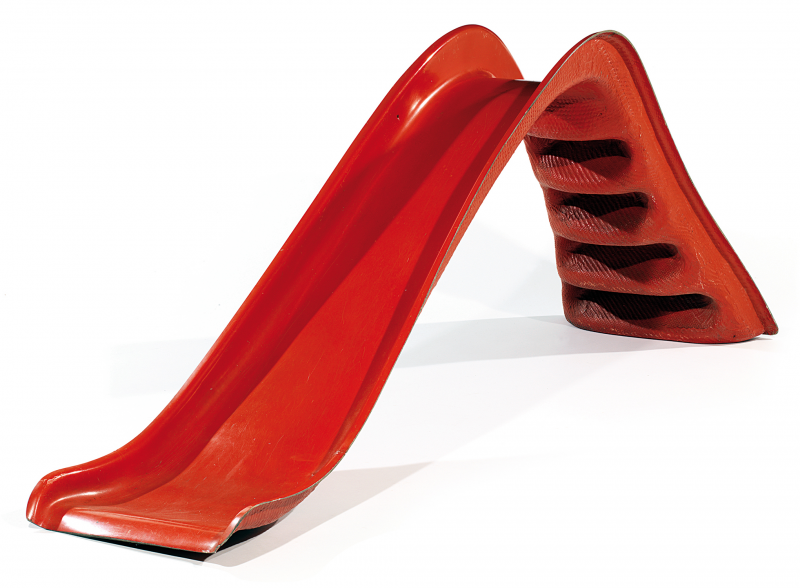
I bend down to take a peek at the lower levels and find: stain, tear, Title, Title, stain, bright clear red outstanding unpretentious untitled fat thing. It was such a relief.

cat. nr: 942.9 chun 1

keyword: develope envelope

Moment


Thursday, March 5, 2009
Hug me

Yeey

A really great holiday
Some music that hugs you
Enjoying a great meal with your very best friends

It is the longing to keep enjoying that nice moment
Your favourite moment
To freeze time at the exact time you want it to

White Room


Friday, February 20, 2009

1 month ago my brother and me got a new apartment, so a moving process started. I had to paint my new room and organize my stuff but because of my study I could spend only few hours a day to do that. Things went really slow, each day I was working in a small part of the room, moving my stuff from this corner to another. I did not finish organizing it but I am not in a hurry. Every week my room slowly changes from one shape to other. Slowly, but one day my room will be complete. At the same time I was sending photos of the apartment to my mom to keep her in touch with my daily life.

I like to be slow, ’cause it’s giving me time to see what’s going on around me.

Why take a break?


Tuesday, February 17, 2009

Principally, I think I am relative slow… especially in doing my assignments… my brain is running the whole period… and I can’t close down… so I need typically too long to get to the point… to say “yes” to my idea… and the longer I think about it, the more difficulty it gets… from one element to the next… in the end thousand… once I felt in love with details and complicated schemes…
Then it is in the evening, one day before the deadline and I still have to work it out… working the night through… falling asleep in the middle of all the material… glue… scissor… cutter… ruler… pencils … waking up with a piece of paper glued on my nose or somewhere else…
Sometimes I love this nights… waking up and directly start to work and in between a short rest… a complete continued circle….
Never stop before perfection?