Skip to Content Skip to Search Go to Top Navigation Go to Side Menu


"type design" Category


Jonathan Puckey en (de grafische) Tool


Monday, November 5, 2012


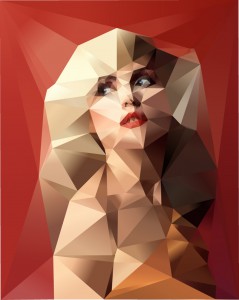
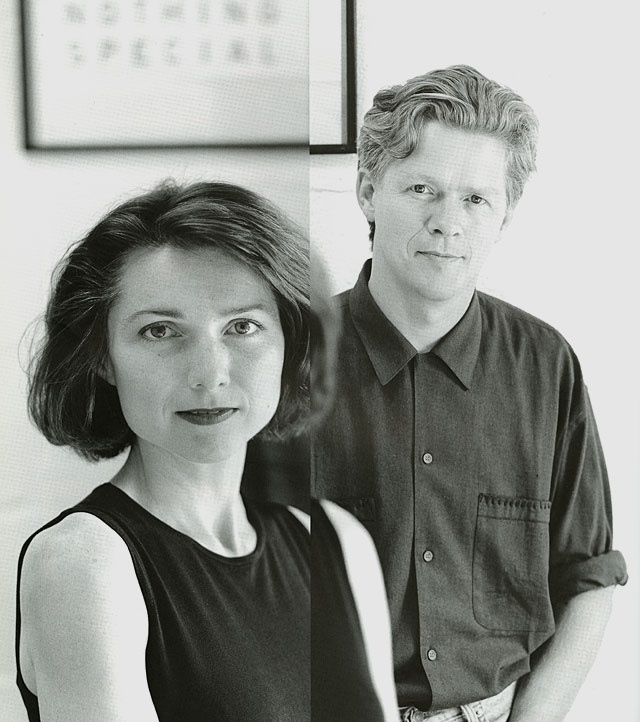
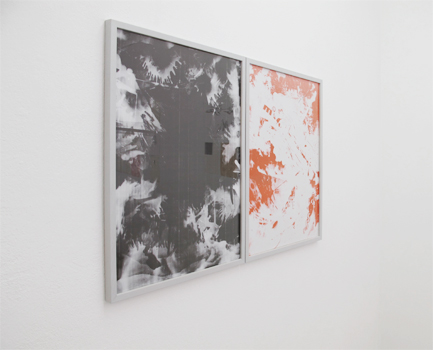
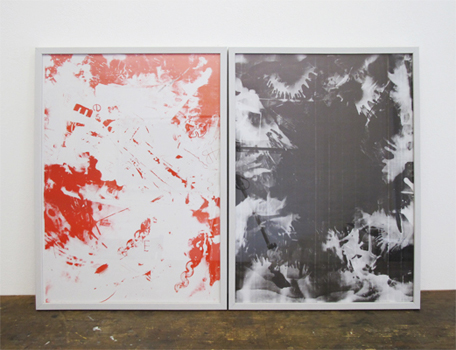
Links, foto bewerkt met Q*bertify. Rechts, originele foto van de band “Tool”.


Jonathan Puckey is een vormgever gevestigd in Amsterdam. Jonathan maakt deel uit van Studio Moniker, en draagt bij aan Conditional Design. Conditional Design is een samenwerking als ook een manifest waarin zij onder andere stellen: “We search for unexpected but correlative, emergent patterns”. Veel van het werk dat zij produceren is hiertoe te herleiden, het laten ontstaan van patronen uit gestelde regels. De systemen die zij creëren gaan uit van procesmatige ontwikkelingen zonder gefixeerde eindresultaten. Vanuit een gecreëerde setting kan een patroon oneindig doorgaan en veranderen. De regels die zij opstellen zoeken naar de mogelijkheden om informatie te visualiseren en het oog te behagen. Een voorbeeld hiervan is de site van het SNS Reaal Fonds, waarbij zij de uitgaven van dit fonds omzette in metaballs.

Een terrein waarin Jonathan werkt en onderzoek doet zijn tools. Dit zijn tools in de brede zin, van computersoftware om foto’s te bewerken tot gereedschappen om lettertypes te ontwerpen. Naast dat Jonathan deze tools gebruikt in zijn werk heeft Jonathan samen met Jürg Lehni het platform Scriptographer.org opgericht. Dit project, dat tegenwoordig verder gaat op Paperjs.org, probeert als een platform voor het ontwikkelen van nieuwe tools te fungeren. Over het ontwikkelen en gebruiken van tools nam ik van Jonathan het onderstaande interview af.


Zijn (type) tools een recent fenomeen, hoe ben jij begonnen met creëren van tools?

Ik weet zelf niet hoe lang het al gebruikt wordt. Zelf programmeerde ik eerst generatief, waarbij na op de knop gedrukt te hebben ik als maker geen invloed meer had. ik Als ontwerper schrijf je de code die vervolgens volgens een bepaald patroon een vorm of de vormtaal genereert. Op de Rietveld Academie ben ik het programmeren als de basis voor het vormen van gereedschap gaan zien, waar je mee aan het werk kan gaan. Hierdoor ontstaat een tweeledig maakproces waarbij je eerst de tool ontwerpt, waarna je met de tool verder kan ontwerpen. Je hebt hierdoor twee momenten van invloed.

Als jij zelf een tool maakt en deze vervolgens gebruikt, waar ligt dan het zwaartepunt van de creativiteit?

Dit is een combinatie, meestal ben ik tijdens het programmeren ook aan het gebruiken. Door tijdens het programmeren features te maken kan ik vervolgens de tool verbeteren.

In hoeverre heeft de gebruiker werkelijk invloed op het functioneren van de tool, als de voorwaarde al gegeven zijn?

Dat is per tool zeer verschillend, sommige tools zijn al helemaal af als je ze hebt gemaakt. Het werk wat je ermee doet uit nog wel wat je wil uiten, maar de tool wel de overhand heeft in het vormen van de uitkomst. Bij sommige tools is dit echter nog erg open, de gene die werkt met de tool heeft dan een sterkere invloed op het eindresultaat, zelfs sterker dan de ontwikkelaar van de tool. Dit is altijd een balans, de gereedschappen waar niets aan toe te voegen is door de gebruiker zijn dan ook de gereedschappen die ik niet weg geef, als de gebruiker weinig invloed heeft is het delen minder van belang.

Wat is voor jou het criterium waar een goede tool aan moet voldoen?

Dit is erg afhankelijk van de gebruiker waarvoor de tool bedoeld is. Persoonlijk test ik de tool altijd uit door me af te vragen: hoe lang kan ik er mee werken, kan ik hier nog weken mee vooruit? Als dit het geval is, dan is het een goede tool, want dan heb ik het blijkbaar niet meteen door. Een goed gereedschap is ook iets waar je heel lelijke dingen mee kan maken. Waar het aan jou is om de juiste input te leveren, zodat het er toe doet hoe jij de tool gebruikt.
De tool moet sprekend zijn, op het moment dat de tool niet spreekt betekent dit dat het idee nog te vaag is. Dat het idee nog niet genoeg gereduceerd is tot zijn essentie.

Heb je voorbeelden van tools welke je als mislukt ziet?

Een tool waar ik veel tijd in heb gestopt maar nog nooit iets mee heb gemaakt is Ribbon Folder. Ik was gefascineerd door het idee dingen te kunnen vouwen. Meer specifiek; hoe je als je iets vouwt, vervolgens die gevouwen hoek kan uitrekenen? Als je een lijn maakt door punten te plaatsten met de hand, zit in de vorm van de hoeken die ontstaan een bepaalde logica. Door op een lijn te drukken kan je op verschillende punten meerder vouwen creëren. Dit heeft me veel tijd gekost, maar toen ik klaar was deed het me eigenlijk niks. Het eindresultaat nodigde me echter niet meer uit er iets mee te gaan doen.

Ribbon Folder

Worden jou tools ook door anderen bewerkt, heb je hiervan voorbeelden?

Wat was de motivatie om de tools gratis aan te bieden op Scriptographer.org en paperjs.org?

Voor Jürg Lehni was de rede om Scriptographer.org te starten om de discussie over gereedschappen te beginnen. Hij wilde hiermee de vraag stellen waarom we allemaal dezelfde software gebruiken, bijna iedereen gebruikt Adobe software. Scriptographer.org confronteert de gesloten mentaliteit van Adobe met een ander perspectief. Daarnaast was er de pragmatische reden dat Jürg deze tools al bedacht voor zijn werk.

Zijn er zaken die als inspiratie fungeren voor het vormen van tools?

Van nature hebben wij (Studio Moniker) een natuurlijke fascinatie voor techniek, waar we allemaal mee bezig zijn. Als ontwerpers zijn we dan ook nooit bezig om afgewerkte eindproducten te ontwerpen. Bij het ontwerpen van bijvoorbeeld een poster heeft het onze interesse om een systeem te ontwikkelen waardoor de poster uit zichzelf gaat groeien, hierdoor ontstaan organische processen die niet volledig te controleren zijn. Met een gereedschap controleer je in zekere zin nog meer. Maar door te beginnen met limiteren door het stellen van een omgeving, kan je vervolgens binnen deze omgeving volledig vrij ontwerpen. Hierdoor voorkom je dat je gaat emuleren, je doet nooit alsof je principes hebt hebt bedacht die je moet vasthouden of imiteren, de ontwikkelde software werkt als het goed is uit zichzelf.

Door regels te stellen is in het eindproduct voor iedereen het spoor te herkennen in het eindproduct.

Het meest optimaal is als die zoektocht zicht in het eindproduct zichtbaar aanwezig is. Zoals bijvoorbeeld in het Delauney Raster. Het Delauney Raster vormt beelden om tot backtographics, waarbij het gebruik maakt van het Delauney Triangulatie (http://nl.wikipedia.org/wiki/Delaunay-triangulatie). Er is al veel gedaan met Delauney Triangulatie in wiskundige software etc. Normaal word de punten-set waaruit de driehoeken ontstaan gegenereerd, ik heb uitgeprobeerd of ik dit handmatig kan controleren. Ik vroeg me of; of ik kan doorhebben hoe de driehoeken zich vormen? Dit bleek te werken, waaruit het idee ontstond om hier inzichtelijke software voor te programmeren.
Ik had het gevoel dat hierin iets zat, door eerst te doen en achter te rationaliseren ontstaan interessant vormen.

Delauney Raster

Heeft het maken van tools een belangrijke plek gekregen?

Met name webdesigners zitten dicht bij de sourcecode, dichter dan andere ontwerpers. De overgang naar digitaal heeft veel veranderd, met name webdesigners blijven vaak binnen het domein van de machinale software. Veel van de programma’s simuleren dan ook wat daarvoor kwam. Het is raar om te blijven steken bij dezelfde programma’s. Vroeger konden fysieke gereedschappen makkelijk worden aangepast. De schroevendraaier die mensen vroeger hadden, ontbreekt nu af en toe. Door platforms te vormen kan meer richting gegeven worden.
Ik vind daarnaast dat de mens een belangrijke plek in het proces moet behouden. Veel programmeurs vinden echter dat de computer zelf creatief is. Deze creativiteit is echt alsof, de ‘randomness’ van een computer zorgt ervoor dat de posters die een computer genereert alle zo random zijn waardoor de verschillen generiek worden. Wij zijn echter op zoek naar waardevolle verschillen, die betekenis uitdrukken. De input van de ontwerper zorgt uiteindelijk voor de betekenisvolle uitkomsten.

Typographic Matchmaking in the City and how it gave me an interest in the meaning of type design.


Sunday, November 4, 2012


First I would like to start with an introduction of the project. The typographic matchmaking in the city project, launched by the Khatt Foundation, focuses on typography’s use(d) in place-making within an urban context. It will investigate the way that typography can fuse with urban design to create public spaces with an unique sense of place. Places that attract people because they are pleasurable, involve social encounters and immersion in the sights, sounds and atmosphere of the space.

Trying to bring back the traditional use of typography in the city, five teams of fifteen Arab and fifteen Dutch designers collaborated on creating new bilingual typefaces formed for 3-dimensional/architectural applications. The end results of the projects are five new bilingual typefaces, inspired by both Latin and Arabic script traditions. These typefaces will be applied as poetic narratives in the form of participatory public art, into the public spaces of two cities: Dubai and Amsterdam.

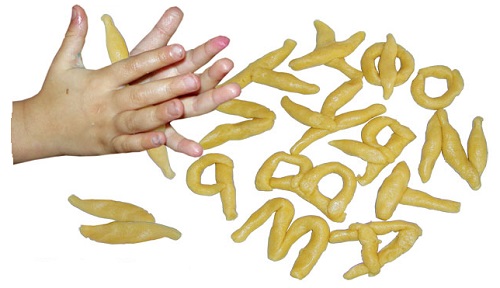
Each team took their inspiration for their typefaces from different sources. Their inspiration, process, brainstorming sessions, early sketches and prototypes are carefully documented [x]. It gives an insight into the thought behind typeface design. A big and complicated challenge in this project –of course– was to create the same visual language and aesthetically corresponding letters (type/font) for two scripts that are structurally very different. One of the five projects is the Kashida. In this project for example, they took inspiration for their typeface from broken pieces of tagliatelle. Kashida became a completely 3-D font, that is, in its result still noticeably coming from the tagliatelle. Here is a program to use Kahshida for your own personal text.
These typefaces are meant to stand out, in contrast to street signs for example, that affect us unconsciously. Eventually, the main goal is to have these typefaces to become part of public space and perhaps even to help create or improve public space.

So far about “matchmaking in the city”. What was more interesting for me, was the fact that for some people typography is a serious and genuine interest, even a passion. For me that is hard to understand. I think typography is something you either love or hate, or to be more subtle, like or don’t like. I can’t “kind of like” the subject, however I can try to get interested, but I will never fall in love with the amazing world of helvetica, verdana and Kashida.

Where did it come from? The urge to design something that has already been designed and been used in currentform for ages; our alphabet, simply how we now it, and once was decided how to write it.
Our alphabet, as we know it know developed from pictographs, that are dated before the 27th century BC, to hieroglyphs, known as the Egyptian writing, to the Phoenicians alphabet (1050 BC), which is first to be composed exclusively of letters and is the earliest alphabet that is directly related to our alphabet now. From this alphabet, the Greek alphabet derived, which in its turn evaluated to the alphabet we use nowadays.

So to make a distinction between the alphabet and typography: An alphabet is a standard set of  letters (basic written symbols or graphemes) which is used to write one or more languages based on the general principle that the letters represent phonemes (basic significant sounds) of the spoken language.”  and “Typography is the art and technique of arranging type in order to make language visible”

There actually is a great distinction to make, and that is, that typography is something that is supposed to be designed, it is design. The alphabet is like the entity of typography.
Typography is about arrangement and appearance. This arrangement involves the combination of point size, line length, line spacing, defining the spaces between groups and pairs of letters.

Why do we feel so eager to arrange and to come back to my previous question; why do we want to design something that is, in itself already a design? What can there be designed out of something that already has specific rules to be followed, in order to be understood? Well, apparently, quite a lot. In fact typography is a way to say something in a text that is already saying something.
Typography gives a text a double meaning and can create awareness on itself. With a type font you can force someone to read, or experience a text in a specific way.

With this conclusion I would like to look back at the Typographic Matchmaking in the City project. A project based on trying to design an experience, rather than a type font. By reading a text in Kashida in the context of, for example, an urban environment, could give you, in a way, a certain experience of the space. A harmony or connection between languages and their role in society creates a consciousness of a multicultural space where everyone can feel welcome.

Because of doing this research I was forced to create an interest, not only for the subject I was given, but also for typography in general. I couldn’t have imagined how important a good designed type font can be and what it can evoke. How much time and energy it takes to design one and most important how it connects to way more than only just “saying something” with letters.
Still typography is something I was not made for, as well as typing with Kashida can only interest me for not more than the sentence: Hi, this is a type font.” surprisingly, over all, that was what I enjoyed the most.


Qui?


Thursday, November 1, 2012

Pierre Di Sciullo, Pierre Di Sciullo, de eerste opdracht voor mezelf was zijn naam uit te kunnen spreken. Ondertussen ben ik zijn naam in zoveel verschillende artikelen, documenten, websites en filmmaterialen tegen gekomen, opdracht een is gelukt. Wat heeft deze man een hoop informatie en werk.

Pierre werd in Parijs geboren omstreeks 1961. Hij verliet na 3 maanden de Parijse kunst academie, er werd van hem verwacht om met bestaande karakters te werken, en hij was er zeker van dat hij daar geen plezier uit kon halen. Toen hij de leeftijd van 23 bereikte is hij begonnen met zijn zelf gepubliceerde magazine Qui? Resiste. Via dit medium experimenteerde hij met typografie en design.  Momenteel heeft hij al 13 publicaties, onder andere te zien op zijn website. In 1995 ontving hij een award ‘Prix-Charles-Nypels’ voor zijn typografische onderzoeken.

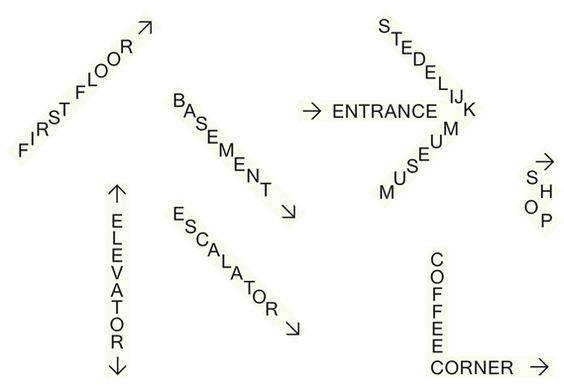
Een ander opvallend deel van Sciullo is dat hij deel heeft genomen aan de pitches voor de nieuwe huisstijl van het Stedelijk Museum in 2008. Samen met vijf andere ontwerpers hebben zij ‘gestreden’ om de nieuwe vertegenwoordiger daarvan te zijn. Uiteindelijk na lang beraad is de jury bestaande uit Gijs van Tuyl(directeur destijds), Paul Hefting (een publicist over grafische vormgeving, Hendrik Driessen (directeur van museum De Pont), Dingeman Kuilman (directeur Premsela), Petra Blaisse (vormgeefster bij het interieur-exterieur bureau Inside Outside) en Hester Wolters (voormalig eindredacteur van Vormberichten) met de conlussie gekomen dat Pierre di Sciullo het best aan de eisen voldeed. Het was belangrijk dat de huisstijl een allesomvattende samenhang had, en dat niet alleen de affiches maar ook de wegwijzing, het briefpapier, de website en desnoods het toiletpapier in DE stijl zouden zijn. Ook werd er veel naar het verleden en de ex ontwerpers, om het zo maar te noemen, gekeken. Sandberg speelde daar een enorme rol in. In de tijd dat hij directeur was (van 1945 tot 1963) heeft hij ook de rol van grafisch ontwerper tot zich genomen. Op een speelse, natuurlijke en zoals hij zelf zei: ‘menselijke’ manier ontwierp hij de huisstijl. Het was belangrijk voor hem dat er persoonlijkheid en gevoel in het werk zatten. In 1956 ontwikkelde hij de zogenoemde ’5 gouden regels voor een affiche’ die als volgt gingen:

1. Een affiche moet vrolijk zijn, tenzij men medelijden wil opwekken.

2. In elk affiche moet rood zitten

3. een affiche moet op een of andere wijze de nadruk beschouwing uitlokken. Anders beklemd de indruk niet

4. ontwerper en opdrachtgever dragen een verantwoordelijkheid ten opzichte van het stadsbeeld en de gemeenschap. Het affiche moet namelijk niet alleen het stadsbeeld verlevendigen, het moet ook menselijk zijn.

5. een affiche moet dus een kunstwerk zijn.

”Aan de letters en de kleur konden mensen al zien dat het van het Stedelijk kwam.” Wie ook niet uit het plaatje kan ontsnappen is Crouwel. Zoals hij zelf zegt in een interview probeerde hij zich af te zetten van ‘het natuurmens’ Willem Sandberg, ook omdat hij erg tegen hem opkeek. Hierdoor heeft hij zijn geconstrueerde, systematische en functionalistische stijl gecreëerd. Alles ging volgens een stramien en op elk affiche maakte hij een bepaald beeldmerk voor de betreffende kunstenaar volgens DAT schema.


Ik merk dat er ontzettend word gekeken naar deze twee mannen tijdens het oordeel over de zoektocht naar de nieuwe ontwerper. En dat Di Sciullo behoorlijk voldoet aan deze eisen. Totaal op zijn eigen manier en filosofie weet hij het beeld van Crouwel en Sandberg in het nu te plaatsen en bijna te blenden tot een. Toch heeft de nieuwe directrice van het Stedelijk besloten om niet verder in zee te gaan met Di Sciullo. Na ongeveer een jaar werk aan deze huisstijl, uren werk, besluit Ann Goldstein dit alles over de boeg te gooien. Met een onbekende som is Di Sciullo afgekocht. Het is bekend dat Goldstein niet heel uitgesproken is over haar beslissingen en (door een jury voorgeselecteerden) tentoonstellingen, dus over het ontslag had ze verder, zoals verwacht, geen specifieke toelichting. Wel had ze het volgende te zeggen; Mijn beslissing voor een nieuwe huisstijl is heel gebruikelijk voor nieuwe directeuren. Di Sciullo’s voorstel was niet mijn richting en het kwam erg vroeg. Ik wist dat ik die beslissing snel moest nemen. Ook uit respect voor hem. We zijn nu nog bezig met de huisstijl voor de langere termijn.’ Sciullo zou het Stedelijk dus niet voor langere tijd van een huisstijl kunnen voorzien, en waarschijnlijk, vooral gezien vanaf Goldstein’s voorliefde voor minimalisme, was dat het ook niet. Een hele hopen vragen blijven onbeantwoord. Hoe? en Waarom? Sciullo heeft mij overtuigt van zijn kunnen en zijn inzichten voor deze opdracht, wat mij betreft kan het nieuwe ontwerp daar niet tegen op.


A choice is always a limitation.


Wednesday, October 31, 2012


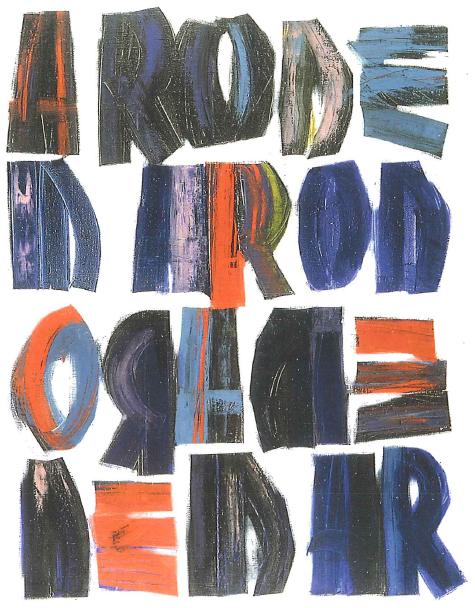
Guy Rombouts


Guy Rombouts (Geel, 1949) is een Belgisch beeldend kunstenaar.

Hij is opgeleid als drukker en heeft in de drukkerij van zijn familie en voor het Nieuwsblad van Geel gewerkt, tot hij in 1975 voor het kunstenaarschap koos. Sinds de jaren ‘70 werkte hij aan alternatieve communicatiesystemen. Zijn fascinatie met taal en letters leidde in 1983 tot het Drieletterwoordenboek.
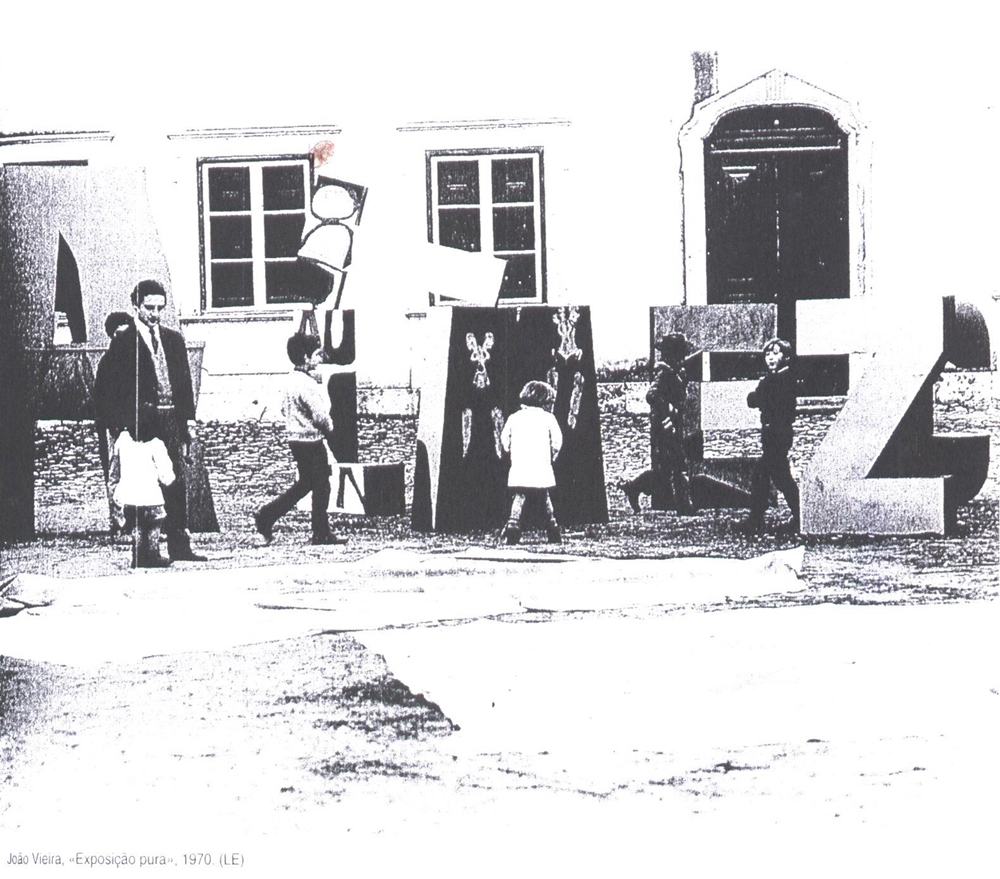
Sinds 1986 werkte hij samen met Monica Droste (1958-1998), met wie hij ook trouwde. Samen met haar ontwikkelde hij het Azart-alfabet, met letters die een vorm in een lijn, een kleur en een geluid combineren. Op basis hiervan maakten zij een aantal, meest drie-dimensionale, kunstwerken. Het eerste werk waarmee zij bekendheid kregen buiten de kunstwereld, was het ontwerpen van de Letterbruggen (1994) op het Java-eiland te Amsterdam.
Ook na de dood van zijn echtgenote maakte hij werken, waarin het Azart-alfabet wordt gebruikt, zoals de Lettertuin (hersteld in 2006), bestaande uit betonnen “letters” in Burcht (Zwijndrecht) bij de Schelde.
Er bevinden zich enkele werken van Rombouts in het Museum van Hedendaagse Kunst Antwerpen (M HKA).


Azart alfabet

“Monica vond de naam Rombouts niet universeel genoeg. In een oude Franse tekst was ik het woord Azart tegengekomen. Dat woord kan verwijzen naar het alfabet en – via het Franse hasard – naar de arbitraire relatie van taal en werkelijkheid. Daar konden we beiden mee leven.” 

— Guy Rombouts

azart alfabet


A choice is always a limitation.


(more…)

THE ALPHABET OF GROUP A


Wednesday, October 31, 2012

The Alphabet of Group A

The main language we speak in group A is English and mostly the communicating language on this earth, but there’s of course many other languages.

In Group A we have Arubiano, Danish, Dutch, French, German, Spanish and South Koreean Nationalitys.

The students name below are in alphabet form that makes it easier and faster to search for the name you attempt to search.
Last name to first name in alphabet form from A to Z

Last name

  1. Arco Johanna
  2. Arnardottir Maria
  3. Barlinckhoff Anne
  4. Chuard Nicolas
  5. Dinther Jessy van
  6. Galama Jorik
  7. Goldbech Rikke
  8. Jang Aram
  9. Kuijl Thi-Lien
  10. Liimatainen Mira
  11. Nagler Floor
  12. Oduber Natasha
  13. Peterson Chelsea
  14. Ryliskyte Agne
  15. Schraven Mari
  16. Sjoerd Schunselaar
  17. Sjøberg Jakob
  18. Vasquez Callo Rodrigo
  19. Westbom Weflo Anton
  20. Zürrer Selina

First name to last name in alphabet form from A to Z
First name
  1. Agne Ryliskyte
  2. Anne Barlinckhoff
  3. Anton Westbom Weflo
  4. Aram Jang
  5. Chelsea Peterson
  6. Floor Nagler
  7. Jakob Sjøberg
  8. Jessy van Dinther
  9. Johanna Arco
  10. Jorik Galama
  11. Mari Schraven
  12. Maria Arnardottir
  13. Mira liimatainen
  14. Natasha Oduber
  15. Nicolas Chuard
  16. Rikke Goldbech
  17. Rodrigo Vasquez Callo
  18. Selina Zürrer
  19. Sjoerd Schunselaar
  20. Thi-Lien Kuijl

Karl Nawrot and the charm of infinity


Wednesday, October 31, 2012
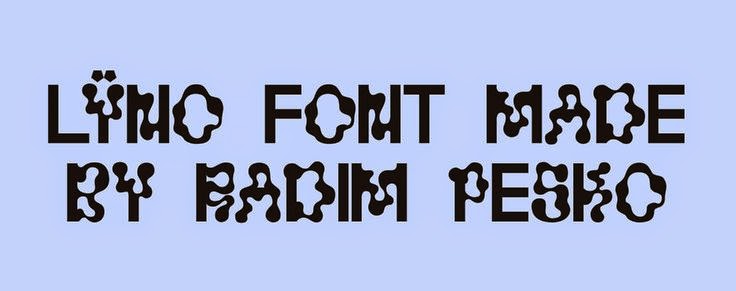
Lÿon typeface, designed with Radim Pesko


Karl Nawrot, also known as Walter Warton, is a French graphic designer and illustrator who lives and works in Seoul. He first studied illustration in Lyon, France and in 2008 finished a Master’s Degree in graphic design at The Werkplaats Typography in Arnhem, The Netherlands. Through his design studio Voidwreck Nawrot has been working on a variety of projects from designs of typefaces to illustrations and more experimental work. He has also been teaching drawing at the Rietveld Academy and has worked as a curator for graphic design exhibitions.

Nawrot’s designs explore basic shapes and patterns taking them very far into abstraction and playing with the different possibilities. Many works show a true fascination for infinity and repetition. In an interview for gallery 12mail he said that his inspiration was “the drawings that I trace in the morning when a part of myself is still asleep.” His work is often very drawing based yet he has also developed his very own style in working in more experimental way. He creates his own tools which can be anything from ink stamps to circular record templates and geometrical stencils. He uses these tools and devices to investigate and explore the possibilities of shapes and patterns and to make type experiments.

(more…)

The significance of experimentation in type design


Wednesday, October 31, 2012

Typography is the expression by which we communicate in our written language. My focus for this text is experimental type in our modern time. To understand the current state and the future of typography, I believe its important to look at the development of type through history.

Typography has a long history of development and in European history we can trace it back as far as 40 000 years, where cave paintings and other forms of expressions (such as decorated bones and crafted tools) has been found in Cromagnon, France. The Homo sapiens living in this period came to Europe from Africa and the Middle East, about 100 000 years ago. Other historical founds also include Petroglyphs, which is a group name for carvings on cave walls and surfaces alike. These carvings has been found around 12 000 B.C and is believed to be the ancestors of the modern typographical system, based on the Pictogram and Ideogram.


Petroglyphs found in Val de Fontanalbe, France.


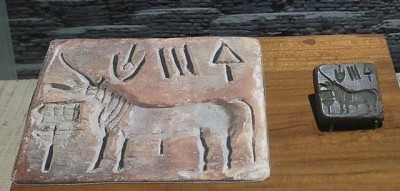
Pictograms were used to illustrate and depict the chosen object, for example an ox. This kind of communication is still used to today in some countries, for example in the chinese language. After some time, the system developed, a circle which normally would represent the sun could also have the meaning of a day. The result of this development is called the Ideogram. This means that the context of the signs had relevance to the individual signs, as the circle changed meaning depending on the content of all signs combined. An extra sign could also be added to one of the individual signs to point out the exact meaning, this is then called a determinative. Another important development was the invention of the phonogram. Through the phonograms the humans could now also communicate by writing the sound of the spoken word. The shift from the Ideogram to Phonogram happened around 3000 B.C.

Around 3500 B.C, the Sumerians settled down by the rivers Eufrat and Tigris in Iraq. They also developed a unique written language which is called Cuneiform script. This written language was made by using a shaped object which was then pushed down in wet clay. When the clay dried, the document became intact. This kind of writing was widely used in Asia, Assyria and Persia. By the same period, around the area of the Nile, the egyptians developed an important way of communication. These scriptures were called the hieroglyphs, it was also built on the Ideogram but had different and more diverse signs for sounds and letters. The hieroglyphs were also divided into eight major categories.


Egyptian Hieroglyphs.


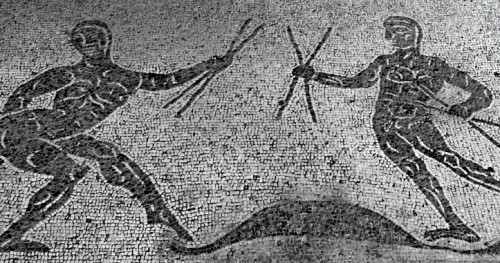
Around 1000 B.C, a new written language was invented, called the Phoenician alphabet. This written language is the root for many languages, among them Hebrew and Syrian, as well as the Etruscan language which in return later on developed into Latin. The Latin alphabet was used by Greek settlers, who colonized the islands outside of Italy’s shores. The earliest find of the Greek alphabet was made in 730 B.C, on the island Ischia. The development of the Greek language continued as the Romans gained power in Italy. The Phoenician language was read from right to left, but as the Romans developed the Latin language, they shifted the way the text was read to left to right. The way the letters were standing was also shifted as this happened. It was also around this time that the Romans developed characters from the Phoenician language into the Latin characters we know as Alpha, Beta, Omega, Gamma, and so on. Serifs were for the first time invented during this time as well, first used in inscriptions on walls using a hammer and a spike, as they could be read more clearly this way.


Example of roman inscriptions.


The Romans continued to develop their written language, as the Unical script and the Half Unical script was invented around 500 A.D. The Unical script was based on two lines, creating only capital letters, the Half Unical script was based on four lines, creating the opportunity for lower case letters as well. This development later led to the Gothic styled scripts found in Germany around 1100 A.D, developed versions of this script type was later made in France and Italy. This later developed type later came to England through Belgium. This period of development is usually called the humanistic handwriting, and was dominant from 1300 A.C to around 1460 B.C. In 1439 the first European movable printing press was made by Johannes Gutenberg, which allowed high quality printing for typefaces. This printing technique quickly spread through Europe and during this period and following on, specific typefaces started to be created in more diverse styles. Claude Garamond (1490 – 1561) was one of the first to produce typefaces independently.

There was a high development of typefaces during this period and by the 19th century, the highest peak was considered to have been reached. Some even considered that the highest point of typographical development had been reached already by the 17th century. Although typography continued to develop as Napoleon was interested in Egypt by this time, and he had several excavations and expeditions ordered. The interest for the Egyptian hieroglyphs were high during this time and people started to loose interest in their roman type heritage. Inspired by the findings in Egypt, type designers came up with a new invention in the modern written language, the sans-serif. All previous modern writing had been serif typefaces, but by 1816 the first sans-serif typeface was created by William Caslon IV, the typeface called Egyptian. The sans-serif typefaces also became more popular along with the industrial revolution, as companies could communicate their advertisements more clearly with help of the bold letters. Typography continued to develop during the 19th and 20th century, creating several influential and modern typefaces.


Example text of William Caslon IV’s typeface Egyptian from 1816.


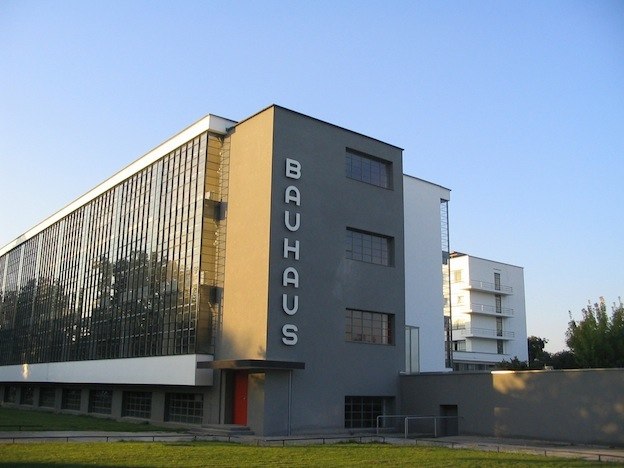
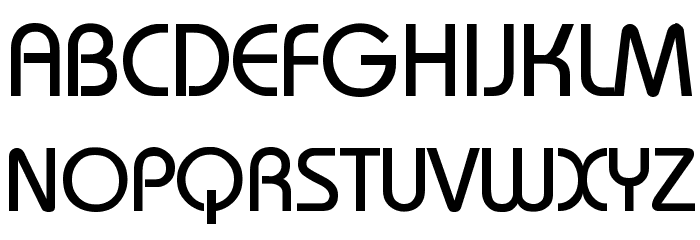
However, since the development of typography had been so great by the 20th century, modern designers as well as fine artists started to seek for new ways to use type. Francis Picabia, a Dada artist in the beginning of the 20th century, is one of first to experiment with typography. As the Dada artists influenced the typographical approach, designers started to take serious notice to this approach as well. Herbert Bayer and Joost Schmidt were two Bauhaus designers who stopped using the roman letters as a basis for their typographical designs. Instead their language became more futuristic, with focus on the circle and the line. An example of this can be found in Herbert Bayer’s typeface Universal, from 1925.


Herbert Bayers Universal, from 1925.


Bayer also had controversial ideas regarding the sizes of the alphabet. His point of view was that only the lower case letters were needed, as the letters are pronounced the same way when we read them, regardless if it is capital or not. This influenced Bauhaus directly, as they started to only design lower case letters. This came to be called the functionalism movement with focus on freedom from tradition, geometric clarity, simplifying the typographical elements and the use of primal colours. At this point designers were well aware of the direct influence that typography could have, and with the functionalism they attempted to communicate in the clearest way possible, avoiding ornaments and other subjective expressions within the typography. This lead to a language which would communicate very strongly and direct with the viewer, the most famous example being Helvetica, designed in 1957 by Max Miedinger and Eduard Hoffmann.


Helvetica, designed in 1957 by Max Miedinger and Eduard Hoffmann.


During this time the so called Grid system was invented, which created a new way to approach type. The Grid system is a line based system which allows for typography and other elements such as photography or illustration to be arranged in a symmetrical or asymmetrical order. This movement is close to the functionalist movement, but involved mainly swiss designers, the so called ‘International typographic style’.

Another important change happened as technology advanced and computers were invented. As computers with programs allowed anyone to fairly easily play with type in a much more free way, typography was no longer restricted to designers and professionals. As typography became digitalized, there was no longer a need to cut the type in a traditional way. This meant that the profession that earlier demanded a lot of handwork and precision, could be executed quickly by the means of modern technology. David Carson, among others, is famous for his experimental approach in the beginning of the 1990′s. He treated type in a new original way, and among other things invented the style that we today call ‘Grunge’.

Neville Brody and Jon Wozencroft is the name of two designers who also was involved in modern experimental type, and in 1991 they founded the Fuse magazine together. Fuse has since then been a platform for new and innovative ways to approach typography, and since its start it has been a controversial magazine which questions the modern language and its usage. A platform such a Fuse is important, as they encourage both discussion as well as practical input for the further development of type design. It is clear that expression within type is returning, since the most legible and clear typefaces already have been made during the 20th century. We are now in the beginning of the 21st century, and the way we are communicating and sharing information is developing quickly.

Looking back at history it is evident that innovations and experiments relevant to the times has always been present. As in other art forms, previous developments sparks new responses. The type of today is as earlier mentioned used more freely. One might consider if typography still is as important as it used to be, or if it is only the typefaces that has lost their relevance themselves. As we become more informed and aware of our past, we become more aware of the choices we make today. And if the importance of expression in type has increased today, can really type from the 15th or even the 19th century express the thoughts or feelings of today?

Typographers today can make their own decisions when it comes to using type, they can disregard from renaissance inventions, or functionalism from the 20th century. But we are always limited to our own inventions, wherefore I believe experimentation should always be encouraged. Though I can not predict the future, some even believe that the written language will die out, as technology will allow more sufficient ways to communicate.  It is hard to say in what direction our language will develop in the future, and the role of the typographer. But having an open discussion and room for experimentation is an important step to keep up with the rapid changes of today.

the fleurons


Monday, October 29, 2012


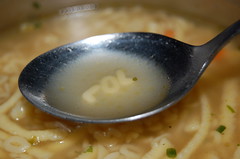
“This silky, mellow soup offers up traditional autumn color, with a crunchy little surprise in the fleurons, which are nothing more than decorative bits off a puffy pastry.” ”Those fancy ornamental graphics that are used to start a new section within a chapter.” ”Would their use in a complex list would be a faux pas?” “Fancy typography.” ”Section breaks, dinkus (a dinkus is whatever you want a dinkus to be. It has no definite meaning. If you are at a loss for words the word dinkus can fill in for you) space break symbols, paragraph dividers, fleurons and glyphs.” ”To make pages look better.” “Stuff like that, vector accents, motifs.” “Frilly bits.” “Informal something that is desirable but not a necessity, a luxury.”


In my language (which is lithuanian, the oldest living language) there is no such word as a fleuron. Fleuron is considered to be element of architecture . I understand fleuron as ugly something (usually stupid ornament in book) which always annoys me. And always brings up question “WHY ARE YOU THERE”. I raided the books I have looking for this ugliness, however, only few were infected. For understandable reasons, pictures won’t be posted.


This research made me aware of fact, that some people are urgently looking for fleurons. For wedding invitations, fiction books and etc..They are hard to find( what I kind of experienced myself), because people don’t even know how they are called..How to use them properly ( I also don’t know).. If you want to know more about fleurons and see some examples I provide you with a great link which I found on first page of Google.


And then you come across “collaborative project” like Font Aid. Organization which is based on great ideas like creating and selling fonts based on certain tragedies (and part of profit is given to the victims). Earthquake and tsunami in Japan?? Oh great, let’s all create beautiful fleurons and sell them. Let’s involve more than 300 designers and let’s make less than 13 000 USD, oh jeeeee. Already four of those beautiful collaborations happened! When is the fifth coming across??? Well that depends on disasters, wars, tsunamis..Something strong we need to get inspired, don’t we.. And of course, all the information you are longing for is totally available right here.


And watch this!


Did you like the video? Did you notice any fleurons? Did it help you to understand something better? If no, think about it, and watch video one more time. My suggestion to Font Aid would be just to contact those guys, I am sure they could help with more than 13 000 USD. So that is how I feel about this project. My feelings probably have nothing to do with the true reasons behind. And have a look at Building Letters Three magazine. You can still help 2004 tsunami refugees in Asia buy buying it for 35 euros (including free shipping).


On the other hand I came up with the idea that fleurons are very natural for humans to make. They are brain drawings. When you sit there waiting for a call and nervous with a pencil in your hand and a piece of paper..There is a very great opportunity for a fleuron to pop out. The only question is how advanced your brains are. What is it there? Two little crossed flowers or teddy bears? Fleurons can be very different and loads of them are just ridiculous (for me).  I saw one in the Building Letters Three magazine. So there is this green leaf with white flower in it. The flower has eleven petals and Mother Earth in it. Eight human figures are standing on Earth holding each other hands and flowers in between. Below it is written People ARE Flowers. With People and Flowers in the same handwritten font. Word ARE is in bold and fat font. You don’t want to see it.


My conclusion would be that fleurons are not necessary, though they are. That we don’t notice them until they are ugly. We don’t need them until we do. We can’t find them because we don’t know what they are. New fleurons worldwide won’t be created till something big and awful happens. Fleurons representing the pain of many. Sold for not much for not many. How poetic and cruel. The fleuron. Will hurt your eyes.


4D typography in public spaces


Sunday, October 28, 2012

My first contact with 4D typeface was in Casco at Utrecht. The 4D typeface was from Herman Damen and it intrigued me and left some questions behind. After i dived in the subject I found the typeface of Lo Siento. The beautiful designs are however not really used in the public space and not well known by the public’ because of that. Why? Are the 4D typeface not useful in public spaces or are they just not clear enough? In this research I will analyse which kind of way 4D typeface can be an extra supplement in public spaces.

Plan of the research
To find out why 4D typeface it not that much seen in the public spaces I will ask some different questions to help myself in this research.
-what kind of 4D typefaces are already present in public spaces?
-what do people think about 4D typeface? Is it well known?

Examples of 4D typeface in public spaces.
When we think about some known examples of typeface in public space we soon think about logo’s or indication of places (for example in public transport). It’s impossible to miss it on the highway: the Mc Donalds indication. Maybe that’s a part of the success of the logo next to the road; it is recognizable and readable from two directions. But is it also a 4D typeface? The definition of 4D typography: “4D Typography is the result of intersectioning, in an orthogonal way in space, two extrusions of the same character, which allows the spectator to read it from, minimum, two different positions in space.” (Lo Siento, 2012) that means that the Mc Donalds indication next to the road (what is readable from both sides) is a 4D typeface. But of course when the Mc Donalds logo is placed on a wall of a restaurant, this is not the case.
A second example of 4D typeface in public spaces is a place indication, for example a subway. In the Netherlands you see this a lot in the form of a cube with the letter ‘M’ printed on every side. The indication sign is readable from more perspectives (at least four). But… here starts the question: is it allowed to call this a 4D typeface when it is a cube with a printed letter on each side? When you ask me, it isn’t because the indication (the cube itself ) is not a character.


To define that 4D typeface will fit in public space, the opinion of the pubic on these places is important. To find out these opinions I went to Schiphol airport, the library in Middelburg and the railway station Rotterdam Central. Prominent is that a big part of the respondents (above 90%) never heard about 4D typeface. When I showed the 4D typeface of Lo Siento, there were not many people who recognized this way of typography. Of course they did when I showed them a picture of the indication of Mc Donalds. When I asked them about their opinion, a lot of people reacted really positive. Over all they thought that it is a really attractive supplement in public spaces. Eva: “For me it is really appealing. 4D typeface could give the usual (mostly boring) indications a new life.” Next to all these positive reactions there were also some negative points, mostly about the readability. Richard: “This way of designing is much better, nice! But I think it’s not always possible to use 4D typeface. The character ‘R’ is a difficult one, they should be careful with that.”

Ways to put 4D typeface in public spaces
In this research I couldn’t find many examples of 4D typeface, especially not in the public spaces. But the people I interviewed where really positive about it. I think (and the respondents also did) that 4D typeface could be a new supplement in the public spaces. I will give you some examples how we could do it. I hope that this way of typeface will pick up fast in the public spaces. For me this is a big discovery in the typeface.


THE WAY OF A HANDWRITING


Sunday, October 28, 2012

cover of the book Well Well Well containing his differents works, 2010


Letman. Behind this nickname hides a former student of the Rietveld Academy, Job Wouters.  He represents well a very illustrative part of graphic design and type design. This young artist is currently becoming quite famous, with some impressive institutions as clients like Monoprix, Heineken, Tommy Hilfiger, the New York Times Magazine, Playboy, or more recently a collaboration with dutch artist Dries Van Noten for a fashion show. In addition he has just published a book in collaboration with Gijs Frieling, and received the Dutch Design Award for his series of posters called Undercover.


Wouters first started to practice his drawing passion with friends and his brother, sharing their discoveries together. He still often collaborates with his brother Roel, or his childhood friend Yvo Sprey. He was quite intrigued by graffiti, practicing a lot and was particularly interested in street art lettering. This was his first step into the world of typography. In an interview, he said: when I was a youngster I was especially interested in graffiti-writers, who could write their names flawlessly in different styles. The communicative potential of type style was already of great interest to him. It is ironic to start looking at different styles that could communicate your personality through graffiti and finally do the same for corporate firms or advertisements. Later Job entered the KABK school of the Hague in the typography department and then carried his studies further at the Rietveld Academy in Amsterdam, where he graduated in 2004. His great passion for graffiti and handwriting was already very present during his studies. His graduation work was for example made out of 500 posters displaying each name of his classmates, they were handwritten thanks to a huge panel of graffiti styles. Job is definitely interested in underground handmade style of graphic design always keeping aesthetic problems, finalization and communication effects in mind. It is impressive to see a designer like Job who found his way so early, and then sticking to this fundamental base, staying true and evolving all the way.


(more…)

Embellishing my knowledge in Ornaments


Saturday, October 27, 2012

ornament

noun |?ôrn?m?nt|

a thing used to adorn something but usually having no practical purpose, esp. a small object such as a figurine.

• a quality or person adding grace, beauty, or honor to something : the design would be a great ornament to the metropolis.

• decoration added to embellish something, esp. a building : it served more for ornament than for protection.

adorn; beautify : the men and women in the Stone Age ornamented their caves.

Apart from an ornament being a quality or having to do with religion and music or being the popular Christmas Ornaments, it’s all about adorning, and beautifying. And this is no different with Ornaments in the type world, from old to new, it’s the same bull. (pardon my english)
There are many great book to dive into like this famous publication “Ornament and Crime” (1908) by Adolf Loos, produced in the name of ornaments, at the birth of modernism.

The forms used in the type ornament or indeed in any kind of ornament, may be based upon, but should not be imitations of nature. All ornamental units are derived from one of two sources. they are obtained either from natural forms, such as plants, animals, fish, etc., or from forms not directly traceable to nature, such as the elemental geometric forms– straight and curved lines, triangle, square, circle, etc., and their combinations.

Well searching for these buggers is the thing, you type in on your computer [ornaments], you’ll find some ornaments because crafting is so in and do it yourself, and among these you find some of the type ornaments or sites that you can buy a certain font that is ornament based that’s great, but that is not the point. (kind of.)

And for my search I typed these, typeface ornaments, printers ornaments, dingbats, Ornaments. I thank the search of printers’ ornaments”, gave me this following site that is gold. (click image)

(more…)

Understanding a message


Saturday, October 27, 2012

David Bennewith’s *Latent Stare* exhibition


*Latent Stare* exhibition guide cover by Saul Steinberg


David Bennewith (who is born in 1977) is a graphic designer from New Zealand living in the Netherlands. He has a small design studio named Colophon (since 2007) which focuses on graphic and type design. He works on both commission-based and non-commission-based projects as well as research-orientated. He has been working as an advising researcher at the Jan van Eyck Academie design department (since 2010) and is currently teaching in the graphic design department in the Gerrit Rietveld Academie. David Bennewith doesn’t want to call himself the curator of the *Latent Stare* exhibition, but the organizer. The exhibition is a project that explores the practice, methods and messages of type design. The exhibition was open from 8 July – 30 September 2012 in Casco, Utrecht, but had also been set up in the design department at the Jan van Eyck Academie, Maastricht (in 2010).


To begin with I had to research the title because I didn’t know what Latent Stare meant.


*Latent Stare*, definition:


la·tent /?l?tnt/ :

1. Present or potential but not evident or active: latent talent.

2. Pathology In a dormant or hidden stage: a latent infection.

3. Biology Undeveloped but capable of normal growth under the proper conditions: a latent bud.

4. Psychology Present and accessible in the unconscious mind but not consciously expressed.


stare /ste(?)r/ :

    An intent gaze.


So I guess a *Hidden Gaze* would be close to a synonym.


I visited Casco with my class and teacher to see the exhibition and listened to David Bennewith, the organizer-not-the-curator of the exhibition, explain some of the works. Unfortunately I couldn’t really follow what he said due to the strict programme that day which didn’t include any breaks to refill the students’ brain energy and empty stomachs. So all I could think about was food. Type design hasn’t got much in common with food. What did happen though was I paid a lot of attention to David Bennewith’s New Zealand accent. *Latent Steeeer*. I started thinking about how interesting it would have been if the exhibition were about his accent and not only the letters of the English alphabet. How boring is it that even if you speak with this amazing accent you still have to write the same way as all the other accents.


(more…)

The Power of Simplicity.


Friday, October 26, 2012

Adrian Frutiger, born in 1928 in Interlaken Switzerland, is the creator of the ‘Univers’ and ‘Frutiger’ typefaces. Besides typefaces he is also known for signets, logos, corporate typefaces and corporate identities for publishers and industrial enterprises. At a young age he experimented with invented scripts and stylized handwriting frustrated as he was with the formal, cursive penmanship being enforced at the Swiss school he was attending. At the age of sixteen, he was interested in sculpture and learned woodcutting, engraving and calligraphy. His father discouraged him to continu his studies in sculpture and encouraged him to go work in the printing business. Even though he was in the world of printing, he kept his love for sculpture which influenced a great part of his type forms.

But in this research I will only talk about his independent works, the symbols; the forms and counterforms.


Generally speaking, form and counterforms, is the way in which the type and its background have an effect on each other. We can also say; letters or in this case, symbols are created by positive and negative shapes. The positive shape is referred to as the form, the negative shape is referred to as the counterform.

It is easy to make a negative or positive image and reverse it afterwards, but the meaning of the symbols will change completely. This is what Frutiger wanted. Nothing has one meaning, the imagination of our thoughts is so wide that you cannot give it a name. Even though Frutiger gave his symbols names, titles, or better said feelings, I for example do not feel the same way as he does about those symbols. Which is a nice thing, because we do not share the same past, we lived in different periods, so this influences the way of how I look at it. The forms are recognizable in my eyes, you can easily define the subject of it. In the counterforms though, it is a bit difficult because the symbols are not free in space anymore. They are encircled, outlined, which confuses the imagination to think ‘out of the box’. Even though they are connected with each other, they obtain different atmospheres. 


This is an example of forms – positive

               This is an example of counterforms – negative

The symbols are ‘Frutiger Symbols’ and ‘Frutiger Stone’ was made to express Frutiger’s thinking, feelings and opinion in signs. It is a symbol font of plants, animals and stars as well as religious and mythological symbols. This typeface builds a completely new design system, which offers endless possibilities, the “world language system” as Frutiger said. Better formulated, the entire spiritual world of his mind or even our minds becomes readable trough symbols. There’s no need to use letters to express ourself, only symbols matter. The simplicity of letting go our feelings on paper, with a brush or in woodcutting. 

An example of Frutiger Stone

The idea of universal connections determines his thinking and marks all his creative work. No need for intellectual capacity for reading the signs, Frutiger wanted people to use their dreams to understand his work. Which is a beautiful idea, but almost impossible. Because our thinking does not always match the way Frutiger wanted. His symbols were in a way, a spontaneous interactions between his feeling at that time and what his hand was doing with those informations.

I truly like the fact that all the symbols are connected witch each other yet not completely. In his forms there is a representation of movement, there’s always a beginning but never an ending. He thought that he could always find a way to make it “better”, “uglier”, more “aggressive” or put more “emotions” in it. Nothing was in his eyes finished. Like the human existence and thoughts, which were the main themes of the forms, he asked himself often the same questions about life, beauty and our thoughts. Those impressions of the feelings he had at that moment fit well in his forms.

While I am talking about a way to communicate with each other without using the alphabet, I can show you an example that is still in use: Charles de Gaulle Airport at Roissy, France.

He was asked to make a new directional sign system. The yellow background with the white letters in French and the black letters in English is an invention of Frutiger. I think this task which was given to him, completed his way of thinking. Frutiger wanted to make an universal language connected with symbols to make it understandable for everyone, young and old. It is remarkable how those symbols hit us in the eyes, and what it means to us. I can imagine that when you are in a hurry to catch your flight you would not have the time or the ability to read, only to see symbols. It makes live easier, understandable and there is no speaking or wrong communication. There’s only one language that we all do speak Frutiger’s language, and that is the symbol-language.

Frutiger is found in the work of the Romanian sculptor C. Brancusi, who made sculptures that represented what Frutiger wanted in his works. Leave the unnecessary for what it is and focus on what you want to see, to feel. Trying to reach the perfection. Frutiger took note for his forms and counterforms. He also developed some sculpture himself.


Frutiger opened a door to express ourself, our feelings and thoughts in symbols, an international language without knowledge, but only the use of our dreams and our unconscious. We share the same feelings, but we do not show them equally. And this is in my opinion the essence of what Frutiger wanted to show us. Nothing is the same, yet it is.

If you want to know more about Adrian Frutiger and all his typefaces, there’s a documentary The man of Black and White – Adrian Frutiger by Christine Kopp and Christoph Frutiger. There’s also a good paper about Frutiger’s life and works; Travail de Maturité « A.Frutiger »; Frutiger .


Signs and sounds – The way to communicate


Friday, October 26, 2012

If you talk about communication, you can not avoid Paul Elliman.

Paul Elliman is born in 1961 in the UK. He is a London based artist and designer, with works primarily focusing on communication and different ways of communication through language, sound and typefaces.

He is dealing with new looks and ways to use the written language. He has made a human alphabet, with people acting letters in a photo booth machine.


The original poster as Paul Elliman made it.

His work often involves collections of things. The largest project is his own font, “Found Font”, which is based on things from his everyday live. It is an ongoing project that already has been going for over 23 years.

(more…)

New [S] for Stedelijk Museum Amsterdam


Wednesday, September 12, 2012

23 /09 /2012

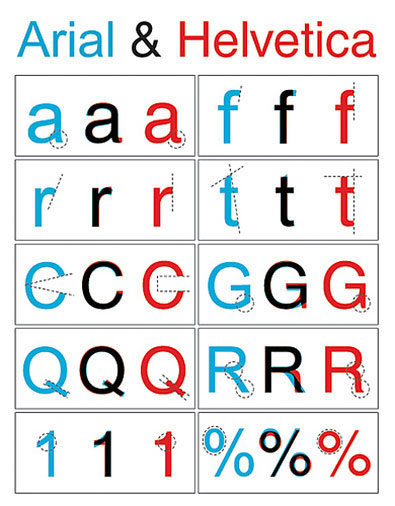
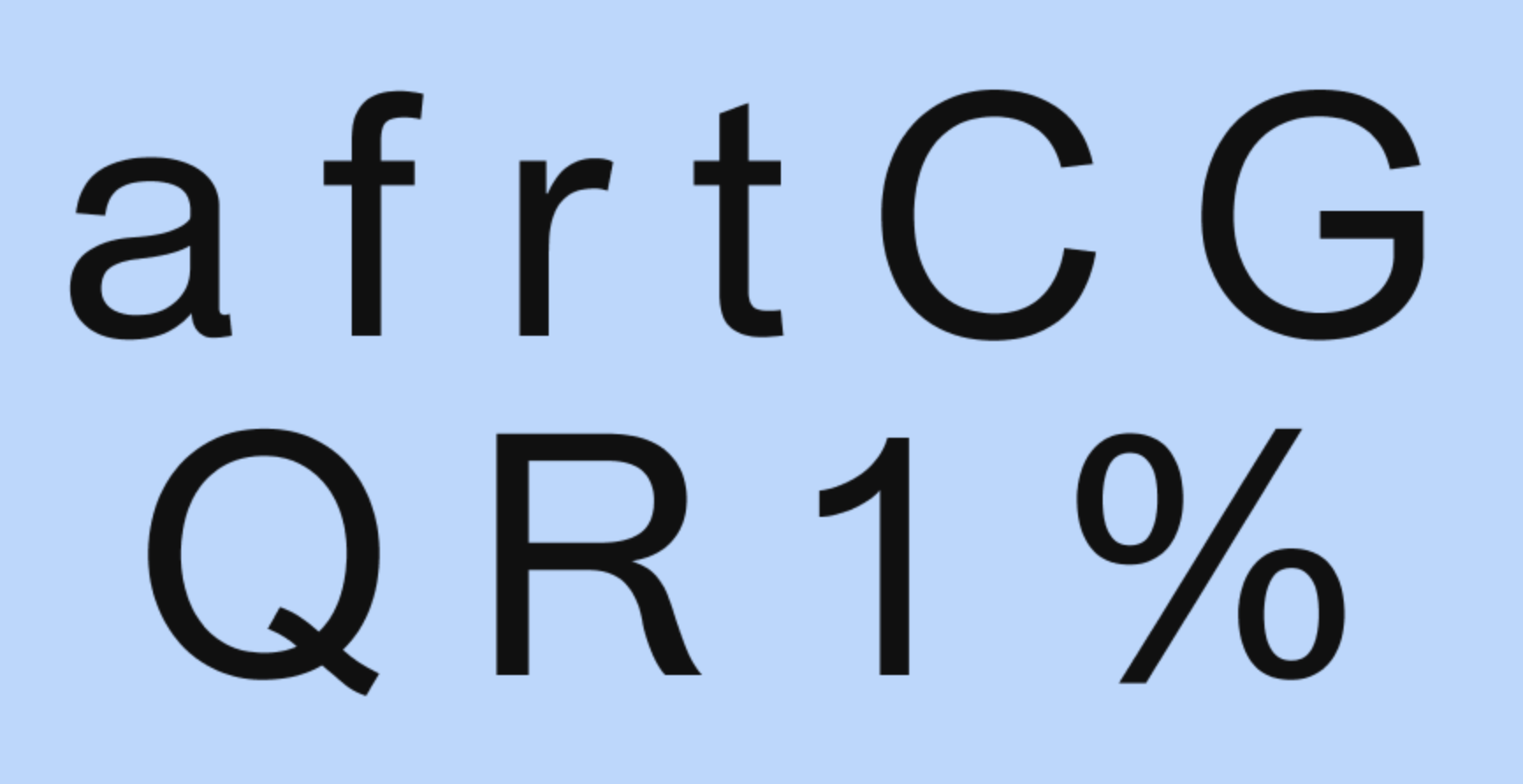
The visual identity of the Stedelijk Museum in Amsterdam is undergoing a radical reconsideration by Mevis & Van Deursen. Internationally renowned as one of the most inventive and acclaimed design agencies in the Netherlands, the duo had previously created the graphic identity of the museum’s Temporary Stedelijk program from 2010 to 2012. The museum’s visual re-branding will be an ongoing process, to be seen in a new logo, website design, publications, newsletter, stationery and posters, among other applications. In anticipation of the reopening of the Stedelijk Museum on September 23, the new campaign will be gradually unveiled. Wondering what typeface was used is not that crazy. It is a new ‘font’ designed by Radim Pesko called ‘Union’. A blending between ‘Helvetica’ and ‘Arial’

A Printed Book History 11 : Bifur a composed typeface


Monday, May 21, 2012


„Bifur: caractère de publicité” by A.M. Cassandre, Paris 1929


I found this book most interesting at the collection exibit I saw at the University of Amsterdam. A.M. Cassandre, whose real name was Adolphe Jean-Marie Mouron, was an Ukrainian- french graphic designer from the Interbellum period. He was designing posters and letter types.
Bifur was poduced by Deberny & Peignot from Cassandre’s designs. The book is a publication of this font released in 1929.

I chose this book cause i was impressed by a font itself and also the form of the book- how it was printed. I really like the simplicity and a specific character of it. The font was originally produced in 1- and 2-color versions. The one presented in the book is a 1-color version. I think visually it is very appealing and it was quite innovative for its time. The simplicity of the geometrical form, clarity of the message, funcionality create a beautifully balanced font. For me particularly attractive is the fact that some of the letters could be read as images and some of them as the letters with a small decorative element which anyway stays really simple. For example the lines in the letter „L” create the letter but in „M” they just create space around it. That makes me look at it, also the illustration in the book and not something that creates a readable image.
I also like the way how it is presented in the book. I think the combination of this elegant form of the font and the yellow colour create an absorbing, unique image.

Personally i also like the posters of A.M. Cassandre and i think the font in his works is very well combined with the images and shows how important this connection is.

post by Hania Sobolewska


Monday, January 9, 2012


Wednesday, November 23, 2011

ForEver


Monday, September 19, 2011

Continuing lines, black and white, thick and thin, contrast.

Coming to you, back and forth, constant movement.

Soft and clear shape.

Bonding speed, sometimes slow and wide sometimes fast and light.

Going, growing.

E-ego- electricity- embrace- Emil- east- english -Ethiopia, jazz, eager- elegant, only, love, lonely, – evol- eternity.

Letter, body, language, a story, in between the line.

Continuing.

The Amsterdamse School Trip


Friday, May 20, 2011

De Stijl versus Wendingen

Wendingen magazine 1929 #3 on Diego Rivera. Cover by Victor Huszar

The magazines de Stijl and Wendingen were both founded around 1918. De Stijl was connected to the artistic movement of De Stijl and Wendingen was connected to the Amsterdamse school. These two movements are completely different, if not opposite to each other (De Stijl being functional and minimal, only using the primary colors and black white and grey, and the Amsterdamse School playing with different colored bricks and all these ornaments). Logically these two magazines felt like competitors when they started to publish.

Wendingen magazine 1921 #4 on Frank Lloyd Wright and Berlage. Cover by El Lissitzky

That’s why I was completely confused when I saw a cover of Wendingen depicting a work of El Lissitzky, a constructivist artist and what I’ve always been told is that constructivism was kind of close to the Stijl. This issue was about: Frank Lloyd Wright’s architecture!!! I always thought that he was the one heavily influencing the Stijl. What turned out to be the case was that the Dutch back in those days weren’t really making ‘groups’. They stayed individuals and were inspired by different sources and that’s why, how different the movements may be, also individuals brought characteristics of the Stijl into the Amsterdamse school and the other way around.
Isn’t that just great: they were existing movements but there seems to be no rules or boundaries in taking aspects of other movement, you are free to be inspired by everything.

[by Liza Prins]

SMELL it, LICK it, SUCK it, BITE it, CHEW it, EAT it.
4 years ago I went on a study trip to a curtain great house, build by a curtain great architect, that I do not remember. And just before I went in, my previous teacher at Architecture and Design, Aalborg (Denmark), told me and the rest of my class, that we would get goosebumps, when we first got inside this building. He was in love. Than I went in – but no goosebumps. I apparently did not feel a thing.
Only now I understand, what he was taking about – but in another context.
Today I was placed in front of these amazing art magazines from the 1920s named “Wendingen”. I really felt it.
I tried to smell it.
I was just about to lick it.
I would love to suck it!
I wonder how it would be to chew it.
I really wanted to eat it.

[by Kristine Andersen]

Inside and Outside the Amsterdam Ring

>As the capitol of the Netherlands Amsterdam is a popular place for new businesses and companies. Still you see that a lot of these companies place there new architectural masterpieces outside of the ring. Is this because of the high ground prices inside the ring?


> On a trip trough Amsterdam we quickly discover that the historical buildings of the city are not only in the center-canal areas. Around these canals you see a band, almost like a protecting layer, made of architecture that is maybe even historical as its center. The buildings and blocks give you an unique look on the wide collection of the Amsterdam School architecture. This is something that a lot of tourists miss when they come to the city: icons like ‘het schip’ in the Spaardammerbuurt, mercatorplein, the Berlage Lyceum and the many blocks and bridges through the city. Maybe this is a good thing; in this way it stays as an unique treasure that functions as a decor for the the daily life of many. Lets hope this architecture will be protected in the future and won’t be replaced by transient cheap Almere buildings that will be replaced every twenty years.

[by Taro Lennaerts]

B-Group goes “Wendingen”


[click left for English / click right for Dutch]

[by Henk Groenendijk]

A call from the past

In some places the atmosphere doesn’t seem to change with time. Regardless of new interior pieces, integrated technological devices or relatively fresh layers of paint on the walls, you just come in there and dive into the setting of decades ago.

That happened to me when I stepped into the hallway of a former post office, which is now turned into the museum called ‘t Schip. Blue shiny tiles on the walls and floor, wooden benches, iron bars around and the coolness of the air immediately placed me into the first half of the previous century, when the work there was humming: post office workers were stamping, sorting or preparing for dispatch numerous letters and parcels, customers were writing addresses on envelopes, buying stamps and waiting for the telephonist to scream out loud their name and the number of the telephone booth where they could pick up the phone and hear the voices of their far away families or friends.

The booths are still there. With exactly the same heavy door, yellow tiles on the walls and little table. And even though the place of the telephone was taken by the modern computer you still get a feeling that if you come in you can hear those voices. The voices of the past.[x]

photo by Gordon Parks

[by Anastasia Starostenko]

A wrestling match

If de Amsterdamse School and de Stijl were to fight each other in a wrestling match de Stijl would totally kick de Amsterdamse School’s ass. De Amsterdamse School would be wasting time executing these beautifully choreographed moves while de Stijl would engage in some straight on pounding with it’s massive angular fists and totally destroy de Amsterdamse School’s ass. Then de Amsterdamse School would attempt to retaliate by trying to impress de Stijl through jumping around like a ballerina but like a true wrestler de Stijl would bellow out “None of this fairy Efteling crap!” And pound de Amsterdam School straight into the floor, leaving only some bricks in a beautiful brownish/red color and a perfectly square hole in the ground.

Doctors wouldn’t be able to restore de Amsterdamse School to his old self since the resources are no longer around. De Stijl however, would collapse some days after the match as it would turn out his sturdy build was way overestimated and so the next week’s competition would be between a Bijlmer “Honinggraad Flat” and a temporary complex of sea containers.

[by Sanne Hartland]

Typotecture


Wendingen Dudok-issue cover design by Wijdeveld • Hilversum Cityhall by Dudok
dive into the exiting world of Typotecture [x]

[by Casper Braat]

Architectura et Amicitia

The ‘Amsterdamse School’ is a interesting architectural-style and is partly als known by it’s social-aware approach. The style belongs to a neo-style and contains architects such as: van der Mey, de Klerk [known by his work 'the ship'], Kramer, and others.

I think it’s interesting that the ‘Amsterdamse School’ does not only stand for architectural knowable realizations, but that there’s also a whole movement for furniture [tables, chairs, clocks, lamps, textile etc], and even the idea of a ‘typical type font’, > Amsterdamse School is everywhere.

Wendingen was a interesting magazine [launched by the group, Architectura et Amicitia, of architects, artists etc] and was mainly focused on the ‘Amsterdamse School’.

I see this style as organic and yet non-organic, same as that it looks formal and family-aware. It is all and non, and that strikes me the most.

[by Petros Orfanos]

My Little Time Machine

Being born and raised in Amsterdam and going around this city for 23 years I can still every now and then catch this utopian feeling by walking past the frozen canals in the winter or taking the ferry to the north part of the city by sunset, but I sometimes wonder what it must feel like being a tourist in my own city discovering new places and seeing things you have never seen before. The 5 minutes I spend inside the Scheepvaarthuis was the first time in a while that I felt this way. For this very short period, for just these 5 minutes I was a tourist, a tourist who stepped in a Time machine and was able to see inside a little part of her city from almost a hundred years ago.

[by Giulia Shah]

pelican + crystal + ship = Amsterdamse school

What made the Amsterdamse school style buildings so colourful was the rich use of symbols. Perhaps the easiest thing to notice was the inspiration from the nature in the structure of the buildings: flowing round forms (like a shell) or geometric forms (like a crystal). This gives the buildings a feeling of a living organism.

Then there are also sculptures full of symbolism. Sometimes they are telling the story about the building, like it’s function or it’s history. For example the Scheepvaarthuis is built in a triangular shape so that it looks a like a huge ship and there’s a lot of Indonesian style statues and sculptures to tell about the Dutch colony.

The funniest thing I saw were the pelicans in Spaandammerbuurt. One of the explanations that I found for a pelican as a symbol was that it is a sign for charity after a legend that the pelican pecks her own breast to feed her starving chicks with her own blood. Well, is this maybe something for social housing then?

– From nature to architecture and from architecture to printed matter –

[by Katje Hannula]

Een historische wandeling in een moderne stad

De excursie was een belevenis op zichzelf. De eerste keer dat ik zolang heb gefietst in Nederland en tegelijkertijd zoveel moest onthouden. Je leeft in het heden maar wordt omringd door het verleden. Gebouwen uit de negentiende eeuw of veel verder met hedendaagse bouwstijlen in hun glorie. Een vermoeiend uitstapje met interessante gebouwen zoals de Gerrit Rietveld academie die in de stijl van het modernisme is gebouwd met veel staal en glas. Het gebouw is een transparante doos terwijl je aan de achterzijde ervan massieve gebouwen ziet. De straatnamen die flitsen voorbij tijdens het rijden sommige heel duidelijke leesbaar o.a. Oost zaanstraat, Hembrug straat, Spaardammer plantsoen. Ik kan ook zien hoe de architecten mee gaan met de tijd: combinatie van oude bakstenen, glas, marmer, hout, enzovoort. Mijn hersenen proberen de tijd en de ruimte te bestuderen hoewel niet alles tot me doordringt. De hoeveelheid aan informatie is niet te verwerken. Ik wilde nog meer weten over het soort typografie, dat gebruikt werd voor de nummers van de gebouwen. De tijdschriften wendingen zijn heel uniek en hebben een heel diepe indruk achter gelaten. Ik zag ook hoe de verschillende architecten de stad tot eenheid wilde creëren ondanks de moderne gebouwen tussen de oude. Men wilde geen afbreuk doen aan de historie van de stad Het Olympische gedeelte dat alleen zichtbaar was voor me toen Henk erover vertelde. Door dit alles besef ik dat de exterieur van een stad ook aantrekkelijk wordt als je meer erover te weten komt.

[by Annemarie Daniël]

archi*-talent or archi-braveness

It really makes me wonder how is it possible that architecture differs so much every time you go somewhere . It happened to me in Amsterdam in even more intense way.
Amsterdam’s architecture for me personally is in a cartoonish style or like someone wanted to created imaginary world called “ let’s fit in here”.
I feel like there were not strict guidelines for building . People seemed to enjoy planning the city. No restrictions and open mind are definitely the keys of the

whole charm of the city.
Compare to Poland ( it was a communistic country for some time), our architecture is packed with straight lines and forms and it visibly dominates in large cities. It has a bit of sadness and harshness in a way you approach it and how you feel about it. Amsterdam posses flow of energy that comes and goes . It is a great piece of art in itself and even it is already artistic and feminine it wants to be even more chic by putting f.ex. typography on buildings, graphical images on pathways or even decorating the edges of the houses. It is all to make people’s lives here better to let the energy be felt by people living in here.

Another aspect that attracted my attention a lot is the way buildings from different styles are put together, next to each other. Are they any aesthetic limitations? Is it the way people make art – experimenting in a way, showing the contrast, behaving mad or just enjoying the weirdness of those different styles? Does it has to be clear why something stands next to other object? In my opinion and the best explanation that works for me is simply to intrigue people’s imagination, to let them feel special. What is more this way of building may not fit established rules but by not feeling “ as it should be “ it gives the reason for existence the city needs to posses. To inspire people , to disturb and to let you discover it. This is the purpose an architecture should serve to really strike your mind, excite you and wake up when you, still sleepy, go out to face the world. Just like an art.

* archi – trouble of endless movement of investigation

[by Agnieszka Zimolag]

Glass Windows

Mercatoplein is one of the Amsterdamse school constructions which developed through out and after the First World War as an architectural movement. Mercatoplein is influenced greatly influenced by Frank LLoyd Wright’s le Corbusier that was a project developing 5 years before the square was completed and is a good example of how a suburban space can be turned into a socio economical center where people gather and shop or eat.
What intrigued me most in the square was the design the of windows, because contrary to their small shape,their frequency of their repetitive pattern reminded me of simplified church stained glass windows.
Patterns were indeed found in the window design of Het Schip by Michel Klerk as the top windows of the backside opened in a shape of semi spiral form could convey to the Fibonacci theory.
Sources: studiokoning, Amsterdamse_School [Wikipedia]

[by Claire Bamplekou]

TYPOGRAPHIC MATCHMAKING [IN THE CITY]


Thursday, April 14, 2011

My first discoveries
One of the first impressions I got of the Typographic Matchmaking, was an image of a huge three-dimensional shape with letters that I did not manage to read. However, I could sense meanings and my curiosity grew to decrypt this ‘unknown language’. The shape proved to be a mixture of both Latin and Arabic words, translating each other and forming a common text. As a matter of fact, it was a construction of the type font StoryLine, and one of the outcomes of the Typographic Matchmaking 2.0:

khtt.net
Naturally, I had discovered The Khatt Foundation – Center for Arabic Typography. Founded by Huda Smijtshuizen AbiFarès in 2004, this online platform offers a space for projects which develop Arabic typography and design, and deal with its relation to the Western society.

The project
The first initiative to the Typographic Matchmaking took place in 2005-07, the second in 2008-10. There is a lot to say about the project. The Typographic Matchmaking 1.0 deals with the typographic needs of contemporary design in the Arab world, specifically for publications and new-media. The Typographic Matchmaking 2.0 / in the City stretches the research into the urban space. Here, the focus is to bring the marriage between Arabic and Latin writing cultures to the three-dimensional city.

Huda Smijtshuizen AbiFarès introduces 15 professionals from Europe and the Middle East to collaborate in 5 teams. Each team consists of one Arab and one Dutch type/graphic designer and one architect or industrial designer. Each team also deals with a different subject. It is inspiring to me that they immediately move away from the original classical type and experiment with both language types, starting from scratch. The participants then visit respectively each other’s countries, and the cities of Amsterdam, Beirut and Dubai.

Backgrounds
I find it interesting to mention, that one of the reasons argued for the Typographic Matchmaking is, that because of the poor matches between the Arabic and Latin fonts, most bilingual design projects in the Middle East start in English before getting translated. Too often, the street sign you meet in the Middle East are written in a way that forces the Arabic language to adjust to the Latin language. The basic idea is thus to create new fonts that work both in Latin and Arabic, and especially to find types that create harmony between the different language structures. The aim of the project in the City, is also to bring back the sense of belonging to fast growing multicultural cities in the Arabic environment. One of the big challenges here, is how to deal with a visually already overcharged space. New alternative spaces within the contemporary, shopping dependent, urban structure may engage inhabitants on many levels and create a more emotional relationship with the direct environment and the larger world.
Another important reason is the demand for Arabic identity in the West. I could very well imagine that even people who do not speak Arabic, can connect to their roots through the presence of Arabic script.

Nuqat-folly, with poetry on its walls in the type font Nuqat:

Yielding outcomes
The Typographic Matchmaking is a merging of two cultures, where both adaptation and play are central. I was curious to see how two totally different kinds of languages can translate each other and at the same time meet each other’s ‘needs’.

The font named Nuqat is developed with a grid. The text is created out of dots in both language structures. The system of the grid has here the capacity of making a text where the letters are – or disconnected, or linked to each other. I find this font interesting for its apparent multiple possibilities. I also like to see how it could suit in different public spaces.

Here is a link to see some examples of the Nuqat used in several ways:

(more…)

Letters


Thursday, April 14, 2011


inspired by 'words about words...' from s. themerson's semantic poetry

New & Newer Alphabets.


Tuesday, April 12, 2011

My research is about a Czech graphic designer named Radim Pesko who, along with contributing to various magazines, is running an Amsterdam based type-foundry (RP; a digital type-foundry established by himself in 2009). Occasionally he does curatorial practise and teaches in the graphic design department at the Gerrit Rietveld Academy Amsterdam.
In this text, I will focus on a collaboration Pesko did along with French graphic designer colleague Karl Nawrot in 2010 and compare it to Wim Crouwel’s “New Alphabet” from 1967.

Pesko and Nawrot made a family of four rather unique and aesthetically compelling type-faces; The Lÿon Family. This family is named up after Nawrot’s hometown Lyon, and the designer himself claims that the umlauts in his and Pesko’s ÿ were added to make it appear more personal and playful. The Lÿon font family was introduced to the public as a booklet supplement called “Newer Alphabets” to the “Typefaces Issue” of GRAPHIC (16th edition); a design magazine created by another colleague and friend of theirs, S-Korean Na Kim.

At the launch of Na Kim’s 17th edition of GRAPHIC (“When Design Becomes Attitudes”), both Pesko and Nawrot were there in person to have a talk about their collaboration on the Lÿon project. Lucky for me, since I happened to be in the audience.

I must mention that prior to this, I had made an attempt to interview Pesko via e-mail, but I found the talk at the magazine launch to be more fruitful for my research; basically all my questions were answered without me even having to ask them. The (funny and to some extent rivaling) dynamic between the two collaborators was also obviously easier to catch, and it helped me develop a more wholesome image of both their process and final outcome. But first a little more about the members of the Lÿon family; the Lÿon’s are Jean (after artist Jean Arp), Stan (after director and photographer Stanley Kubrick), Ulys (after Franco-Japanese animation series Ulysses 31) and Walt (after founder of Disney Pictures Walt Disney).

These brother type-faces are creatively based on a feeling or the essence of the characters they’ve been named after, as well as the fact that they have formal approaches to their subject qualities. This is also stated shortly by James Langdon in the “Newer Aphabet” booklet “…they are open and various and their spirit is this: to resist normative tendencies and to reject the idea of definitive form”, but as the booklet basically focuses on presenting the different family members and suggests various juxtapositions of their letters, it was quite helpful to hear the designers explain their work furthermore. Amongst other details, they mentioned how the different “Lÿon brothers” are created with the intention of being able to mix with each other; a feature I personally appreciate a lot because it encourages their potential users to be creative and exploring by being allowed to play around with them.

(more…)

Letters


Wednesday, March 30, 2011

Letters


Monday, March 14, 2011

Letters


Thursday, March 10, 2011

LINETO


Monday, March 7, 2011

Since the start of our Design Theory/Research course about typedesign, graphic design, foundries, fonts, typefaces etc. we have had a look into a, for me unknown but, very interesting world.

This research will be about Lineto which is a foundry that these days sells there Lineto fonts, like replica, via their website and they have type-designers who publish their own fonts through Lineto. We will further explore the similarities between type design, graphic design and art.

My research question will start us out with some history to get a grip on all the different terms that are used to find out what Lineto actually does. For me starting out as a rookie I’m trying to grasp the meaning of this all. This is an interesting step that can also help you in understanding this world on its own. After that we will dive further into the question what the similarities are between type design, graphic design and art.

A type-foundry is a company that designs typefaces. Typefoundries used to sell their typefaces made out of wood or metal and matrices that were used for line-casting machines like Linotype and Monotype. This is such a time consuming and expensive process that when the computer started to be used it was replaced by digital type which is mostly used today.

Now to first get some terms straightened out. The term typeface is often mistaken or used for font. The two terms had more clear meanings before the start of desktop publishing but faded. What the difference between font and typeface is is that a font points out a specific member of a type family like roman or boldface, while typeface shows a consistent visual style which can be a family.

Back to Lineto, Lineto sprung up into existence in 1993 right at the time when the computer started to get used extensively in people’s daily lives. The foundries in this computer age where called digital type foundries which accumulate and distribute typefaces as digitized fonts created by type-designers.

Typefoundries always had used catalogues that were updated every year but since the digital type came in to the scene it was almost impossible for a foundry to make a catalogue looking at the amount of types that were created and distributed.

This way of working was embraced by Lineto and five years after starting their business Cornel Windlin and Stephan Müller the founders of Lineto jointly set up Lineto.com to distribute their own typefaces through the internet. They also invited a number of other designers to publish their fonts alongside theirs.

If you look at the fonts on Lineto.com you start to wonder what the difference is between type design, graphic design and art. There are differences between the three but there is also a very strong cohering similarity which you can’t deny and this I find an interesting discovery.

Starting out with describing graphic design you see that it is a creative process which involves a client who provides the work and then there is a producer, printer, programmer or signmaker of some sort. At the end of the process the result is used to bring across a specific message to the viewer.

In art you see that it is also very much a creative process which brings across a specific message but usually addressing different issues but the principle is most definitely the same.

For a type designer it is the art of designing typefaces. Where the typeface is one or more fonts designed with a certain unity. The function that their end product is used for is also about getting a message across to an audience, a better description of it is that it is a tool for bringing across a message to the viewer.
So everyone of the professions that are described above is about visualizing an idea concept or bringing across an idea or thought or a tool for doing so. Type is so rooted in our system and culture that we cannot escape from its grip, there are always fundamental links rooted at the core of it all. Looking at it in this way I think can open up your mind to look at type in a new and different way as an artist.

NORM formulating new dimensions in design


Monday, March 7, 2011

Dimity Bruni and Manuel Krebs,two graphic designers from Switzerland. Both born in 1970 and met in art school, in Biel. They founded NORM in 1999 and created their own typographic language by ignoring existing conventions. NORM is now based in Zurich. They’re well known for their typeface «Simple» which first got used in their book The Things. Later, Ruedi Baur of Integral, Paris, asked them to redesign the typeface for use in the new corporate design of the Cologne-Bonn Airport – this version is named Simple-Airport.

Bruni and Krebs developed their own typographical brand. They invented their own way of putting the world into categories and they formulated two rules: — the world is divided into two groups:  3d things and 2d things. — anything invisible is not of our concern.

3d things:  3d things consists of physical things that are of material existence. These items should be solid and visible, though not necessarily visible with the eye.

2d things:  the 2d category can be put into four different groups based on dimensions. group 1, those which represent something pertaining to a three-dimensional space group 2, those which represent something not pertaining to a three-dimensional space group 3, those which represent nothing group 4, those which are as yet unknown to us

group 1 represents the physical spacial things. It is bound to its own being because we recognize 3d things through its build, size  and materiality. When speaking in 2d matter, things lose their necessity of being a certain size, light, color. This is quite a wide range of objects, so NORM has categorized group 1 in sizes, — smaller than human beings, but large enough to be seen with the eye — roughly as large as human beings — bigger than human beings, but also small enough to be seen

group 2 represents the non-spacious, nonphysical things. Things that come down to numbers and letters and abstract ideas like sounds. Letters are the most easy to understand. Letters can also be read as signs. They have a double function, we write them and read them. Letters define their own meaning in a very clear way; while sounds are more difficult to represent, read, and understand. Letters have principles, we have a certain way of making letters and this is why they are so recognizable. Letters are principles. Still, there is much room for playing and sculpting in this field. — when designing a new system of writing, signs should be simple. they should be simple, because it makes them easier to remember, to recognize, and reproduce. — also the signs should be in a small quantity, because it makes them easier to learn — no sign should resemble another, because it will create confusion. so each sign should appear no more than once — it should be possible to align the signs in straight rows. always on a horizontal/vertical grid. this is so we can recognize a text, even when the script is unknown to us. — the characters should be simple graphic forms, recognized, and written easily as possible.

group 3 These things represent nothing. the things indescribable and invisible, so no concern

group 4

(more…)

sans Comic Sans


Monday, March 7, 2011

Annual design awards is an event which is announced almost by every design magazine/ company/ institution, whether it is the influential “Wallpaper” or just a blog of a random fashion lover. The best is picked out of everything, “from beds to breakfasts through jeans to genes”. However, when all the winners are praised, the time comes to remember those who weren’t lucky enough to fit on the pedestal. Being nominated as the worst is rather a dishonor for every designer or design company no matter if it’s a car or a pair of shoes.

Nevertheless, sometimes ‘bad’ is not enough to describe public opinion about a design piece. ‘The worst of the worst’ may sound dramatic, but this is a title used talking about… typography.

It is difficult to find a font or, frankly speaking, any piece of design which would be accepted more controversially than Comic Sans MS. Its naive, innocent and childlike appearance makes it so attractive for primary teachers and prayer groups of local churches. Yet it is also immature, juvenile and silly as if written by a 6-year-old, yelling ‘bad taste’ at everything where it pops out.

If some well-known logos were replaced with Comic Sans, it would look rather homely, warm, inoffensive and simply unsuitable. But when it comes to real examples, a restaurant menu presented in this font looks more like a kindergarden canteen while a warning sign loses its all respect immediately and seems to be rather an April Fool’s joke…

As if it was not enough, this font proves to be contagious. Ever since it’s first appearance in 1995, Comic Sans is now everywhere, even on the sides of ambulances or gravestones.

No wonder that such a vast misuse of a font has caused a big anti-Comic Sans campaign: various websites offers hilarious photostreams of Comic Sans spotted everywhere in the world; one can also email a comical educational pamphlet for a friend who is suspected to be a comic sans criminal. As if it was not enough, the hate campaign has it’s own website where special Ban Comic Sans T-shirts or coffee mugs can be purchased. Even more, visitors can donate for creating a documentary called Comic Sans Or The Most Hated Font In The World. The greatest haters can also download a special Safari extension which changes Comic Sans websites into Helvetica!

‘Every time you use Comic Sans, Faye will punch this adorable little bunny’, is written on a picture with a worried girl, holding a small white rabbit, crying ‘but I don’t want to punch the bunny’. The scale of hate sometimes seems to be taken to extreme or even absurd: “Misuse of the font is analogous to showing up for a black tie event in a clown costume”, claims the creators of the hate campaign.

It is interesting to know that originally Comic Sans wasn’t designed for wide use. It was actually created for Microsoft Bob, a software program included in Windows 95. A little dog which was used as a help character ‘talked’ in Times New Roman, a font which was a bit boring, not warm and helpful-looking at all. That’s when Vincent Connare, a typographer who worked for Microsoft, was asked to create a special font for the program.

Apparently Connare was a big fan of comics. Inspired by “Watchmen”, a popular graphic novel, trying mimic its handwritten letters in speech bubbles, he ended up with now inglorious Comic Sans.

What was the secret of it’s enormous popularity? When Microsoft included the font in Word of Windows 95, Comic Sans suddenly bursted like a virus. It was something new, unseen and fun-looking. Connare explains it simply: “because it is sometimes better than Times New Roman”.

Letters


Monday, March 7, 2011


Log in