Skip to Content Skip to Search Go to Top Navigation Go to Side Menu


Archive for January, 2009


Objectiefied Bits


Friday, January 30, 2009

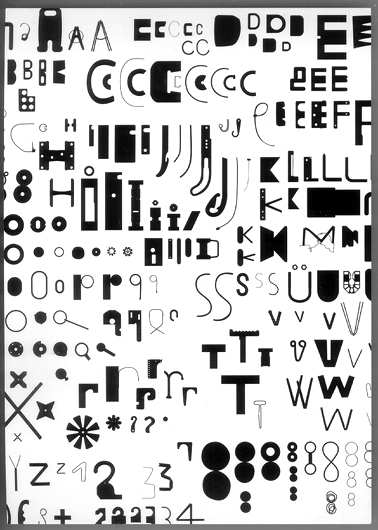
Maybe you find it puzzling that this posting about Helvetica and Wim Crouwel starts with an image of Paul Elliman’s “Bits” Alphabet.

Extremes can sometimes meet when you least expect it, and this fascinates me. It became apparent again during the investigation by the FoundationYear C group, into Gary Hustwitt’s Movie “Helvetica” and our consequently visit to the Wim Crouwel exhibit last month at the “van Abbemuseum”.
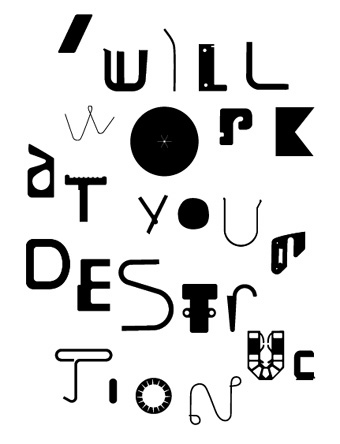
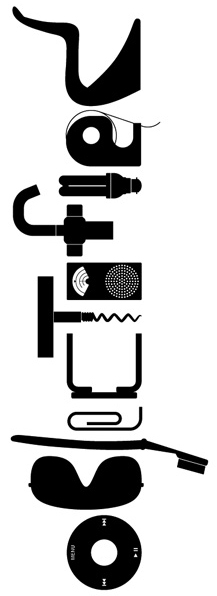
left: Bits by Paul Elliman, right: Objectified by Build (click images for blog info)

“Bits” was developed by Paul Elliman in the mid 90ties and published in the 15th (Cities) issue of Fuse’s conceptual Font Box. quote: “Language moves between us and the world on patterns of repetition and variation, and a mimetic example of this might be something like an alphabet”
Later, in 2004, it was included in the Cooper-Hewitt Design Triennial N.Y. which made “concept type” part of the established design world.

Gary Hustwitt’s new documentary “Objectified” takes design, and as a matter of fact “Bits” too, one step further by making it popular in the same way as he did with “Helvetica”.

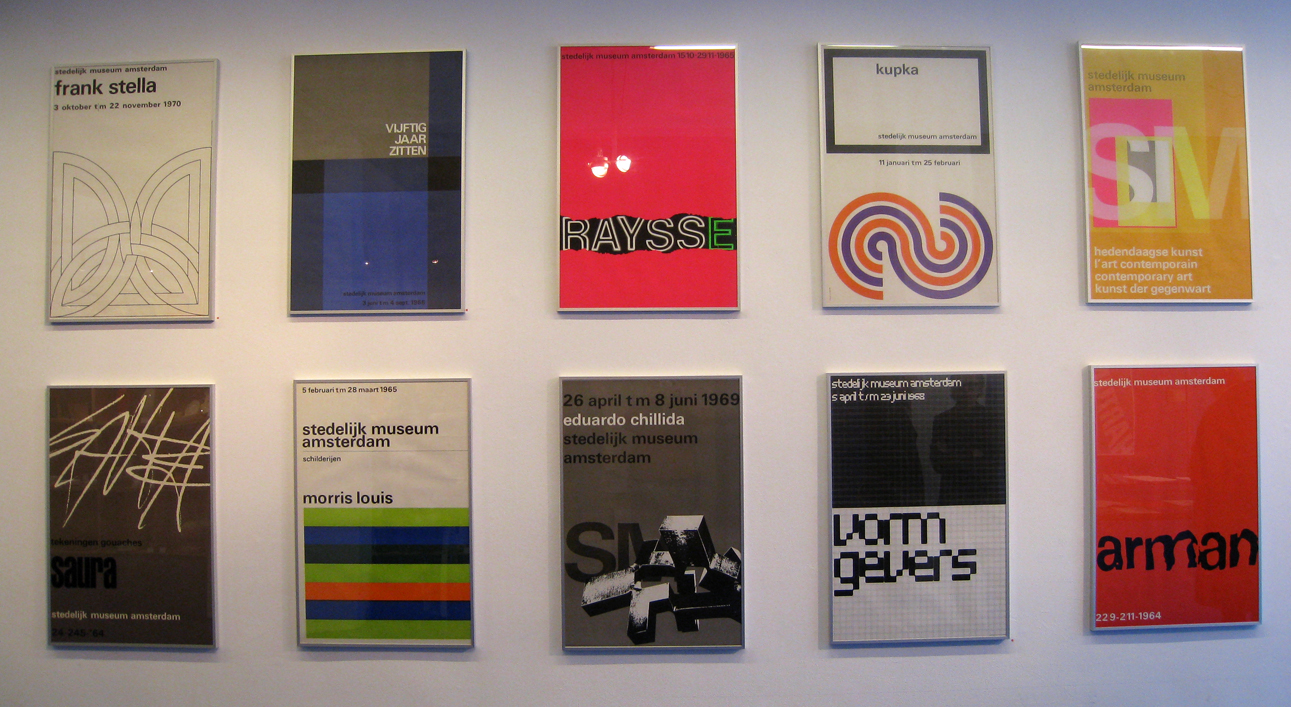
Modernist thinking, or even constructivist-, lays at the base of the “Helvetica” concept and the work of Wim Crouwel, as this first movie on typography has him stated. As a true Dutch graphic design icon Wim Crouwel illustrated this through work, presented at the library exhibition of the van Abbemuseum, celebrating his 70th birthday. A small but beautiful display of catalogues and posters made for both this and the Stedelijk Museum in Amsterdam.
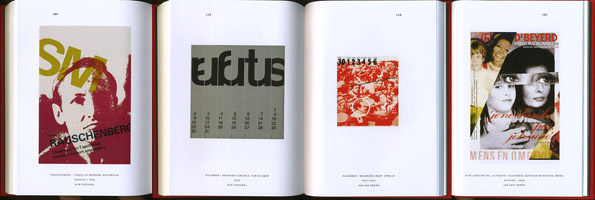

pages by Crouwel versus pages by Jan van Toorn from publication “Het Debat”

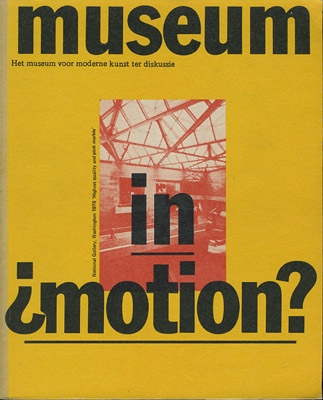
Extremes met in person when Crouwel and Jan van Toorn celebrated their life long controversy with a recurrence of their famous 1970 debate. Functionalism versus engagement. Jan van Toorn succeeded Crouwel as a designer at this museum under the directorate of Jean Leering to manifest in an inspiring cooperation what that leads to in terms of exhibition concepts and graphic design (“Museum in Motion” at the library). Jean Leering also closely work together with Jan Slothouber (read part 1 of C group’s research) at the TU-Delft where the published several internal essay’s on the philosophical and social consequences of design.
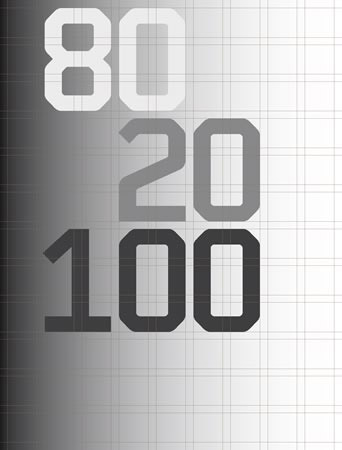
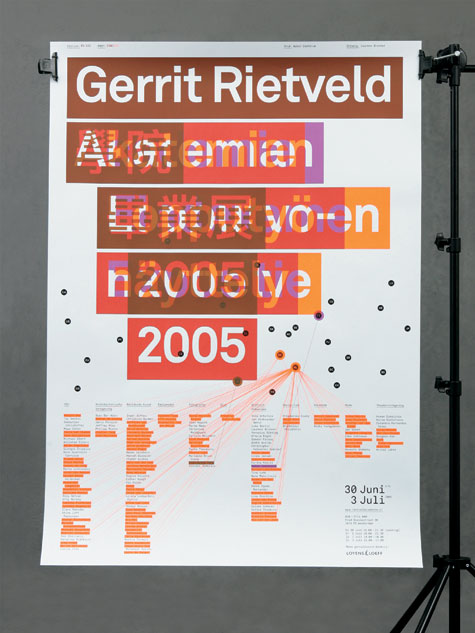
80/20/100 © Nijhof&Lee booksellers – Laurenz Brunner, final exam poster

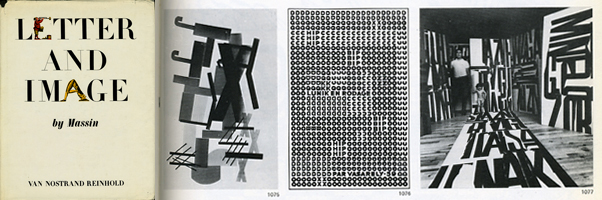
More research was conducted to explore related content or work approach of other designers like, Laurenz Brunner’s “Akkurat”, his successful contemporary remake of Helvetica, Experimental Jetset convicted users of Helvetica, the cooperation “8020100″ between Vivid Gallery in Rotterdam and Nijhof&Lee Bookstore in Amsterdam. Context was created by turning the focus on Adriaan Frutiger, designer of Helvetica’s conscientious alternative “Univers”. To further explore the relation to language and image we further focused our investigating efforts on the visual legacy of Charles & Ray Eames, the “El Hema” exhibition/store and Massin’s timeless publication “Letter and Image“.

With the inclusion of Belgian artist Guy Rombouts the full circle of our focus on type design was completed. The investigation into his visual language concept “AZart” will be presented soon in a separated part 3 C_group posting. This was part II of the C_group research
All researches linked in this posting can be downloaded in A4 format and are also available as hard copy research prints at the ResearchFolders available at the academy library
lines


Friday, January 30, 2009

how would it be to echo somebody?
how would it be to be echoed?
how does it feel, to be allowed to echo somebody?
how sensitive are you to get a good connection to his/her mind or presentation?
hoe does it feel to be echoed by somebody else?
is he/she sensible enough with your thoughts?
should everything be open, or is it better to hold something behind?
are there any rules or lines which should be followed?
i mean… is it really necessary to be always soft and sensible or what would change it, if you would cross the line?
about yourself, it is an easy question, i think you know your inner mine very well?
but how much do you know about the lines of the others?
or how easily can we meet in the middle of that line?

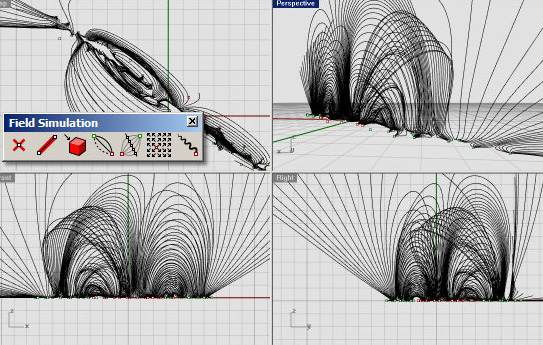
link: Osilloscope

forces at work


Thursday, January 29, 2009

Teamwork – ideas – opinions – help – building up something together

It‘s like standing in a big valley and shouting out your thoughts into the void. Some sounds will bounce back at you, some will disappear in mid-air. This is the big plus about teamwork; that ideas are constantly being bounced off each other to see which ones have potential, and which ones will just dissolve on the way.

This month our team spirit kept up pretty well, but I also noticed that in a good working situation there‘s always a kind of teamwork going on, even if everybody is working on their own individual project. One should always ask for opinions, and always be ready to help someone by thinking seriousely about their ideas.

So, in the spirit of teamwork

Voice of The Gerrit Rietveld Academy


Thursday, January 29, 2009

Echo,

v. reverberate; repeat a sound; transmit immediately each character received by a computer back to the course as to serve as a confirmation of receipt (Computers)

n. repetition of a sound produced by the reflection of sound waves from a solid surface; (Computers) user input printed to the screen so the user can read it; (Slang) person who reflects on another person; person who imitates another

As I walked trough the hallways of the Rietveld I see everything developing,
objects, drawings, performances, everything is moving and growing.

although the strange thing is that everything looks a bit a like,
exchanged words, moves, thoughts connected, reflected and formed,
into one echo that belongs to the voice of the Rietveld academy

Weblog?


Wednesday, January 28, 2009


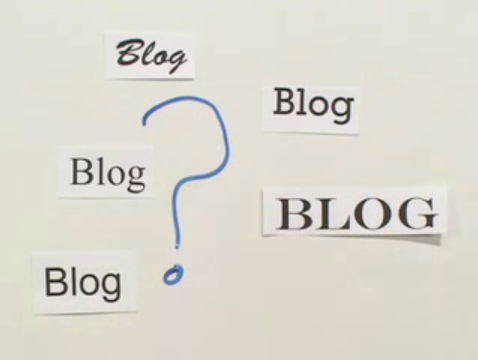
I was browsing the internet looking for a definition of the word ‘weblog’.
Doing so I landed up in blog after blog after blog.
Each blog having a different opinion and way of looking at the word or phenomenon blog.

I thought about this and realised that this was actually already my answer.
- The people trying to define a weblog, on a weblog. Even though they all have different opinions about it.

“There is no need to define ‘blog.’ I doubt there ever was such a call to define ‘newspaper’ or ‘television’ or ‘radio’ or ‘book’ — or, for that matter, ‘telephone’ or ‘instant messenger.’”
-  Jeff Jarvis

But for the general view this might be of some help.

Stuck


Saturday, January 24, 2009

Last week I wrote a posting about a student in the middle of a project, of an exchange of her and other peoples ideas, all seeming fruitful and full of inspiration. This week I visited her again, anxious to hear new developments. She was stuck.

Many artists experience this during the process of making something and a walk around the basic year revealed many tactics in getting back on track:

  • Have a beer

  • Be hungover

  • Go to a junkshop or flea market

  • Make all kinds of small things related to your project

  • Analyze all different parts, what do you want, what does it mean etc.

  • Talk to someone

  • Do something else

  • Find things that are completely non-related.

  • Or just keep on going, stuck is just an idea in your head.

Or do some Automatic Writing, which happens to be also an album of a great band.

Here’s a jam from them, featuring some pictures of your typical inspiration-seeking person.

The Javanees


Thursday, January 22, 2009

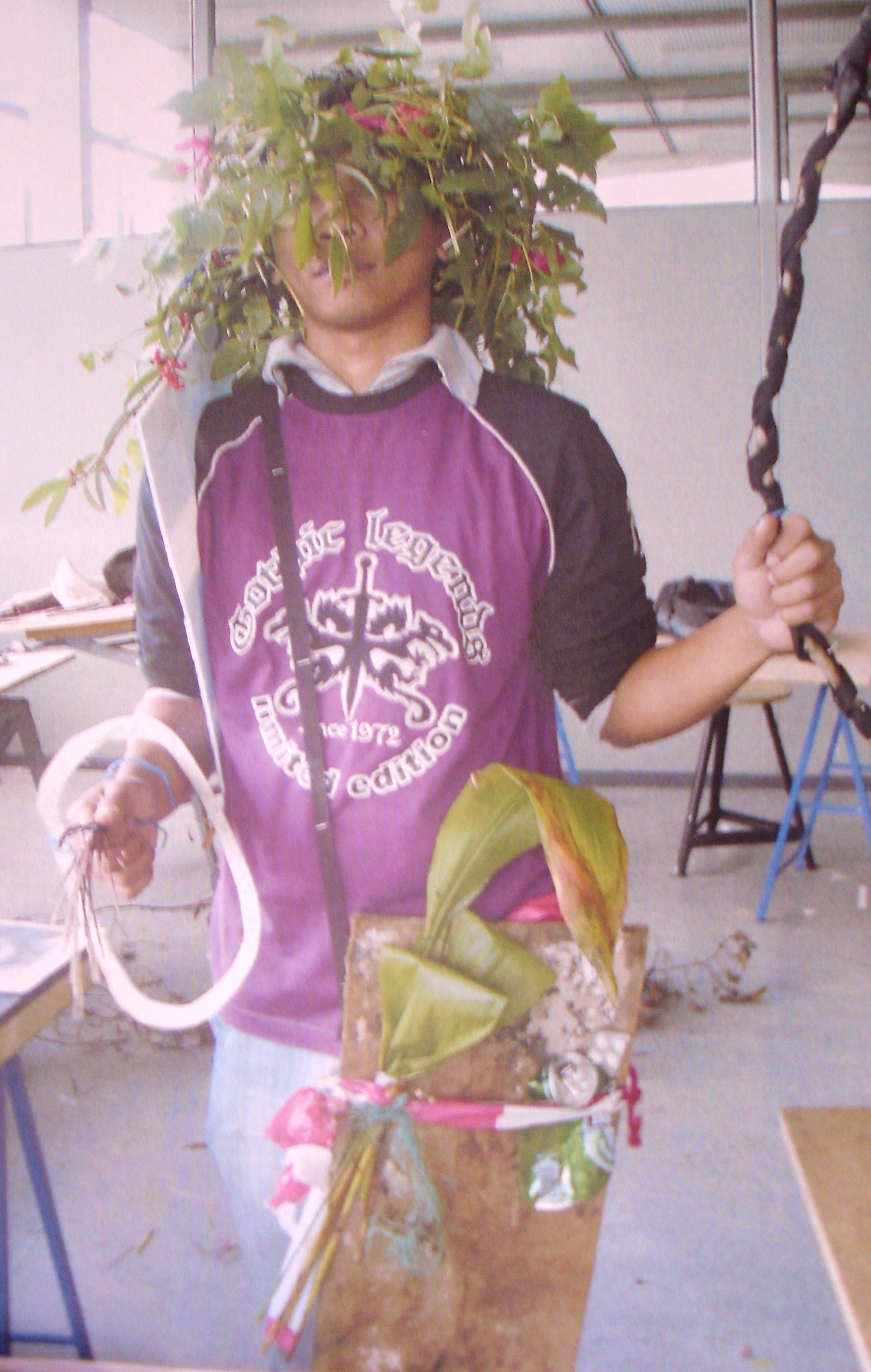
Being a Javanees is a very greatfull feeling. That is what this “tribe” wants to do. His name is Marlon Trimo Kromojodo, but he like to call himself Trimo. Why that, because he want to hold in mind the second name of his grandfather who also is called Trimo. He got an idea to create with natural material the cloth of the “tribe”, but he does something different and creates the Javanees cloth.


This is how Trimo wants to look like. It is really a Javanees style to decorate yourself with natural material. That is the identity of being a Javenees. Like the folding leave and decorate also on the head. So Trimo create his “tribe” in a Javanees style, because it is also looks different.

Look at these: www.javanenvansuriname.info or www.picasaweb.google.com

Animal Imitations.


Thursday, January 22, 2009

It was an assignment that started out with body extensions, and ended in animal imitations. The best known or most visible aspect of a certain animal was picked out and preformed by one of the students. I personally thought they did it in a very funny way without turning it in to a joke. My favourite was maybe the video where Timo Rohula tried to seduce Maria Pedersen. Timo wore the best, most flashy outfit he could get his hands on, and danced like a crazy man. All to get some female attention. Like a tropical bird flaunting his feathers.

Persoonlijk


Thursday, January 22, 2009

Inspiratie halen uit iemand anders’ leefomgeving. Zoeken naar de punten die jij interessant vind en vanuit die inspiratie twee milieus samen laten komen. Een plek waar zowel jij als de ander zicht thuis voelt. Iedereen heeft zijn eigen persoonlijke ruimte binnen een groot huis en met die gedachte moesten er nieuwe omgevingen gecreëerd worden.
Bij architectuur projecten gaat het voordat je begint eigenlijk altijd om een onderzoek. Over wat voor een plek je wil ontwerpen. Is het een plek in de openbare ruimte speciaal voor jongeren of ga je iets maken voor alleen staande vrouwen.

tile table


Thursday, January 22, 2009

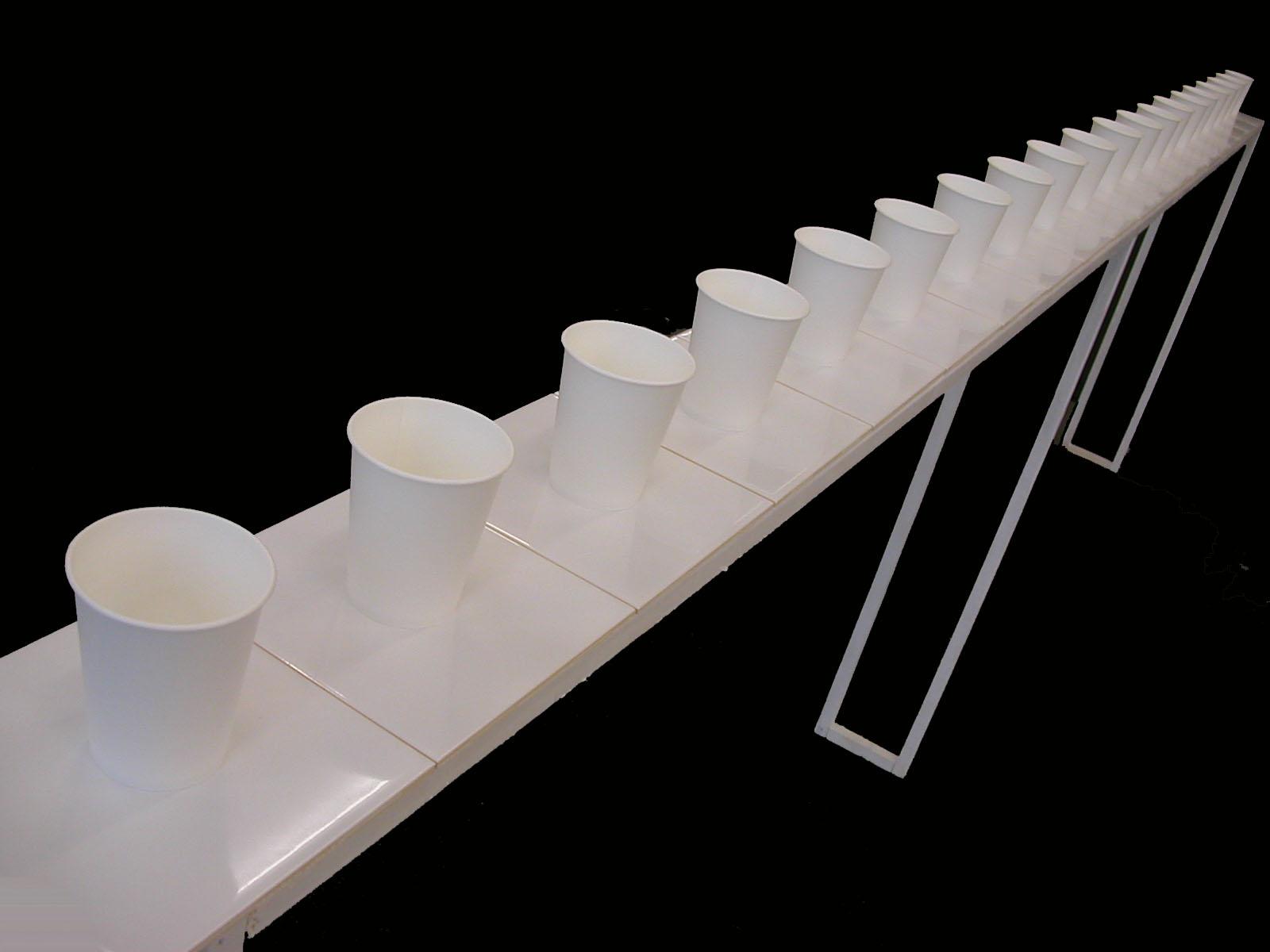
I don’t know why but in my mind, the most strong image of ‘design’ is industrial or product design. For this reason, I had interviewed a friend who has studied industrial design. I liked one of her project which is named tea tablefor 88 persons. She had to make a product with 2 boxes of tiles. She felt the tile seems like pottery saucer so decided to make tea table with them. She made 2m long white tea tabel with tiles and each pieces of tiles have one cup.

2boxes of tiles were 88pieces, so it is named tea table for 88 persons. I really like it’s simple and beautiful shape. It was nice time to me to have an affinity for industrial design which add beauty and convenience on products.

Feminine and Masculine Object Exchange


Thursday, January 22, 2009

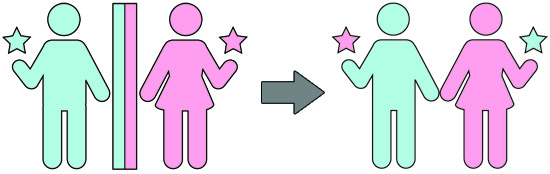
The first idea Paul and Elke had, for making an exchange tool, was a contraption that forced Paul’s legs into a manly stand, Paul usually has a rather feminine stand. After receiving some criticism by the teacher, they came with another plan; to combine two lists composed of stereotype feminine and masculine household objects, suggested by members of the class. They plan to make a glass baseball bat and a handbag which could be used as a lipstick that holds a razor blade. Paul and Elke say they are quite handy, so the rest will probably follow soon.

Segregation cultivation


Thursday, January 22, 2009

Many objects are designed to be perceived as clearly male or female (think of Gilette and Venus razors for example), whereas more essential ones (kitchen appliances, electronic media, tables and beds) are made „unisex“. But when we look at the same essential objects made for children: suddenly it’s all either pink or blue!

Why this sudden change in attitude?
Why – in a world supposedly freed from gender oppression – are boys and girls being subconciously made to feel so different from one another by media and toy companies?

Is it because this makes it easier for companies to supply new products, because they don‘t have to create innovative design and can just stick to typical army- and flower-pattern? Useful as it may be to manufacturers, I doubt it‘s good for children‘s self-image and leads to much teasing in schools that could be avoided by parents paying more attention to a less stereotyped environment for their children.
Would a little girl‘s gender identity be damaged if she used a neutral or (heaven forbid) blue notebook instead of a pink one?

P.S.: a bit of ha ha

conjoining bodies


Thursday, January 22, 2009

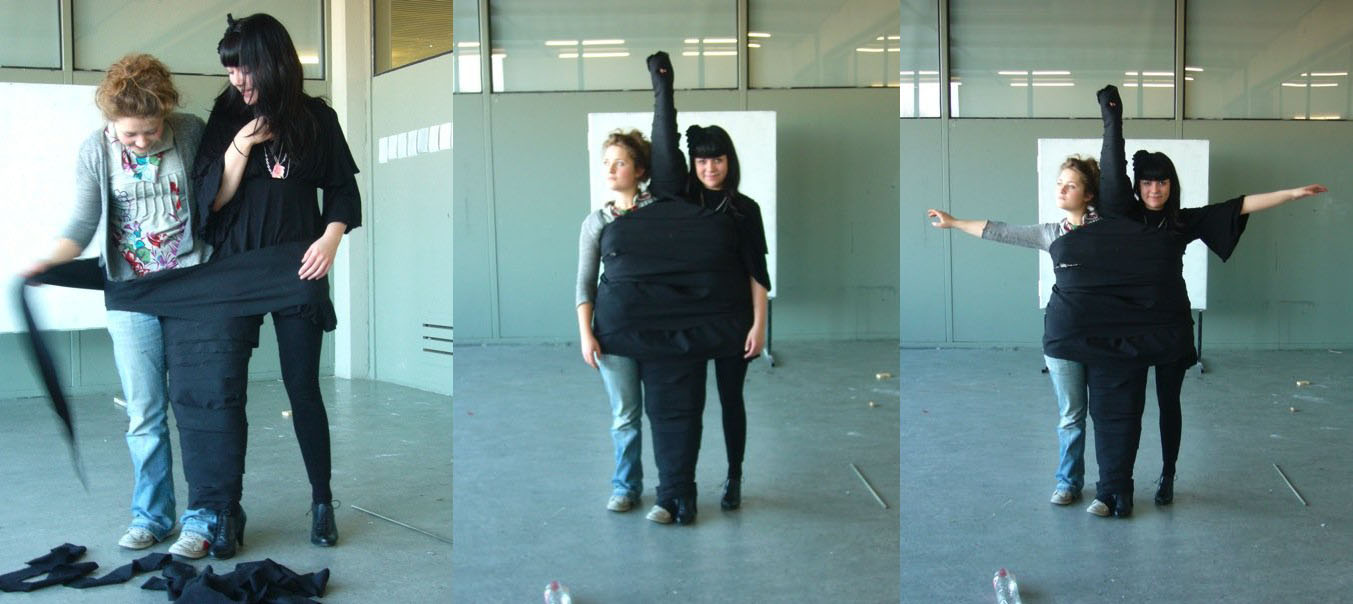
Here the assignment “make a connection” became the inpiration for some reasearch on how to change two bodies into one. How to become a siamese twin. It is interesting to see the new shapes the bodies make, recognizable but totally new.  This project posts questions like; what would fashion look like if the human body was formed differently and how much can fashion form our appearance. It is interesting to think about what effect clothes that conjoin two people would have on our behavior and relationships.

Adapt your body


Thursday, January 22, 2009

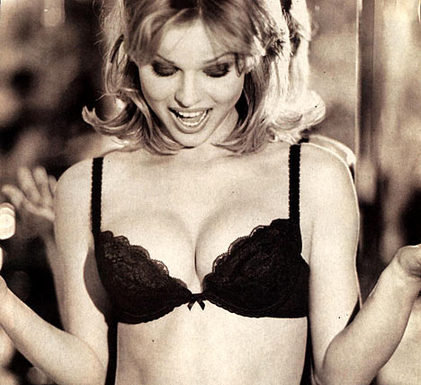
Usually your body decides what kind of clothes you will wear, but what if it would be the opposite way – that the clothes would form your body? If a woman without curves would wear a dress made for a curvy female, there would be empty spaces between the body and the dress. What Anniek Mol thought of, was to design an insert to, in this case, fill the holes with. The idea is to be able to adapt your body to the clothes you are wearing. In addition to that it would change the way you look, you would also move and feel differently. This all started from Annieks uncomfort concerning her body, the question is though – would there not be a greater uncomfort with her design? Or is it after all the same principle like the push-up bra?

Link: Nagi Noda

The opinionator


Wednesday, January 21, 2009

Wouldn’t it be nice to have an opinion machine. In witch you could exchange your opinion for that of someone else.
But how would you make such a thing work?
You could categorize into subjects, such as politics, weither, celebrities etc. But you would end up with an endless amount of subjects.
Or you could leave it up to the opinion exchangers to bring the context themselves.
This to me sounded excellent. You could start out the day absolutely hating the way your hair looks. And end up the day singing your heart out – because you are the best singer in the world.

exchange indivisuality


Wednesday, January 21, 2009

Let’s go a bit deeper into the word indivisuality and subjects around it. Especially the subject exchange. Would you exchange your indivisuality with someone else? If you would, would you go all the way and even change your name and habits, or is it only about visual appearance? Where is the line between individuality and visuality. Can you see these two things as two different things which can be separated or are the always connected with each other? Is it possible to exchange only parts of the indivisuality or do you have to go all the way? Can you exchange your indivisuality? Or can you only pretend?

http://www.marykay.com/whatsnew/virtualmakeover/default.aspx

The Headpiece


Tuesday, January 20, 2009

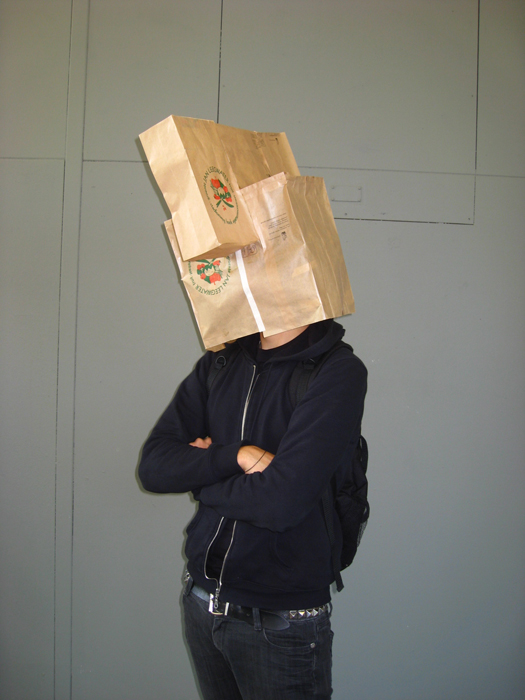
I was asked to be a pedestal for Jesse Muller’s paper mohawk headpiece.
It was a delicate square helmet made from paper bags you would find at a greengrocer’s shop. It somehow reminded me of all the punk shows I used to go to when I was a teenage boy. All the loving memories I have. Beer flying though the air, people jumping over each other, off the stage, slipping on the beer stained floor, falling, bruising, laughing, the dirty squat houses, the friendly violence, the loud music, singing along. I think it’s maybe the most fun a person can ever have in his life.

posted by Tim Matijsen

T-shirt


Monday, January 19, 2009

Link: massa

Take my idea and through it see yours


Saturday, January 17, 2009


How does all this work come into being? It is, of course, the product of the autonomous genius that is the artist, exploring depths where no mind has gone before and bringing back ideas that are completely original. Yeah right.
Most assignments, especially in the Design department involve a lot of research into existing artworks and other media. For instance, the picture above is an in-between work that started with the title of a book “Take my eyes and through them see you“, by Cerith Wyn Evans.
This made the teacher come up with the idea to have the students exchange clothes.
The photo’s gave a student the idea to cut them up and recombine them by hand.
In versions to come, the student said that she might combine it with the 7 sins, because of those sinful Dolce & Gabbana adverts. It made me think of those Magnum commercials from a while ago.
We’re all truly original…

posting by Arthur Perdijk

dependency


Saturday, January 17, 2009

“Create a siamese twin with the fabric you have” was the assignment Emma Olanders and her classmates were given when starting the textile design lesson during the exchange project. Emma and a classmate started working with dependency by means of having a nylon stocking between them and letting Emma actually hang from it. They tried out different ways of hanging, pulling, pushing, giving and receiving weight with different materials between different body parts. They discovered that there are some things that you can do on your own. Having a partner, those small movements or pressures when pushing become unpredictable. The way they were depending on each other and giving/receiving weight has a rather strong connection to the dance technique “contact improvisation“.

posting by Nadja Voorham, photo by Benno Voorham

The Alphabet of Spaces


Friday, January 16, 2009

Isn’t that a great name Merel Woudwijk. You know i am wondering about Merel, because she got an idea to make her own alphabet.  An alphabet  that no one can understand. Very abstract and powerful alphabet. She call it “The alphabet of spaces”.

Why these abstraction, because of the inspiration of artist Sol Lewitt and her conceptually idea spread away in her mind to make such alphabets. There were more than 100 prints in woodcraving, some prints in silkscreen, 32 prints in etchings, and 42 prints in lithograph full with care and patient. She choose the basiccolor black for her alphabet, because it gives her good results and comments

posting by Raz Barsati

Judith Kleinemeier


Friday, January 16, 2009

links to Centraal Museum and Viktor & Rolf

posting by Merel Woudwijk

Cause and Effect


Thursday, January 15, 2009

Seeking: a tool to exchange one woman‘s masculinity for one man‘s femininity (read carefully)

Most people‘s gender-conciousness & gender-identity is located in the mind, so a physical tool could only manipulate the exterior signs. Thus, the tool‘s effects are limited to the exterior, and disappear once the interaction with the tool stops. This could mean altering someone‘s posture, movement, appearance etc.

So there will be a physical difference, but one could also try to show the cause along with the effects: Where does the excess masculinity or femininity come from? Are they rooted parts of this person‘s genes or did they arise out of circumstance/necessity/coincidence during the building of their identity?

Interesting gender phenomenon in Native American cultures


Thursday, January 15, 2009

A doll, a women, a hospital, something to discuss…
Out of bringing a photo of an old hospital with in front a doll bigger than the women, who made it… the interests were big, and she really liked the photo in its time…
In between she worked with an appointment by a doctor…
Inspired by this situation, she started to create her own reaction to it…
A video of herself with half doll, half human body…
She is walking into the camera and the sentence `do you want to see my penis` is lightning up…

Mysteries and Accusations


Thursday, January 15, 2009

After asking my friend about her experiences in her new design class, I’m just as confused as she was when she attended the class last week. Even now, she seems a bit lost when talking about it. She was talking about having to work with strangers, disagreements, posing, shyness, copy-machines and silhouettes. Although these words might seem a bit random, they’ve all got to do with making a booklet, with writings about their experiences in the design class. This is going to be published and I must admit; it sounds an awful lot like what we’re doing the coming three weeks on the designblog!

link: http://www.museums-vledder.nl/eng/index2.html

Silence?


Thursday, January 15, 2009

Inup and his class had to form a tribe for one of the design blocks. They had to create their own outfits, according to a social handicap, chosen from real life, exegerated or immagionairy. And then they had to make a costume, a dress, a mask or a body extension to make clear what is disfunctioning. Some people choose mental illnesses as chizophrenia. Some people locked their heads up in boxes. Some people wore peculiar transparent dresses with almost nothing under it. Then they had to write something about their handicap in a book that is going around all the classes where the design teacher comes to turn the group into a tribe. Inup, what was your handicap? I asked. But he finds it hard to talk about it. How did you work as a tribe? How did you communicate with each other? What did the costume made you feel like? He wants to answer. He understands me. His face moves. His eyes are focussed. The answer is so close, but the language is a punishment. His lips are sealed.

Link: Silence?

indivisuality


Thursday, January 15, 2009

What is your identity? And in what level are you aware of your
identity, of your indivisuality? That is an interesting word. But what
does that mean? The word is not in the dictionary en Google can only
finds design companies. A definition was not found. But for sure it is
a combination of the words individuality and visual. How important is
the relationship between the way you are and your visual appearance?
Should it be equal or is it actually a mask? Do you hide your identity
or do you use your visual-part to show it?

Link: http://www.vertaalwoord.nl/translate.cgi?woord=indivisuality&van=nederlands&v=vertalen

Morphed


Thursday, January 15, 2009

Imagine what it would be like to be attached to someone else – in a way even morphed together – for an indefinite time. Covering yourself with textile to form as one.
Would you feel a bond with one another? Or would you feel uncomfortable and intruded into your personal space?
Think of all the different forms you could become just by working together.

To me using textiles to cover and form your body’s together as one sounded beautiful.

Erwin Wurm is an artist that also uses the underlying shapes to form the sculpture.

about Tim Mathijsen


Thursday, January 15, 2009

nickname


Saturday, January 10, 2009

mothers, fathers, sisters, brothers, nephews, nieces, uncles, aunts, grandmothers, grandfathers, stepmothers, stepfathers, stepsisters, stepbrothers, best-friends, best-friends mothers, best-friends fathers, best-friends sisters, best-friends brothers, best-friends nephews, best-friends nieces, best-friends uncles, best-friends aunts, best-friends grandmothers, best-friends grandfathers, best-friends boyfriends, best-friends girlfriends, friends, friends mothers, friends fathers, friends sisters, friends brothers, boyfriends, boyfriends mothers, boyfriends fathers, boyfriends sisters, boyfriends brothers, girlfriends, girlfriends mothers, girlfriends  fathers, girlfriends sisters, girlfriends brothers, roommates, acquaintances, vague friends, enemies, haters, ex-lovers, lovers, crushes, flirts, flings, one nightstands, soul mates, dates, relations.

make a list of all the nicknames people gave to you.
make a list of all the nicknames you gave to people.

link to this movie: http://www.youtube.com

posted by Karoenja Woudenberg

no title three


Saturday, January 10, 2009

An assignment in jewelry design that was supposed to end up in an object that could roll on your body, became something else for Raz Barsatie.

The objects which could not roll on a body came to have more to do with the body, than the object she made that actually could roll on someone. When watching her objects rolling the mind directly makes a connection to the animal and human. The blue object (see photo above) makes the sound of a tiny horse, whereas the movement is more one of a rather slow, clumsy and unsteady walk of a human. It is interesting how these objects cannot roll on the body but are, instead, independent bodies themselves.
link to youtube

posted by Nadja Voorham

Where’s the goddamn book?’


Saturday, January 10, 2009

Charlie hasn’t been very lucky at finding the information she needs to write for the Rietveld’s DesignBlog. Before, she wrote something about Typography artist Bram de Does. She told me all about her search to find the information she needed, which was all in one book ‘The Kaba Ornament’. Totally fixated on that one book, she searched the Gerrit Rietveld library, the Rijksacademie Library and even the Amsterdam Public Library, to find nothing but a video on de Does. Now Charlie has to write something for the blog again, which involves a handmade book from Rietveld students. But this book too proved hard to find.

Five days before the deadline of the Bram de Does piece, she found the publisher of the book, who shared a number of useful anecdotes with her. Let’s hope she’ll be successful in finding the handmade book as well.

link to ilovetypography.com

posted by Jesse Muller

Computerphobia


Saturday, January 10, 2009

While working on a Graphic Design assignment, a Rietveld student experienced computerphobia, or fear of computers.
A research team has identified three types of computerphobia and treatment for each. In brief:

The Anxious Computerphobic, with physical symptoms such
as sweaty palms and back tension. Treatment: systematic
desensitization, relaxation techniques, imagining situations in which
computers have been a source of anxiety.

The Cognitive Computerphobic, certain that the computer is smarter than he or she is. Treatment: stop the negative thoughts by “creating a void”, and replacing them with positive thoughts to give a feeling of competence.

The Uncomfortable User, among other things done in
this treatment process, the insides of a computer are shown and
floppy disks are cut apart.

Or you could take a look at: “Fingerprint: The Art of Using Handmade Elements in Graphic Design”
by Chen Design Associates. Or this video X

posted by Arthur Perdijk

Venicekade


Saturday, January 10, 2009

Can you imagine how great it would be to have a Rietveld’s pavilion at the Venice Architecture Biennale one day?
Well, last month group F did imagine that together with Carla Boomkens.

That special relation between the water and the land present both in Amsterdam and Venice was a starting point for their design assignment.
The projects and approaches differed a lot; from questioning the space by creating a path leading to the building to reacting on the ecological issues.
But just like the motto of this year biennale – ‘Architecture beyond the building’ all of their projects try to define space as the one measured in years, lifes and tons of melted ice, not necessarily in square meters.

posted by Marcin Przybile

snowflake


Saturday, January 10, 2009

The room is dark. In the speakers is heavy breathing. In the far en of the room is a black tent, it is moving from within as if something is trying to get out. On the floor is twenty white parallel lines leading away from the tent and branching out into a labyrinth. As the breathing stops a heavy beat start to pulsate. Out of the tent comes, one after the other, strange figures in costumes, they look as if they were characters walking out of a Bosch painting. This is the beginning of a performance that was the result of a Design class in word and image. The performance makes me think of the finnish artist Riita Ikonen who uses costumes in her performances but in a more playful way.


posted by Emilia Bergmark

inarticulate happening


Saturday, January 10, 2009

It al started with a confusing assignment, or was there even an assignment?

An inarticulate happening, which nobody can define, but it does have all the aspects of image and language. Control-able vagueness including ideas about social subgroups. Collaboration with a confusing problem that was created out of nothing. Or was the problem there already? Is it complete chaos or efficient harmony. If this “class” has a name, we don’t know what it is. But we don’t know if it needs a name. And where are the boundaries? Are there boundaries? Do we need them? link to: perspicuity.net/paradox/vagueness

posted by Vincent Knopper

Tribe 2


Saturday, January 10, 2009

I want to introduce Nadja Voorham. She likes to dance and she wants to be a part of a tribe with no rules and religion. The biggest rule of them is “ music” and they call themself  “Bling Bling”.  It is a very strange tribe, because when music is playing around, they begin to dance. Very strange. They have to hear one tune and the dance automatically comes out. And when the music stops, the dance also stops. The tribe doesn’t care about the comment of the society. They are very loyal to their rule and their reputation. link to bling bling

posted by Raz Barsatie

Mashed


Friday, January 9, 2009

After having spend the whole day yesterday with the Jackson 5 ABC song in my head, I clearly was inspired by the subject and couldn’t let it rest!

While still searching for an alphabet, Karoenja sat down eating his peanut butter sandwich with a surprising huge fascination of the relief of the butter! He started looking at all other kinds of structures in vegetables. He dove into the Dutch foods; which reminded him of mashed food (hollandse trots!). First have the vegetable in their natural “earthy” state, then you peel of the skin, cook them, mash them, pour gravy over it, finally eat it!
During this process he documented every step by photographing his actions, witch resulted in his personal alphabet

posted by Tessel Schole

Dress To Leave An Impression


Friday, January 9, 2009


In the first four weeks of the basic year, „e“ and her class were instructed by the teachers to: „Make us remember you.“ They used nicknames, objects, made works and performances. This was the first design project, so the whole working process was new to the students. But the teachers were there to talk, direct, and give hints to inspirational sources. „e“ decided that she could best communicate her personality by talking about her favourite dresses and the memories, emotions and characteristics connected to them. The students got to know each other very well through that project by seeing each person‘s creative expression of themselves.
Link: to the pdf file: http://www.amsreview.org/articles/kleine01-2004.pdf

posted by Jane Mumford

Language + Image: as an introduction of design itself…


Friday, January 9, 2009

A big theme “Photography” as a starting point, but worked out in a straight form….
Find a collection of photo prints in a way you think they fit together (no glamour or arty once)… present the series and, of course, discuss a lot with the group…
What can you see… What is going on there…
What is happening with the relation between the pictures…
Next step… think further and create a “Photo story” with some more found pieces…
Of course discussion…
The last one should be a reaction, in anyway, on one photo out of the story…
Yeah… Discussion… yeah…

posted by Lena Hendlmeier